India's EV Market Surges 43% YoY in H1 2026: What's Driving the Growth
Quick Summary
India's EV market grew 43% YoY in H1 2026, crossing 15.4 lakh units sold. See how two-wheelers, cars, buses & trucks performed, and what's driving the growth
Enjoyed this article?
Advertisement
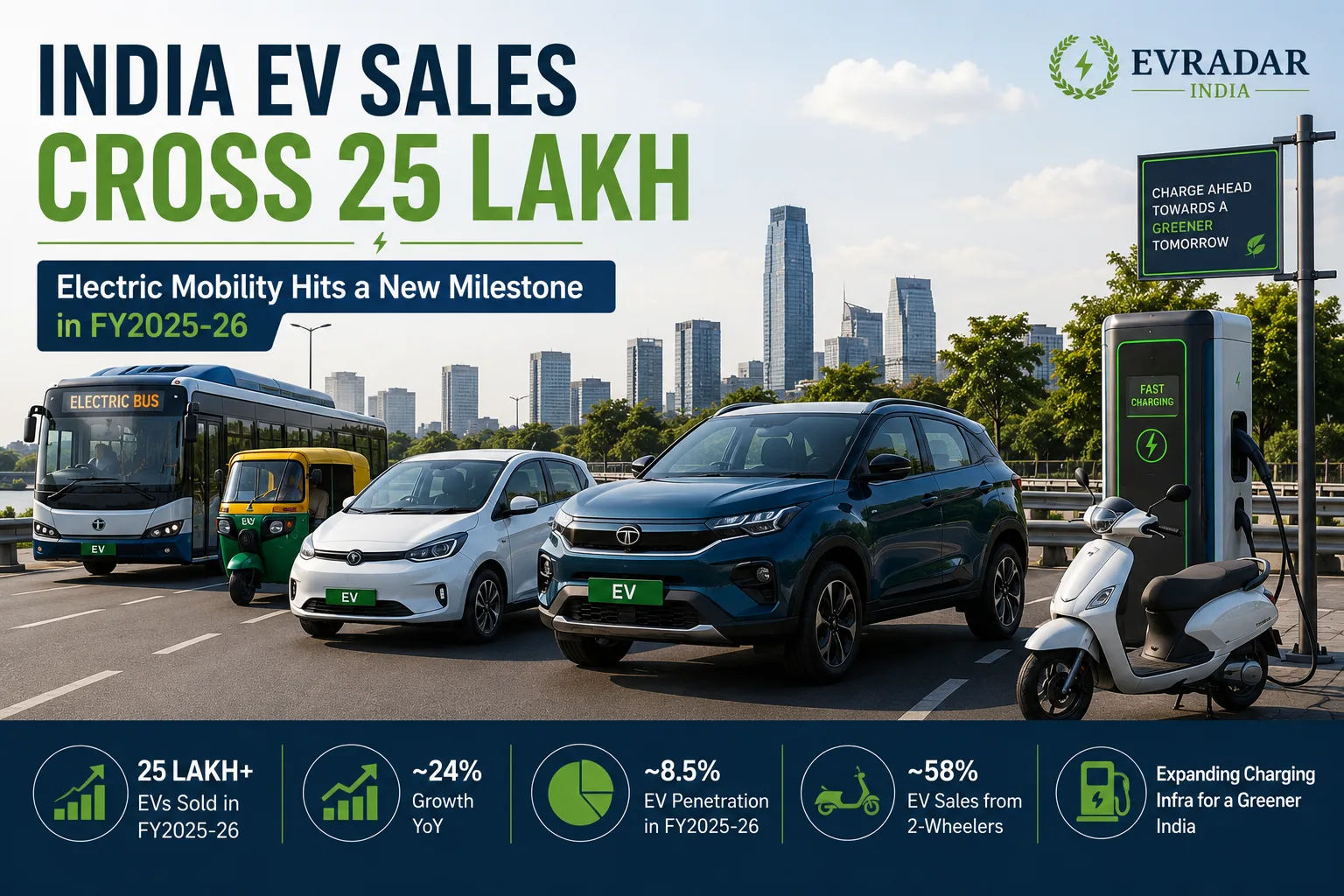
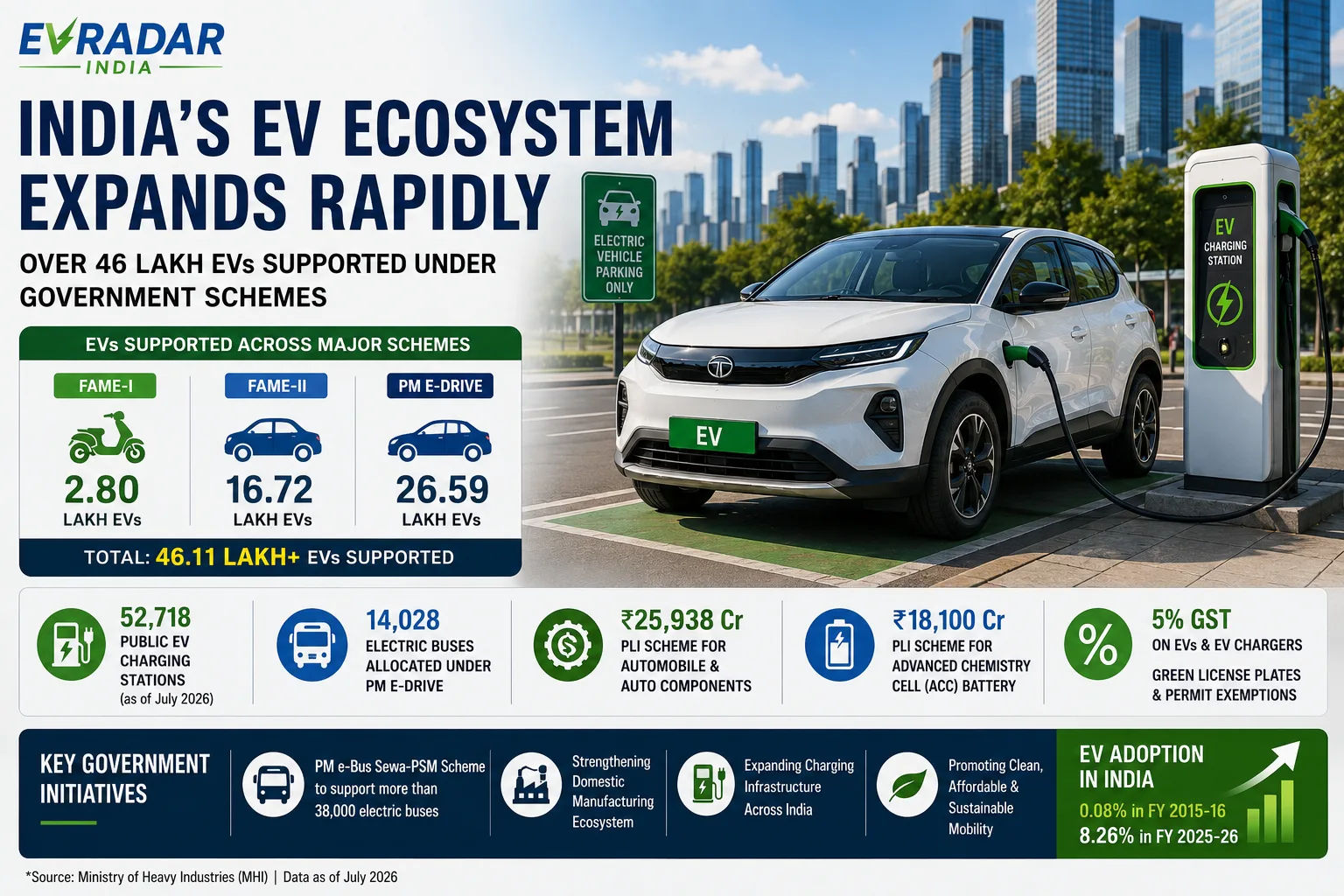
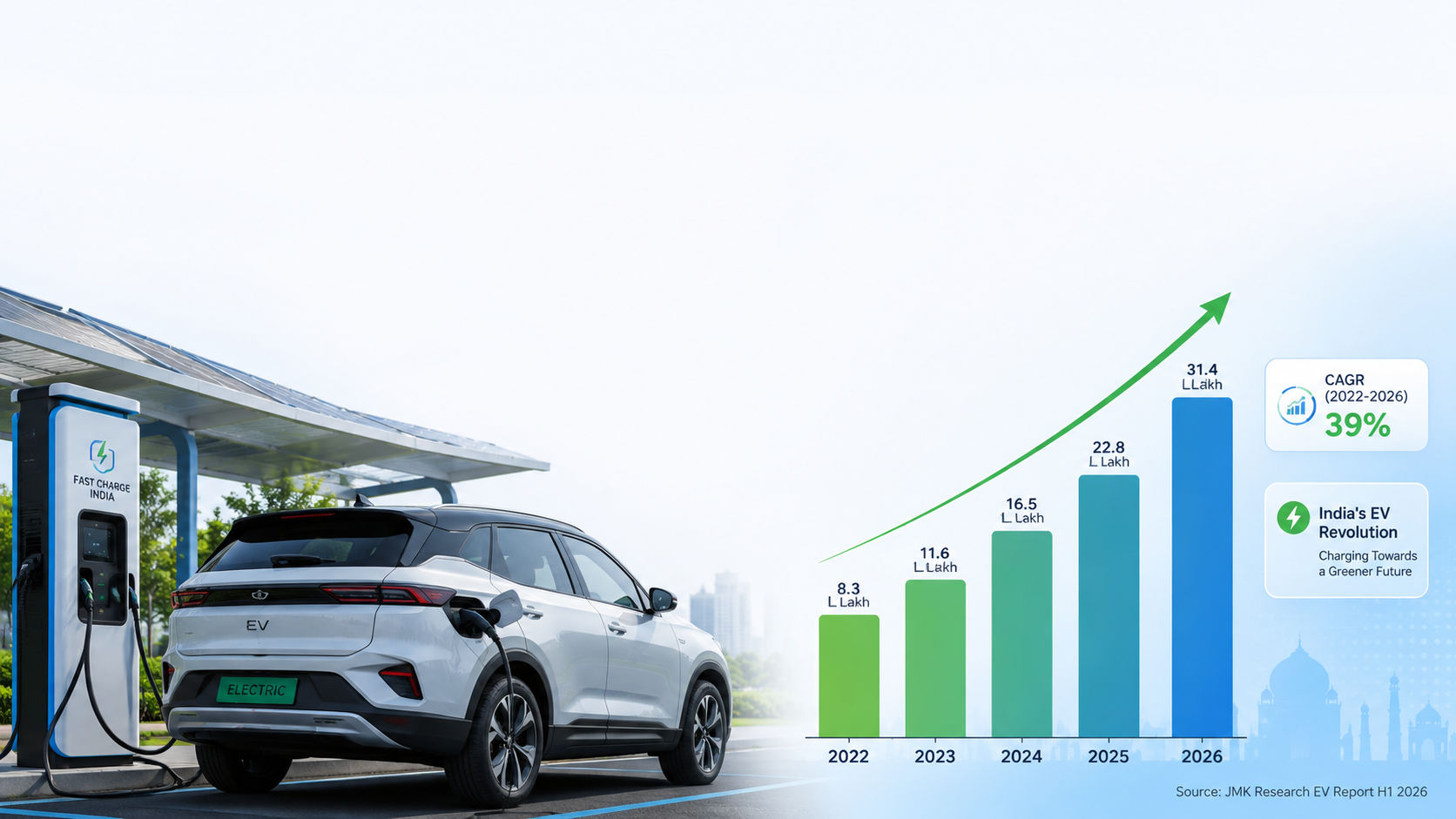
India's electric vehicle market posted a strong 43% year-on-year jump in the first half of 2026, with over 15.4 lakh units registered between January and June. Fresh data from JMK Research shows EV penetration climbing to 11.43% during this period, up from just over 8% in the same window last year.
Analysts expect this momentum to carry through the second half of 2026, backed by supportive policy moves, growing charging infrastructure, and a steadily expanding lineup of new EV models across segments.
Policy Support Fueling the Push
Government initiatives are playing a meaningful role. Delhi's EV Policy 2026 has committed roughly ₹15,000 crore (about $1.8 billion) toward accelerating EV adoption, while Bihar has revised its policy targets to push EV penetration to 30% of new vehicle registrations by 2030. JMK Research points to moves like these as key pillars strengthening the broader EV ecosystem heading into H2 2026.
How Each Segment Performed
Electric Two-Wheelers (E2W)
Two-wheelers remain the dominant EV category, with penetration climbing from 58.51% in H1 2025 to 62.53% in H1 2026. Much of this jump is linked to aggressive promotional pricing ahead of the March 2026 deadline for the PM E-Drive scheme's two-wheeler incentives, along with rising petrol prices making electric options more attractive. TVS Motor held the top spot in this segment for a second straight year, though the entry of Suzuki and Yamaha is expected to intensify competition going forward.
Electric Three-Wheelers (E3W)
Three-wheeler penetration rose sharply too — reaching nearly 74% in the passenger category and just over 60% in cargo. What's notable is that this growth held up even after PM E-Drive incentives for cargo three-wheelers were withdrawn at the end of 2025, suggesting the segment is now being driven more by genuine market demand than subsidy support.
Electric Cars
Passenger EVs saw the standout number: an 83% year-on-year sales increase. The report attributes much of this to the arrival of eight new electric car models during the period, giving buyers considerably more choice than before. Tata Motors and Mahindra continued to lead the segment ahead of rivals.
Electric Buses
Electric bus sales grew 42% year-on-year, climbing from 2,130 to 3,021 units. This growth was largely propelled by government programs — PM E-Bus Sewa and PM E-DRIVE — which awarded large fleet tenders and pushed public transport electrification forward. The segment also saw notable reshuffling among top players as market share shifted.
Electric Trucks
The smallest but fastest-growing segment, electric trucks jumped a striking 339.57% year-on-year, going from just 139 units to 611. This surge is being linked to a wider range of available truck models and growing pressure on logistics and industrial fleets to hit sustainability targets. While still an early-stage market, competitive positioning here is shifting quickly.
The Bigger Picture
Taken together, JMK Research's findings suggest India's EV growth in H1 2026 was powered by a mix of factors: intensifying competition among manufacturers, a wider range of model choices reaching buyers, rising fuel costs nudging consumers toward electric, and continued government incentive support.
FAQs
1. How much did India's EV market grow in H1 2026?
India's EV market grew by 43% year-on-year in the first half of 2026, with over 15.4 lakh units registered between January and June.
2. What is India's current EV penetration rate?
EV penetration reached 11.43% in H1 2026, up from just over 8% during the same period in 2025.
3. Which EV segment sold the most in India?
Electric two-wheelers remained the largest segment by volume, with penetration rising to 62.53% in H1 2026, led by TVS Motor.
4. Which company leads India's electric car segment?
Tata Motors and Mahindra continued to lead India's electric passenger car segment during H1 2026.
5. How much did electric car sales grow in India?
Electric car sales grew 83% year-on-year in H1 2026, helped by the launch of eight new EV models during the period.
6. Did electric three-wheeler sales grow despite reduced subsidies?
Yes — E3W penetration continued rising even after PM E-Drive incentives for cargo three-wheelers were withdrawn in December 2025, suggesting demand is increasingly market-driven rather than subsidy-dependent.
7. How are electric buses performing in India?
Electric bus sales rose 42% year-on-year, from 2,130 to 3,021 units, driven largely by government programs like PM E-Bus Sewa and PM E-DRIVE.
8. What's driving the growth in electric trucks?
Electric truck sales grew 339.57% year-on-year, from 139 to 611 units, driven by a wider range of available models and industrial fleets pursuing sustainability targets.
9. What policy support exists for EVs in India in 2026?
Delhi's EV Policy 2026 has allocated around ₹15,000 crore ($1.8 billion) for EV adoption, while Bihar has set a target of 30% EV penetration in new vehicle registrations by 2030.
10. Will India's EV growth continue in H2 2026?
Analysts expect growth to continue through the second half of 2026, supported by ongoing policy initiatives, expanding charging infrastructure, and new EV launches across segments.
Advertisement
Found this helpful?
Share with your friends & EV community