EV Battery Recycling Breakthrough Could Transform the Future of Electric Mobility
Quick Summary
The future of electric mobility depends not only on producing better batteries but also on recovering valuable materials efficiently at the end of their lifecycle. Technologies capable of near-complete lithium recovery could help create a truly circular battery economy and reduce long-term
Enjoyed this article?
Advertisement
The rapid growth of electric vehicles is creating a new challenge for the automotive industry: what happens to EV batteries once they reach the end of their usable life? A major advancement in battery recycling technology may provide an answer.
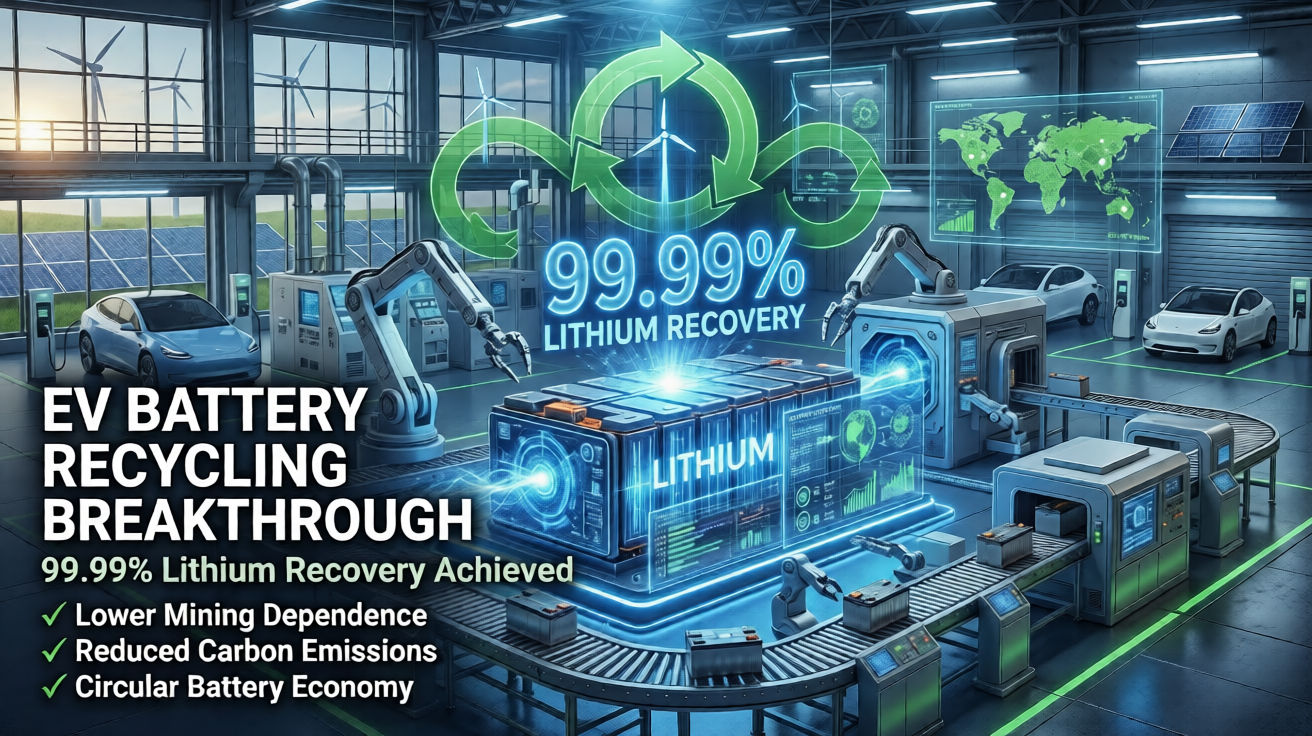
Researchers have developed an innovative battery recycling process capable of recovering nearly all of the lithium contained in used lithium-ion batteries. Early findings indicate recovery rates as high as 99.99%, making it one of the most promising developments in battery recycling to date.
If successfully commercialized, the technology could reduce dependence on newly mined lithium, improve supply chain stability, and strengthen the circular economy for electric vehicles.
Why Battery Recycling Is Becoming Critical
Electric vehicle adoption continues to accelerate globally. As more EVs enter the market, demand for critical battery materials such as lithium, nickel, cobalt, and manganese is rising rapidly.
Industry analysts expect battery demand to increase significantly over the next decade. While mining remains the primary source of these materials, recycling is increasingly viewed as a strategic solution for securing long-term supply and reducing environmental impact.
High-efficiency recycling can help recover valuable materials from retired batteries and return them to the manufacturing process.
Limitations of Existing Recycling Methods
Most battery recycling facilities currently rely on one of three approaches:
Thermal Recycling
This method uses high temperatures to process battery materials. While effective for recovering certain metals, it often results in lithium losses and consumes large amounts of energy.
Chemical-Based Recycling
Chemical extraction methods can recover a wider range of materials but typically require significant chemical usage and multiple purification stages.
Mechanical Processing
Batteries are shredded into a material commonly referred to as black mass. Additional refining is required before valuable metals can be extracted.
Although these methods recover important materials, lithium recovery rates are often lower than desired, limiting overall efficiency.
What Makes the New Technology Different?
The newly developed process focuses on maximizing lithium extraction while maintaining high recovery rates for other valuable battery metals.
Key advantages include:
Up to 99.99% lithium recovery
High recovery rates for nickel, cobalt, and manganese
Reduced energy consumption
Lower chemical usage
Improved material purity
Potential for battery-grade material production
The recovered materials can potentially be reintroduced into battery manufacturing, reducing the need for newly mined resources.
Simplified Recycling Process
The recycling workflow generally follows these stages:
1. Battery Collection
Used electric vehicle batteries are collected and prepared for recycling.
2. Material Processing
Battery cells are safely dismantled and processed into recyclable material streams.
3. Selective Extraction
Advanced extraction techniques separate lithium and other valuable metals from the battery material.
4. Purification
Recovered materials are refined to high-purity standards suitable for industrial reuse.
5. Manufacturing Reuse
The recycled materials can then be used in the production of new batteries.
Estimated Recovery Performance
Laboratory testing has demonstrated exceptionally high recovery rates:
Material | Recovery Rate |
|---|---|
Lithium | Up to 99.99% |
Nickel | Above 99% |
Cobalt | Above 98% |
Manganese | Above 98% |
These figures represent some of the highest recovery efficiencies reported in battery recycling research.
Environmental Advantages
Reduced Dependence on Mining
Lithium extraction requires substantial water, energy, and land resources. Improved recycling could help reduce the need for additional mining operations.
Lower Carbon Footprint
Producing battery materials from recycled sources generally generates fewer emissions compared to extracting and refining virgin materials.
Less Waste Generation
Millions of EV batteries are expected to retire over the coming years. Advanced recycling technologies can prevent valuable resources from being discarded and reduce environmental risks associated with battery waste.
Economic Impact on the EV Industry
Efficient recycling offers several economic benefits:
Reduced raw material costs
Greater supply chain resilience
Improved access to critical minerals
Reduced exposure to commodity price fluctuations
Growth opportunities for battery recycling companies
As battery material demand rises, recycling could become an increasingly important component of the global EV ecosystem.
Challenges Ahead
Despite promising laboratory results, several obstacles remain before large-scale adoption becomes possible.
Scaling the Technology
The process must demonstrate similar performance at commercial recycling facilities.
Cost Competitiveness
Industrial implementation will need to remain economically viable compared with existing recycling methods.
Battery Chemistry Variations
Different battery chemistries may require customized recycling approaches.
Collection Networks
Efficient battery collection and logistics systems are essential for maximizing recycling volumes.
Outlook for the Future
Battery recycling is expected to play a crucial role in the long-term sustainability of electric mobility. Innovations capable of recovering nearly all lithium from end-of-life batteries could significantly reduce pressure on mining operations while strengthening domestic supply chains.
As governments, automakers, and battery manufacturers continue investing in recycling infrastructure, high-efficiency recovery technologies may become a cornerstone of the next generation EV ecosystem.
The coming years will determine whether this breakthrough can move from laboratory success to commercial reality, but its potential impact on the global electric vehicle industry is substantial.
FAQs
1. What is the new EV battery recycling breakthrough?
Researchers have developed a recycling process that can recover up to 99.99% of lithium from used lithium-ion batteries while also recovering other valuable metals at high purity levels.
2. Why is lithium recovery important?
Lithium is a critical raw material used in EV batteries. Recovering it efficiently reduces the need for new mining and improves supply chain sustainability.
3. How does battery recycling benefit the environment?
Battery recycling reduces mining activity, lowers carbon emissions, conserves natural resources, and prevents battery waste from ending up in landfills.
4. Can recycled lithium be used in new EV batteries?
Yes. High-purity recycled lithium can potentially be processed into battery-grade materials suitable for manufacturing new EV batteries.
5. Which materials can be recovered besides lithium?
Advanced recycling methods can also recover nickel, cobalt, manganese, copper, and other valuable battery components.
6. Is this technology commercially available today?
The technology is still being evaluated for large-scale commercial deployment. Industrial validation will be required before widespread adoption.
7. How could this affect EV prices?
Improved recycling could reduce raw material costs over time, which may contribute to lower battery manufacturing costs and potentially more affordable EVs.
8. Why is battery recycling important for the future of EVs?
As millions of EV batteries reach end-of-life in the coming years, recycling will help secure critical materials and support a sustainable circular economy for electric mobility.
Advertisement
Found this helpful?
Share with your friends & EV community