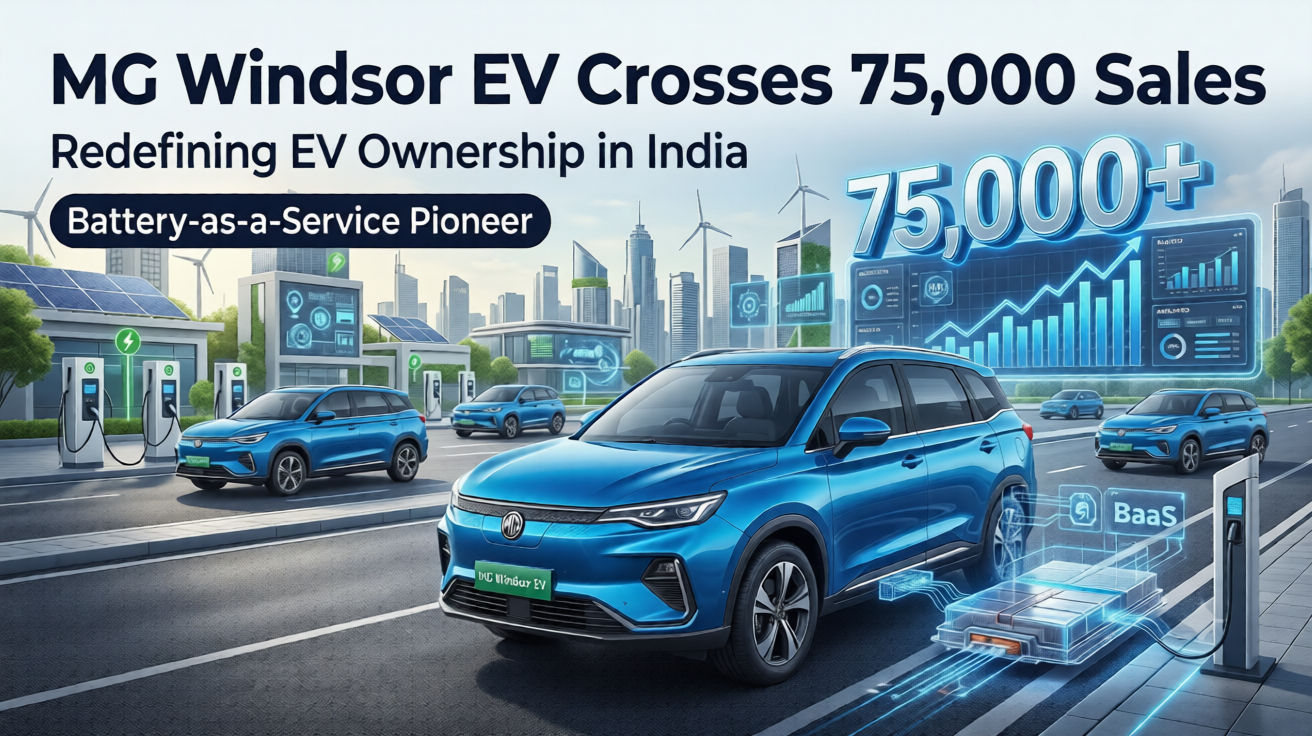
MG Windsor EV Crosses 75,000 Sales Milestone, Reshaping India's Electric Vehicle Ownership Model
Quick Summary
MG Windsor EV surpasses 75,000 sales in under two years, becoming one of India's most influential electric vehicles and popularizing the Battery-as-a-Service ownership model.
Enjoyed this article?
Advertisement
MG Windsor EV Achieves 75,000 Sales Milestone in Record Time
The MG Windsor EV has crossed an impressive 75,000-unit sales milestone in less than two years, cementing its position as one of India's most successful electric vehicles. While the achievement highlights the growing demand for EVs in the country, industry experts believe the Windsor's biggest impact goes beyond sales numbers.
The electric crossover introduced a unique ownership concept that challenged conventional EV buying patterns and influenced several major automakers to rethink how electric vehicles are priced and sold.
A New Approach to EV Ownership
When the MG Windsor EV entered the market, one of the biggest concerns among potential buyers was the high upfront cost associated with electric vehicles.
To address this challenge, MG Motor India launched its innovative Battery-as-a-Service (BaaS) program.
Under this model:
Customers purchase the vehicle separately.
Battery costs are not included in the vehicle's upfront price.
Users pay a monthly fee based on battery usage.
The overall purchase cost becomes significantly lower.
This strategy helped make electric vehicle ownership more accessible for a wider range of Indian consumers.
Breaking Traditional EV Pricing Barriers
Before the Windsor's launch, most EV buyers were required to pay the full cost of the vehicle, including the battery pack, which often accounts for a large portion of the total vehicle price.
MG's BaaS model changed that equation by offering:
Key Benefits
✅ Lower initial purchase price
✅ Flexible ownership options
✅ Reduced financial burden
✅ Better affordability for first-time EV buyers
✅ Improved access to electric mobility
The concept quickly gained attention among consumers looking for practical and cost-effective alternatives.
Industry-Wide Impact
The success of the Windsor EV's Battery-as-a-Service strategy has influenced several major automobile manufacturers.
Industry players have started exploring similar ownership models to attract EV buyers.
Several brands have introduced or expanded flexible battery ownership programs as they seek to reduce entry barriers and accelerate electric vehicle adoption across India.
Analysts believe the Windsor helped shift the industry's focus from vehicle pricing alone to overall ownership economics.
Changing Consumer Priorities
The Indian EV market has matured significantly over the past few years.
Today's buyers are increasingly evaluating:
Monthly ownership costs
Charging expenses
Financing flexibility
Maintenance requirements
Long-term savings
As a result, consumers are looking beyond just driving range and battery capacity.
The Windsor EV's success demonstrates that affordability and ownership flexibility can play an equally important role in purchasing decisions.
Strong Demand Reflects Growing EV Adoption
The 75,000-unit milestone highlights the growing acceptance of electric vehicles among Indian buyers.
Several factors are contributing to this trend:
Growth Drivers
Rising fuel prices
Improved charging infrastructure
Government incentives
Lower running costs
Greater EV awareness
Expanding model choices
The Windsor EV has benefited from these market conditions while offering a unique value proposition that resonates with consumers.
What This Means for India's EV Industry
Industry experts view the Windsor's success as an important milestone in India's electric mobility journey.
The vehicle has demonstrated that:
Innovative ownership models can accelerate EV adoption.
Consumers are open to alternative financing structures.
Affordability remains a key factor in purchasing decisions.
New business models can reshape industry practices.
As competition in the EV segment intensifies, manufacturers are expected to continue experimenting with customer-centric ownership solutions.
Looking Ahead
With EV adoption gaining momentum, flexible ownership programs could become increasingly common across the automotive industry.
Manufacturers are likely to focus on:
Subscription-based models
Battery leasing solutions
Flexible financing plans
Mobility-as-a-Service offerings
Lower-cost ownership packages
The success of the MG Windsor EV suggests that innovation in ownership models may become just as important as innovation in vehicle technology.
FAQs
How many MG Windsor EV units have been sold?
The MG Windsor EV has crossed 75,000 sales in less than two years since its launch.
What is Battery-as-a-Service (BaaS)?
Battery-as-a-Service allows customers to purchase an EV without paying the full battery cost upfront and instead pay separately for battery usage.
Why is the Windsor EV considered important for the EV market?
The Windsor EV popularized flexible ownership models, making electric vehicles more affordable and accessible to Indian consumers.
Has the BaaS model influenced other manufacturers?
Yes. The success of the model has encouraged several automakers to explore similar battery ownership and financing options.
What factors are driving EV growth in India?
Improved charging infrastructure, lower running costs, government incentives, and rising fuel prices are contributing to increasing EV adoption.
Conclusion
The MG Windsor EV's 75,000-unit sales milestone is more than a commercial success. It represents a shift in how consumers and manufacturers think about electric vehicle ownership. By introducing a flexible Battery-as-a-Service model, the Windsor demonstrated that affordability and innovation can work together to accelerate EV adoption.
As India's electric mobility ecosystem continues to evolve, the Windsor EV will likely be remembered not only for its sales achievements but also for helping redefine the economics of EV ownership.
Advertisement
Found this helpful?
Share with your friends & EV community