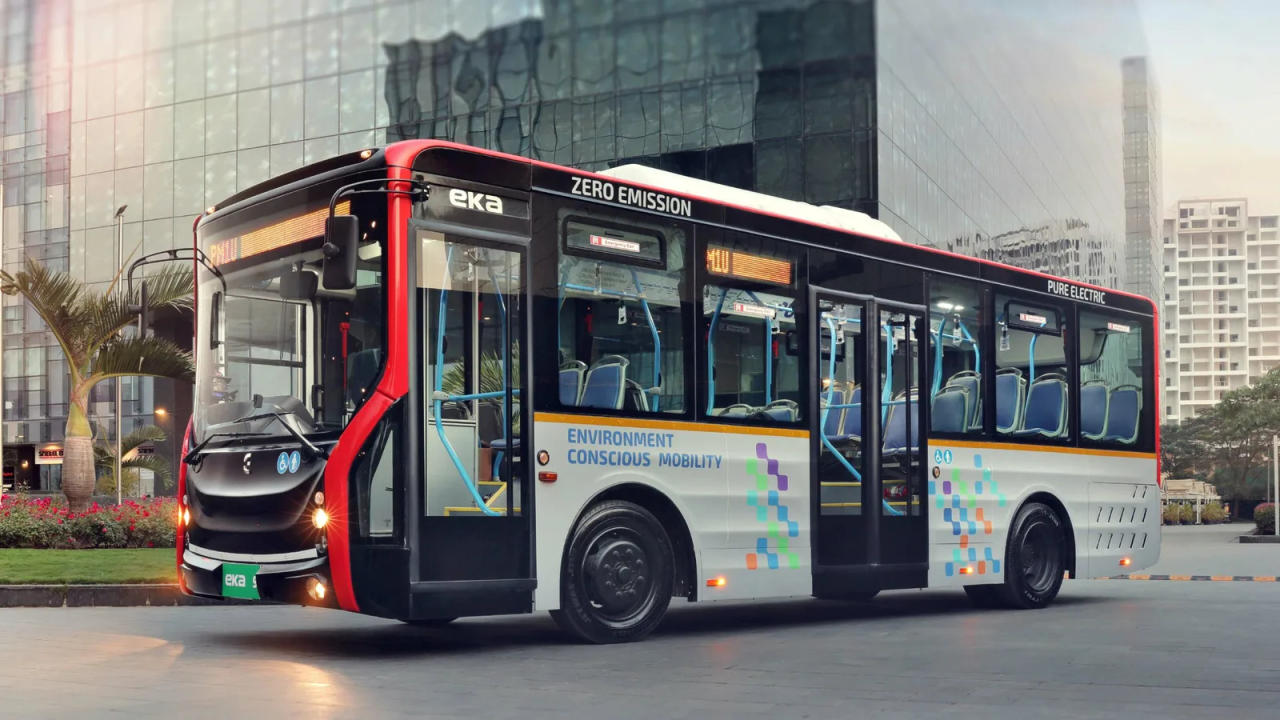
The Brihanmumbai Electric Supply and Transport (BEST) Undertaking has signed contracts for 1,500 air-conditioned electric midi-buses under the Centre's PM E-Drive scheme. The agreements were signed on 12 November 2026. Two operators will supply and run the fleet, one with EKA buses and the other with Switch buses, over a 12-year contract.
The contracts came out of a national competitive bidding process run by Convergence Energy Services Limited (CESL), the state-owned agency that pools e-bus demand across cities under PM E-Drive. The BEST Committee approved the awards before the agreements were signed.
Who supplies what
The order is split 70:30 between two operators:
| Operator | Bus brand | Buses | Depots |
|---|
| Mumbai Vidyut Vahan Operation Pvt Ltd | EKA | 1,050 | 10 |
| SaiGreen EVM Pvt Ltd | Switch | 450 | 2 |
| Total | | 1,500 | 12 |
Bus specifications
All the buses are 9-metre, 28-seat midi-buses built for dense city routes. The main specifications are:
- Range: at least 200 km per charge, from modular battery packs mounted on the roof and at the rear
- Accessibility: 400 mm ultra-low entry floor with a kneeling function, automatic wheelchair ramp and a dedicated wheelchair bay with accessible seating
- Chassis: full air suspension on both axles, disc brakes front and rear
- Safety: fire detection and suppression system (FDSS), 360-degree CCTV, live GPS tracking and remote telematics
- Passenger comfort: air-conditioning and a USB charging port at every seat
How the contract works
BEST is not buying the buses. It is leasing them on a gross-cost contract (GCC) wet lease for 12 years. The operators supply the buses, drivers and maintenance, and BEST pays them a fixed rate per kilometre. Each bus is assured 64,800 km of operation a year, which works out to about 178 km a day, comfortably within the 200 km minimum range.
BEST keeps control of route planning and depot schedules, deploys conductors, collects the fares and keeps all advertising revenue from the buses. Because the operator is paid per kilometre and BEST keeps the fares, the operator carries the vehicle and battery risk and BEST carries the ridership risk.
Rollout timeline
- By March 2027: about 225 buses in service
- By March 2028: the remaining 1,275 buses inducted in phases, completing the 1,500-bus fleet
Why midi-buses
BEST says the smaller buses are meant to reduce waiting times and strengthen last-mile links to Mumbai's existing and upcoming metro corridors and suburban railway stations. A 9-metre bus can reach narrow, steep roads that full-size 12-metre buses struggle with, in eastern suburbs such as Vikhroli, Bhandup and Kanjurmarg. The order is also expected to help BEST restore up to 125 routes it had discontinued.
What it means for operators and the industry
For EKA and Switch, the contract adds a large, long-term order for their 9-metre platforms. Most PM E-Drive bus volume so far has been 12-metre city buses. A 1,500-unit midi-bus award shows that cities now want smaller e-buses for feeder routes, and other city transport undertakings may follow with similar tenders.
For operators, the contract terms show where the money comes from in Indian e-bus deals. The guaranteed 64,800 km a year gives a predictable income for the 12-year term, and that helps with financing the buses. In return, operators must meet uptime and service standards across 12 depots, which need charging infrastructure built in time for the first batch.
The timeline is the main thing to watch. The first 225 buses are due by March 2027, so depot electrification and homologated vehicles have to be ready within about four months. Delivery delays have held up earlier e-bus programmes in Mumbai, and passengers are likely to judge this order by whether buses arrive on schedule.
Quick facts
- Buyer: BEST Undertaking, Mumbai
- Scheme: PM E-Drive, tendered by CESL
- Fleet: 1,500 nine-metre AC electric midi-buses (1,050 EKA, 450 Switch)
- Contract: 12-year GCC wet lease, 64,800 km per bus per year
- Full deployment: March 2028