Delhi EV Policy 2026: Charging Points to Reach 32,000
Quick Summary
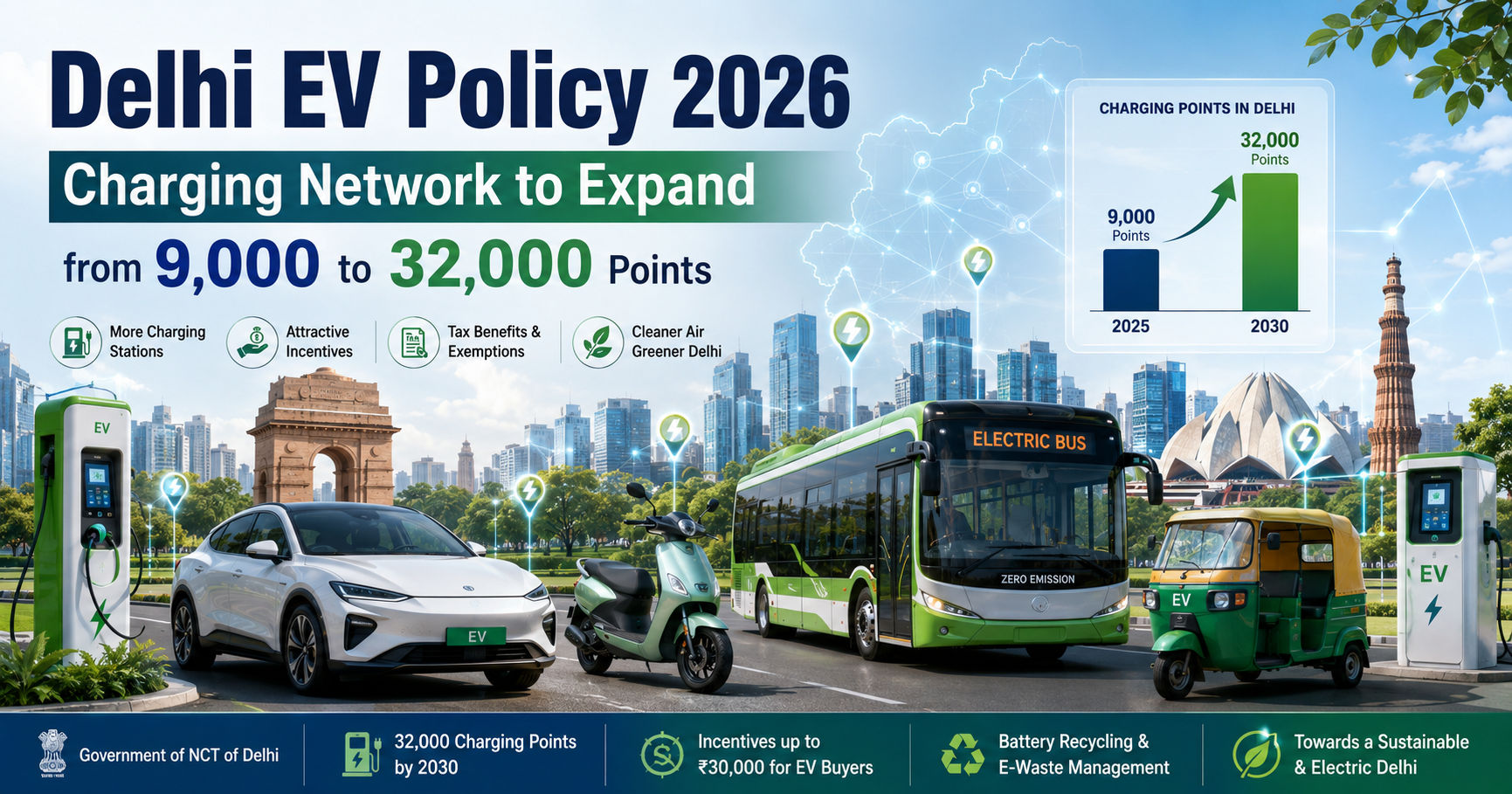
Delhi plans a major expansion of its EV charging network, aiming to increase charging points from 9,000 to 32,000 by 2030. The new EV policy also includes purchase incentives, tax exemptions, charging infrastructure development, and measures to accelerate electric vehicle adoption across the capital
Enjoyed this article?
Advertisement
The Delhi government has announced an ambitious plan to strengthen the city's electric vehicle ecosystem by significantly expanding its charging infrastructure. Under the latest EV policy, the number of charging points across the capital is expected to grow from approximately 9,000 to 32,000 by 2030.
The policy focuses on making electric mobility more accessible through improved charging availability, financial incentives, and tax benefits. Authorities have identified locations for new charging stations and introduced a streamlined approval process to speed up infrastructure development.
To encourage EV adoption, the government is offering purchase incentives for electric two-wheelers and three-wheelers, along with benefits for owners who scrap older vehicles. Buyers of eligible electric vehicles will also receive exemptions from road tax and registration charges.
The policy further promotes cleaner transportation by gradually increasing the use of electric vehicles in public and commercial sectors. Future registrations of certain petrol and CNG vehicle categories will be phased out in favor of electric alternatives.
In addition to transportation goals, the initiative includes plans for battery recycling, e-waste management, and power grid upgrades to support long-term growth in EV usage. The government believes these measures will help reduce emissions, improve air quality, and accelerate the transition toward sustainable mobility in Delhi.
FAQs
1. What is Delhi's new EV Policy?
Delhi's new EV Policy aims to accelerate electric vehicle adoption through subsidies, tax exemptions, and expanded charging infrastructure.
2. How many EV charging points are planned in Delhi?
The government plans to increase charging points from around 9,000 to 32,000 across the city by 2030.
3. Will electric vehicles receive financial incentives?
Yes. Eligible electric two-wheelers, three-wheelers, and other EV categories can receive incentives and subsidies under the policy.
4. Are there tax benefits for EV buyers?
Electric vehicles covered under the policy may receive road tax and registration fee exemptions.
5. What support is available for scrapping old vehicles?
Vehicle owners who scrap older vehicles may qualify for additional incentives and benefits when purchasing an electric vehicle.
6. When will only electric autorickshaws be registered?
The policy proposes that new autorickshaw registrations transition to electric-only from 2027.
7. How will Delhi support EV charging infrastructure?
The government plans to establish new charging stations, simplify approvals, and involve power distribution companies and housing societies.
8. Does the policy include battery recycling?
Yes. The policy includes provisions for battery recycling, e-waste management, and sustainable disposal systems.
9. How will the policy help reduce pollution?
Increased EV adoption can reduce vehicle emissions, helping improve air quality and support cleaner urban transportation.
10. Will commercial vehicles also benefit?
Yes. The policy includes incentives and operational benefits for electric commercial vehicles and trucks to encourage cleaner logistics and transportation.
Advertisement
Found this helpful?
Share with your friends & EV community