

Tata Harrier EV Buyer's Guide 2026: 65 vs 75 kWh, RWD vs QWD, Which Variant to Buy and Real-World Range
7 min
EV news, prices & data for India
The Ola S1 X Gen 3 starts at ₹80,999 and comes with five battery options up to 5.2 kWh. Here's every variant with price and range, the one we'd buy, charging time, running cost, warranty and Ola's service record.
Advertisement
The Ola S1 X is Ola Electric's budget scooter and one of the cheapest ways to get a full-size electric scooter in India. The Gen 3 range starts at just ₹80,999 ex-showroom and offers five versions with batteries from 2 kWh to 5.2 kWh, including a long-range S1 X+ with Ola's own 4680 Bharat Cell. On price and claimed range, it's hard to beat. The bigger question for many buyers in 2026 is Ola's after-sales service, which we cover honestly below.
| Variant | Battery | Claimed range (IDC) | Ex-showroom |
|---|---|---|---|
| S1 X 2 kWh | 2 kWh | 108 km | ₹80,999 |
| S1 X 3 kWh | 3 kWh | 176 km | ₹1,03,999 |
| S1 X 4 kWh | 4 kWh | 242 km | ₹1,19,999 |
| S1 X+ 4 kWh | 4 kWh | 242 km | ₹1,21,999 |
| S1 X+ 5.2 kWh (4680 Bharat Cell) | 5.2 kWh | 320 km | ₹1,49,999 |
Ex-showroom prices verified in November 2026. The PM E-Drive incentive for electric two-wheelers applies until March 2028; ask your dealer how it's reflected in your price. Ola frequently runs offers, so always confirm the final on-road price.
On-road prices: Delhi, Mumbai, Bangalore. Full specifications: Ola S1 X page.
The battery changes more than range. Top speed rises with battery size, and the S1 X+ gets a much stronger motor:
| Version | Peak power | Top speed | Kerb weight |
|---|---|---|---|
| S1 X 2 kWh | 7 kW | 101 km/h | 105 kg |
| S1 X 3 kWh | 7 kW | 115 km/h | 109 kg |
| S1 X 4 kWh | 7 kW | 123 km/h | 113 kg |
| S1 X+ (4 and 5.2 kWh) | 11 kW | 125 km/h | 113 kg (4 kWh) |
A simple rule: take the smallest battery that covers your daily distance at least twice over, so you aren't charging every night and still have a buffer when the real-world range falls short of IDC. For most city riders doing 30–50 km a day, that means the 3 kWh or 4 kWh.
We haven't found an independent, named road test of the Gen 3 S1 X, so we can't give you a tested range figure. What we can say is that IDC figures are measured on a slow, gentle test cycle. Real-world riding with a pillion, at higher speeds, in faster riding modes or in hot weather uses noticeably more energy, so you should plan on getting clearly less than the IDC number. Treat IDC as a figure for comparing batteries, not a promise, and size your battery with a generous buffer.
For most owners, overnight home charging is the cheapest and most practical option. See our EV charging guide.
An estimate at a home tariff of ₹8 per kWh, using claimed IDC range (real-world cost per km will be higher, and charging losses add a little):
A full charge of the 4 kWh pack costs about ₹32 at home. Even if your real-world range is well below IDC, the S1 X will cost a fraction of a petrol scooter to run. Work out your own savings with our EV savings calculator.
The S1 X uses a combined braking system (CBS); ABS isn't offered. It does get hill-hold and Find My Scooter. The S1 X rides on 12-inch steel wheels with 90/90 tyres at both ends. Wear a good helmet and allow for longer braking distances at the higher top speeds of the bigger batteries.
Warranty terms for Ola's scooters have changed several times, so read the current policy carefully and keep a copy of what you're offered at booking.
We found no recall for the Gen 3 S1 X. However, after-sales service is Ola's biggest weakness, and you should factor it in:
Not every owner has problems, and many are happy with their scooters. But before buying, visit your nearest Ola service centre, ask about waiting times and parts availability, and talk to local owners. Other drawbacks: CBS only, steel wheels on the S1 X and fast charging limited to Ola's own network. On the plus side, there's a useful 34-litre under-seat storage space.
The S1 X's main rival is the TVS iQube, which costs more but is backed by TVS's large dealer network; see our S1 X vs iQube comparison. Also compare the Hero Vida V2 Pro (Vida V2 Pro vs S1 X), the Ather Konarc (Konarc vs S1 X), the Bajaj Chetak 35 Series and Ola's own S1 Pro.
On paper, the Ola S1 X offers more range and speed for the money than almost any rival, and the S1 X+ 4 kWh at ₹1,21,999 is the variant we'd choose. The S1 X 3 kWh at ₹1,03,999 is the budget pick. The catch is service: if there's a responsive Ola service centre near you, the S1 X is great value. If not, a slightly more expensive scooter from a brand with a stronger local service network may be the safer long-term choice.
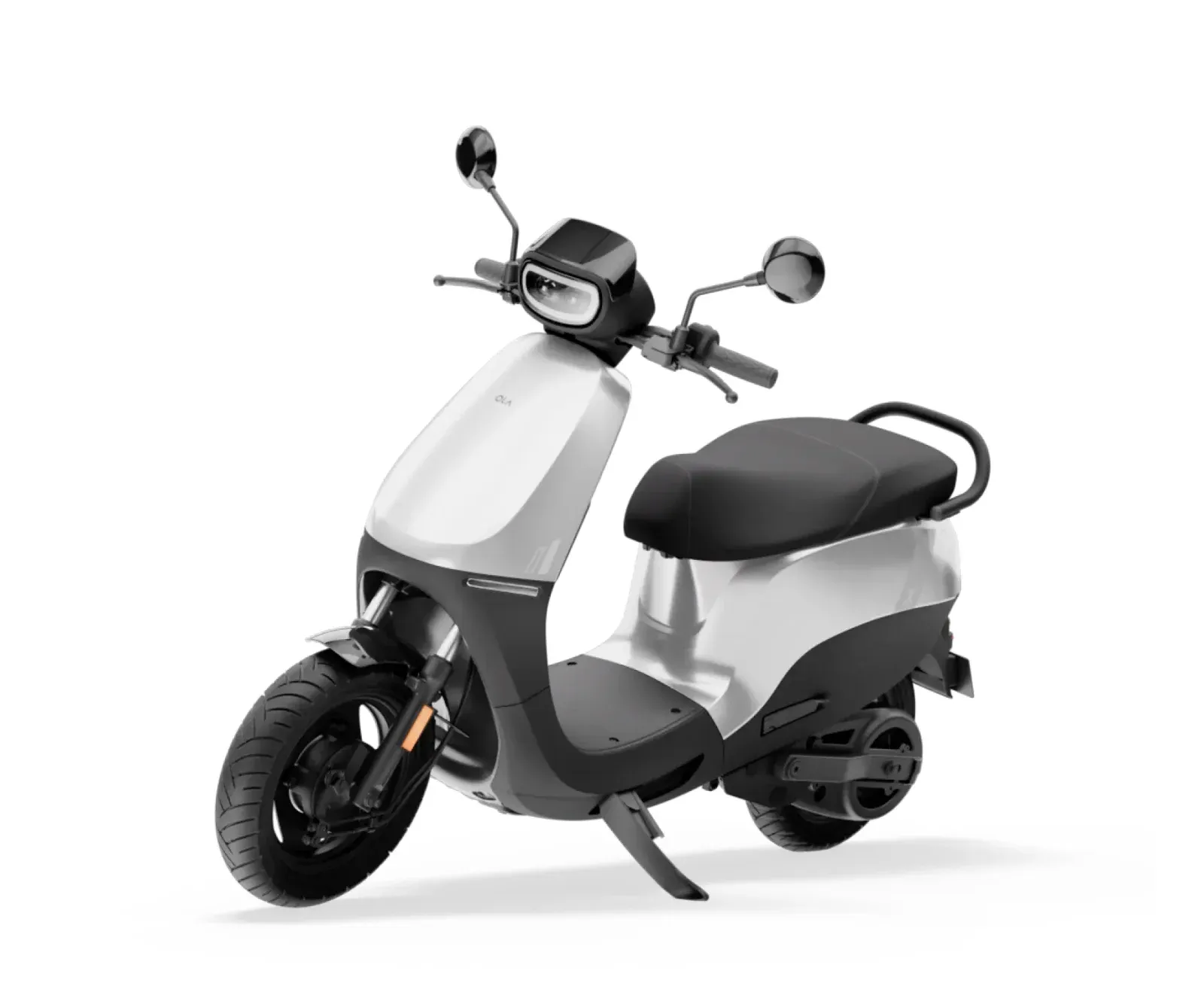
Image: Ola Electric (S1 range shown)
The S1 X+ 4 kWh at ₹1,21,999 is the best value. It costs only ₹2,000 more than the S1 X 4 kWh but has an 11 kW peak motor (against 7 kW) and a 125 km/h top speed, with the same 242 km IDC range. On a tight budget, the S1 X 3 kWh at ₹1,03,999 with 176 km IDC range suits most city commutes.
Ex-showroom prices in November 2026 are ₹80,999 (S1 X 2 kWh), ₹1,03,999 (S1 X 3 kWh), ₹1,19,999 (S1 X 4 kWh), ₹1,21,999 (S1 X+ 4 kWh) and ₹1,49,999 (S1 X+ 5.2 kWh). The PM E-Drive incentive, which runs until March 2028, applies to eligible scooters; check the current amount with your dealer.
Claimed IDC ranges are 108 km (2 kWh), 176 km (3 kWh), 242 km (4 kWh) and 320 km (5.2 kWh). We haven't found an independent, named road test of the Gen 3 S1 X, so we can't give a tested figure. Expect real-world range to be clearly lower than IDC, especially in faster riding modes.
ZigWheels lists 4 hours 50 minutes for 0–80% on the 4 kWh pack using the 750 W portable charger. Ola does not publish per-pack charging times for the S1 X. On Ola's own Hypercharger network, 10–70% takes about 35 minutes, according to Ola.
No. The S1 X uses a combined braking system (CBS), not ABS. It does get hill-hold and Find My Scooter.
The scooter is covered for 3 years or 40,000 km, and the battery for 3 years or 50,000 km under Ola's warranty policy, with paid extended battery warranty plans available. Ola's warranty terms have changed over time, so confirm them before buying.
Advertisement

