Tata Tiago EV Buyer's Guide 2026: Real-World Range, Which Variant to Buy, Charging Time and Running Cost
7 min
EV news, prices & data for India
Our 2026 Tata Harrier EV buying guide: all 18 variant prices, 65 vs 75 kWh, RWD vs QWD, the best-value variant, ~401 km real-world range, BaaS, charging time, running cost, safety and known issues.
Advertisement
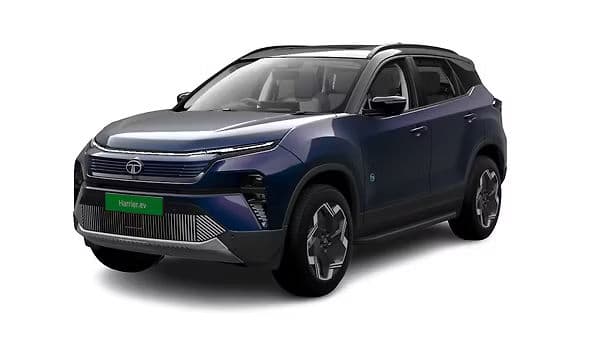
The Tata Harrier EV is Tata's most powerful car. It's a full-size five-seat electric SUV with a choice of two batteries, rear-wheel drive or dual-motor all-wheel drive (Tata calls it QWD), and a 5-star Bharat NCAP rating with full marks for adult protection. It also has one of the longest price lists in the segment, with 18 versions running from ₹21.79 lakh to ₹30.54 lakh. This guide narrows those down to the few that make sense.
| Variant | Battery | Claimed range | Ex-showroom |
|---|---|---|---|
| Adventure 65 | 65 kWh | 538 km (MIDC P1+P2) | ₹21.79 lakh |
| Adventure 65 ACFC | 65 kWh | 538 km (MIDC P1+P2) | ₹22.29 lakh |
| Adventure S 65 | 65 kWh | 538 km (MIDC P1+P2) | ₹22.29 lakh |
| Adventure S 65 ACFC | 65 kWh | 538 km (MIDC P1+P2) | ₹22.79 lakh |
| Fearless+ 65 | 65 kWh | 538 km (MIDC P1+P2) | ₹24.29 lakh |
| Fearless+ 65 ACFC | 65 kWh | 538 km (MIDC P1+P2) | ₹24.79 lakh |
| Fearless+ 75 | 75 kWh | 627 km (MIDC P1+P2) | ₹25.29 lakh |
| Fearless+ 75 ACFC | 75 kWh | 627 km (MIDC P1+P2) | ₹25.79 lakh |
| Fearless+ QWD 75 | 75 kWh | 622 km (MIDC P1+P2) | ₹26.79 lakh |
| Fearless+ QWD 75 ACFC | 75 kWh | 622 km (MIDC P1+P2) | ₹27.29 lakh |
| Empowered 75 | 75 kWh | 627 km (MIDC P1+P2) | ₹27.79 lakh |
| Empowered 75 ACFC | 75 kWh | 627 km (MIDC P1+P2) | ₹28.29 lakh |
| Empowered 75 Stealth | 75 kWh | 627 km (MIDC P1+P2) | ₹28.54 lakh |
| Empowered 75 Stealth ACFC | 75 kWh | 627 km (MIDC P1+P2) | ₹29.04 lakh |
| Empowered QWD 75 | 75 kWh | 622 km (MIDC P1+P2) | ₹29.29 lakh |
| Empowered QWD 75 ACFC | 75 kWh | 622 km (MIDC P1+P2) | ₹29.79 lakh |
| Empowered QWD 75 Stealth | 75 kWh | 622 km (MIDC P1+P2) | ₹30.04 lakh |
| Empowered QWD 75 Stealth ACFC | 75 kWh | 622 km (MIDC P1+P2) | ₹30.54 lakh |
Ex-showroom prices as of November 2026. "ACFC" versions cost ₹50,000 more and come bundled with the 7.2 kW AC fast charger. Confirm current prices and offers with your dealer.
Battery-as-a-Service (BaaS): since 28 September 2026, Tata has offered the Harrier EV with BaaS. Autocar India reported an upfront price of ₹14.49 lakh for the entry 65 kWh variant, with a battery usage cost of about ₹5.9 per km (worked out on 60 km a day), plus charging costs.
On-road prices: Delhi, Mumbai, Bangalore. Full specifications: Tata Harrier EV page.
On the Fearless+, the step from 65 kWh to 75 kWh costs ₹1 lakh (₹24.29 lakh to ₹25.29 lakh) and adds 89 km of claimed range. That's the easiest upgrade to justify. QWD costs another ₹1.50 lakh over the 75 kWh RWD. It's worth paying for if you regularly drive on slippery hill roads or bad tracks, or you simply want the performance. Otherwise, rear-wheel drive is enough for most Indian driving. Note that QWD adds weight (2,335 kg in Autocar India's test) and gives up some frunk space (35 litres against 67 litres).
Feature details are from Autocar India's variant breakdown. Each trim adds to the one below it.
Autocar India's road test of the 75 kWh QWD recorded about 401 km on a full charge, against a claimed 622 km (about 64%). In a separate head-to-head, the lighter Sierra EV AWD went further on the same battery size, which Autocar India attributed partly to the Harrier's extra 205 kg of weight.
We haven't found an independent road test of the 65 kWh or 75 kWh RWD versions. Rear-wheel-drive cars should do better than the QWD because they carry one motor and less weight, but we won't guess a figure. Expect a sizeable gap to the claimed numbers, as with every car on this list.
| Charger | Time |
|---|---|
| 7.2 kW AC wall box | ~10.7 hours (75 kWh) |
| DC fast charger, up to 120 kW (20–80%) | ~25 minutes (claimed) |
Ten-plus hours on a 7.2 kW charger means an overnight charge from very low won't always reach 100% by morning. That's rarely a problem in daily use, because you'll seldom start from empty. Public chargers that can actually deliver 120 kW are still limited, so expect longer stops on slower units. Read more in our EV charging guide.
These are estimates worked out from battery size and range, ignoring charging losses.
Under BaaS, add the ₹5.9 per km battery usage cost. Try your own figures in the EV savings calculator.
The Harrier EV has a 5-star Bharat NCAP rating (2025), with a perfect 32/32 for adult occupant protection and 45/49 for child occupant protection. Six airbags are standard and seven come from the Fearless+ trim. ESC, TPMS and hill-hold are standard. Higher trims get a 360-degree camera, auto parking assist, a driver attention monitor and, on the Empowered, Level 2 ADAS.
We found no formal recall for the Harrier EV, but there are documented software complaints:
Also note that Autocar India measured just 163 mm of ground clearance laden, against Tata's claimed 205 mm unladen.
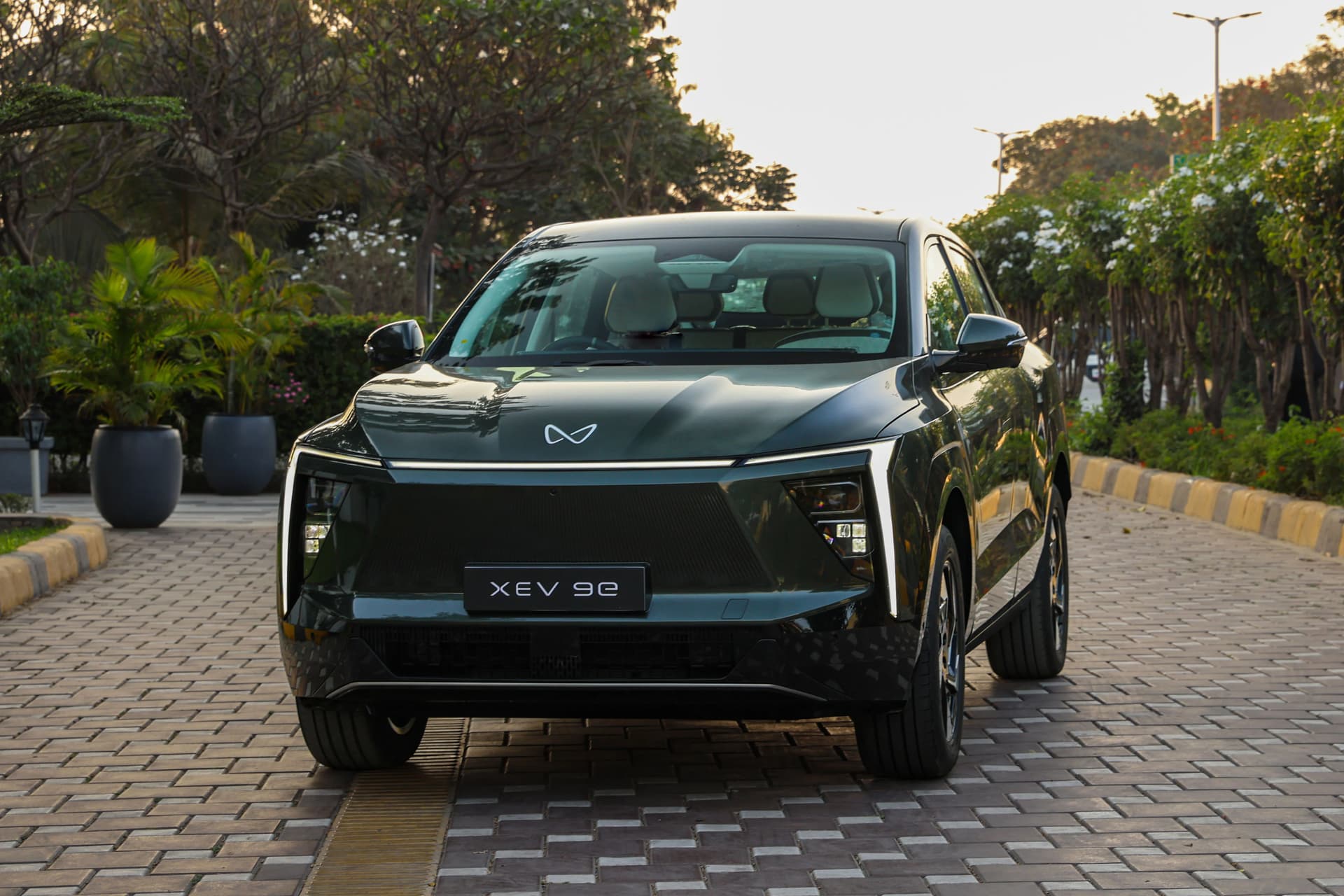
The Mahindra XEV 9e is the closest rival (see Harrier EV vs XEV 9e). Also consider the Tata Sierra EV, which offers similar batteries for less money, the BYD Atto 3 and the VinFast VF 6. Check our ranking of the longest-range electric cars in India.
The Harrier EV is safe, roomy and quick, especially as a QWD, and it comes with a lifetime battery warranty for the first owner. The weak points are a real-world range that falls well short of the claim (about 401 km for the QWD) and software that still has rough edges. The Fearless+ 75 at ₹25.29 lakh is the variant to buy. Step up to the Empowered 75 for ADAS, or to a QWD only if you'll use the all-wheel drive. Before you commit, compare it with the Sierra EV, which shares much of the same hardware for less money.
Image: Tata Motors
Autocar India recorded about 401 km from the 75 kWh Harrier EV QWD in its road test, against a claimed 622 km. The claimed figures are 538 km for the 65 kWh RWD and 627 km for the 75 kWh RWD. We have not found independent tests of the RWD versions.
The Fearless+ 75 at ₹25.29 lakh ex-showroom. It pairs the 75 kWh battery with a 360-degree camera, ventilated front seats, JBL audio, seven airbags and 19-inch wheels. The Adventure S 65 (₹22.29 lakh) is the budget pick, and the Empowered 75 (₹27.79 lakh) adds Level 2 ADAS.
For most buyers, RWD is enough. QWD adds a front motor, taking torque from 315 Nm to 504 Nm (0–100 km/h tested at 6.74 s by Autocar India), and costs ₹1.50 lakh more than the equivalent 75 kWh RWD. It also weighs more, at 2,335 kg, and has a smaller frunk.
ACFC versions cost ₹50,000 more than the regular version and come bundled with the 7.2 kW AC fast charger for home use. On that charger, the 75 kWh battery takes about 10.7 hours to charge.
Based on 75 kWh and Autocar India's 401 km real-world range (about 18.7 kWh per 100 km), home charging at ₹8 per kWh costs roughly ₹1.50 per km. Public DC charging at ₹20–25 per kWh costs ₹3.74–4.68 per km. These are estimates that ignore charging losses. Under BaaS, add about ₹5.9 per km.
Yes. It scored 5 stars in Bharat NCAP (2025), with 32/32 for adult protection and 45/49 for child protection. Six airbags are standard and seven come from the Fearless+ trim, and Level 2 ADAS is on the Empowered trims.
Advertisement