Tata Harrier EV Buyer's Guide 2026: 65 vs 75 kWh, RWD vs QWD, Which Variant to Buy and Real-World Range
7 min
EV news, prices & data for India
Thinking of the Tata Tiago EV? Here are all four variants with prices, 19.2 kWh vs 24 kWh, Autocar India's tested real-world range, charging times, running cost per km, safety, warranty and our pick.
Advertisement
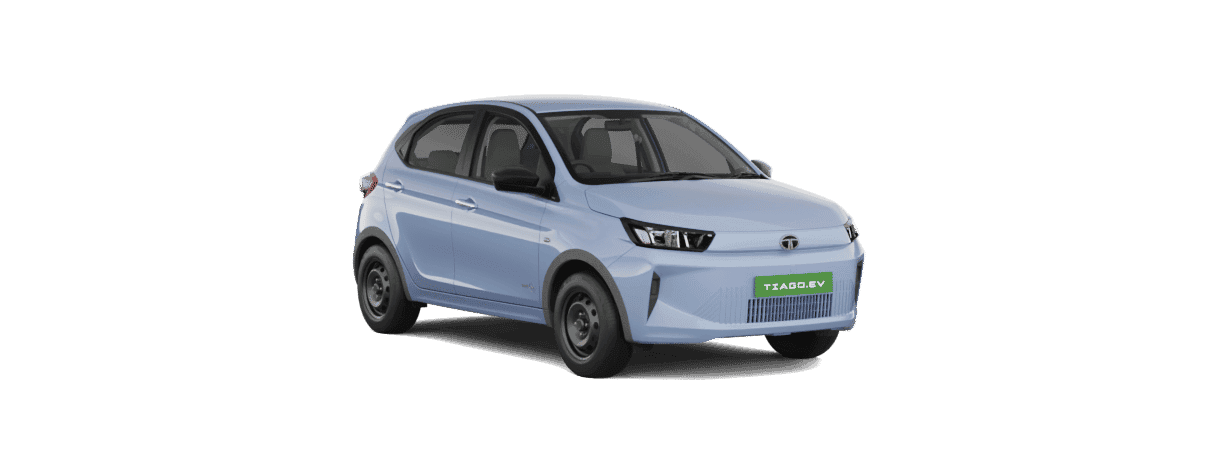
The Tata Tiago EV is the cheapest way into a Tata electric car, and one of the most affordable EVs in India with a proper five-seat, four-door body. Prices start at ₹6,99,000 ex-showroom, you get six airbags as standard, and it is one of the few cars at this price that supports DC fast charging. But with two batteries and four variants, the choice matters. Pick the wrong one and you could end up with a car that has too little range, or one that has features you don't need.
This guide covers prices, which battery to choose, the best variant, tested real-world range, charging, running cost and what to watch out for.
| Variant | Battery | Claimed range | Ex-showroom |
|---|---|---|---|
| Smart (Medium Range) | 19.2 kWh | 226 km | ₹6,99,000 |
| Pure+ (Medium Range) | 19.2 kWh | 226 km | ₹8,49,000 |
| Pure+ (Long Range) | 24 kWh | 285 km | ₹9,49,000 |
| Creative+ (Long Range) | 24 kWh | 285 km | ₹9,99,000 |
Claimed ranges are MIDC Part 1+2 figures. Ex-showroom prices verified in November 2026; insurance, registration and any road-tax waiver in your state change the final price, so confirm the on-road figure with your dealer.
On-road prices: Delhi, Mumbai, Bangalore. Full specifications: Tata Tiago EV page.
This is the most important decision, and for most buyers the 24 kWh Long Range is worth the extra money. Here's how the two compare:
Comparing like for like, the Pure+ 24 kWh costs exactly ₹1,00,000 more than the Pure+ 19.2 kWh. Since real-world range on a small EV falls well below the claim (see below), that extra buffer makes a real difference on longer days, highway runs and in summer, when the air-conditioner is running all the time. The 19.2 kWh makes sense only if you drive less than about 60–80 km a day, mostly in the city, and can charge at home every night.
Feature lists change with Tata's frequent updates, so check the brochure for the exact equipment on each variant before you book. If ₹10 lakh is your limit, also see our list of electric cars under ₹10 lakh.
Autocar India ran a 24 kWh Tiago EV (from the earlier Tiago EV line-up, with the same battery size) as a long-term test car and estimated a real-world range of about 187 km on a full charge in mixed conditions, with an efficiency of 7.77 km per kWh. That is about two-thirds of the 285 km claim. In one month of use, the same car averaged 8.3 km per kWh, and it completed a roughly 150 km Mumbai–Pune run, including the ghat climb, on one charge with about 10% battery left.
We haven't found a named road test of the 19.2 kWh version. Expect a similar shortfall against its 226 km claim. In practice, the 24 kWh Tiago EV comfortably covers a few days of city driving between charges, but it isn't built for long highway trips. Autocar India noted that sustained speeds of 80–100 km/h drain the battery quickly.
| Charger | 19.2 kWh | 24 kWh |
|---|---|---|
| 7.2 kW AC (10–100%) | ~2.6 h | ~3.5–3.6 h |
| 3.3 kW AC (10–100%) | ~6.9 h | ~8.7 h |
| 30 kW DC (10–80%) | ~35 min | ~35 min |
| 30 kW DC (20–80%) | ~30 min | ~30 min |
The charging port is the standard CCS2 type, so the Tiago EV works with most public fast chargers. For daily use, overnight charging at home on a 3.3 kW or 7.2 kW wall box is the cheapest option. Ask your dealer which charger is included with your variant and what installation costs. Our EV charging guide explains wall boxes, wiring and public charging apps.
Here's an estimate based on battery size, range and a home tariff of ₹8 per kWh (tariffs vary by state and slab, and charging losses add a little):
So, realistically, budget around ₹1 per km on home charging, or about ₹1,000 for 1,000 km a month. If your current petrol hatchback returns 18 km per litre with petrol at ₹100, it costs about ₹5.6 per km, so the saving is roughly ₹4.5 per km. Public DC fast charging costs much more per unit than home charging, so the savings shrink if you rely on it. Work out your own numbers with our EV savings calculator.
Every Tiago EV gets six airbags, ABS with EBD, corner stability control, a tyre pressure monitoring system (TPMS), a rear camera, parking sensors, speed-sensing auto door lock and impact-sensing auto unlock. However, the Tiago EV has not been crash-tested by Bharat NCAP or Global NCAP, so there's no official star rating for the electric version. Note that it comes with a puncture repair kit, not a spare tyre.
We found no recall for the Tiago EV. Autocar India's long-term 24 kWh car reported no faults and no maintenance costs over its first few thousand kilometres, but it noted that power drops noticeably and the air-conditioning cuts out below about 15% charge to save energy. It also found road and wind noise noticeable at higher speeds. Separately, media reports have covered some Tata EV owners, including Tiago EV owners, getting recurring high-voltage "critical" warning messages. These appear to be isolated cases, but ask your dealer about software updates at every service. Other limitations are the small 240-litre boot and 14-inch steel wheels.
The Tiago EV's most direct rival is the MG Comet EV, which is smaller and has only four seats; see our Tiago EV vs Comet EV comparison. If you want a compact sedan with a bigger boot, look at the Tata Tigor EV. For more space, range and a higher seating position, the Tata Punch EV is the natural step up.
The Tiago EV is a sensible, affordable city EV with six airbags, DC fast charging and a long battery warranty. Its biggest weaknesses are real-world range (around 187 km on the 24 kWh, as tested by Autocar India), the lack of a crash-test rating and limited boot space. Our pick is the Pure+ 24 kWh at ₹9,49,000, which gives you the bigger battery without paying for extras. Choose the Smart 19.2 kWh at ₹6,99,000 only if your daily driving is short and you can charge at home.
Image: Tata Motors
Autocar India estimated about 187 km on a full charge from the 24 kWh Tiago EV in mixed driving, at an efficiency of 7.77 km per kWh. The claimed MIDC figure is 285 km. We have not found a named road test of the 19.2 kWh version, which is claimed at 226 km; expect a similar shortfall.
The Tiago EV costs ₹6,99,000 to ₹9,99,000 ex-showroom in November 2026. The 19.2 kWh battery is offered in the Smart (₹6,99,000) and Pure+ (₹8,49,000), and the 24 kWh battery in the Pure+ (₹9,49,000) and Creative+ (₹9,99,000).
The Pure+ 24 kWh at ₹9,49,000 is the best all-rounder. It costs ₹1,00,000 more than the Pure+ 19.2 kWh but adds 59 km of claimed range (285 km vs 226 km) and more power (75 hp vs 61–62 hp). Buy the Smart 19.2 kWh only if you drive short distances in the city.
On a 7.2 kW AC charger, 10–100% takes about 2.6 hours (19.2 kWh) or 3.5–3.6 hours (24 kWh). On a 3.3 kW charger it takes 6.9 hours or 8.7 hours. Both batteries support 30 kW DC fast charging, which takes about 35 minutes from 10–80%.
All Tiago EV variants get six airbags, ABS with EBD, TPMS, a rear camera and parking sensors. However, the Tiago EV has not been crash-tested by Bharat NCAP or Global NCAP, so there is no official safety rating for the electric version.
Tata covers the battery and motor for 8 years or 1,60,000 km, and the vehicle for 3 years or 1,25,000 km. Roadside assistance is also offered; confirm its duration with your dealer.
Advertisement