Tata Harrier EV Buyer's Guide 2026: 65 vs 75 kWh, RWD vs QWD, Which Variant to Buy and Real-World Range
7 min
EV news, prices & data for India
Planning to buy the Tata Curvv EV? Our 2026 guide covers the 55 kWh-only price list, Accomplished X vs Empowered X, ~365 km real-world range, BaaS, charging time, running cost, safety and known issues.
Advertisement
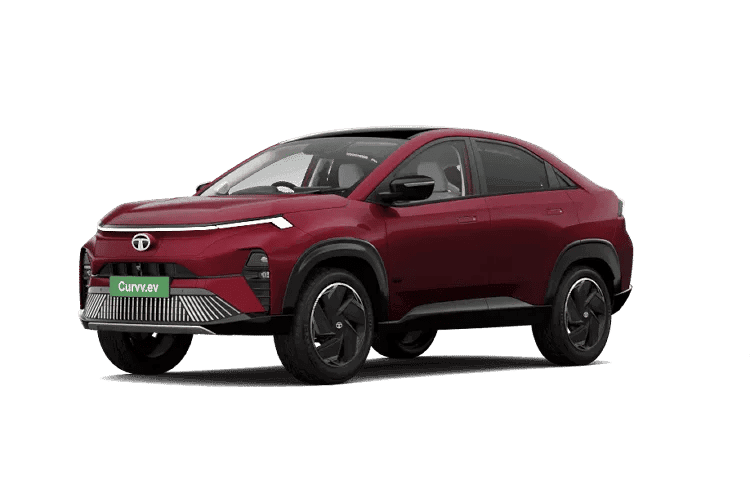
The Tata Curvv EV is Tata's coupe-styled electric SUV, sitting between the Nexon EV and the bigger Harrier EV. In May 2026 Tata dropped the smaller 45 kWh version and relaunched the car as a 55 kWh-only line-up, so every Curvv EV you can buy today has the same battery, the same 167 PS motor and the same 502 km claimed range. That makes choosing simpler: the real questions are whether the Curvv EV fits your budget and driving, and how much equipment you want.
Here's what you need to know before you sign the booking form.
| Variant | Battery | Claimed range | Ex-showroom |
|---|---|---|---|
| Accomplished X 55 | 55 kWh | 502 km (MIDC Part 1+2) | ₹17.19 lakh |
| Empowered X 55 | 55 kWh | 502 km (MIDC Part 1+2) | ₹19.39 lakh |
| Empowered X 55 Dark | 55 kWh | 502 km (MIDC Part 1+2) | ₹19.69 lakh |
Ex-showroom prices as of November 2026. Tata has revised prices more than once this year, so confirm the current figure and any offers with your dealer.
Battery-as-a-Service (BaaS): since 28 September 2026, Tata also sells the Curvv EV with BaaS. Autocar India reported an upfront price of ₹10.99 lakh for the entry 55 kWh variant, with a battery usage cost of about ₹5 per km (worked out on a 60 km daily run). That cost is on top of what you pay for electricity, so BaaS lowers the down payment but not your monthly bill. Check the current rates and loan terms at the dealership.
On-road prices: Delhi, Mumbai, Bangalore. Full specifications: Tata Curvv EV page.
With the 45 kWh pack gone, the choice is between the Accomplished X and the Empowered X trims (the Empowered X Dark is the same car with an all-black look). Both use the 55 kWh liquid-cooled NMC battery and a front-mounted motor making 167 PS and 215 Nm. Autocar India timed 0–100 km/h in 9.25 seconds, so performance is the same whichever trim you pick.
The differences are equipment, wheels and the frunk. The Accomplished X runs on 17-inch wheels with 215/60 tyres, while the Empowered X gets 18-inch wheels with 215/55 tyres and an 11.6-litre frunk. Smaller wheels with taller tyres usually ride bad roads a little better, which is worth thinking about if your daily commute is full of potholes.
The gap between the two trims is ₹2.20 lakh. If ADAS isn't a must-have, the Accomplished X covers what most families actually use.
Tata claims 502 km on the MIDC Part 1+2 test cycle. In Autocar India's road test, driven in Eco mode, the Curvv EV covered about 365 km on a full charge, roughly 73% of the claim. Autocar India's long-term Curvv EV returned 5–6 km per kWh in town, mostly in Sport mode.
In practice, 365 km means most city users will charge once or twice a week. On long highway runs, plan fast-charging stops so you reach each charger with a comfortable buffer rather than a near-empty battery. Range will drop further with high speeds, heavy air-conditioning use and a full load.
| Charger | Time (55 kWh) |
|---|---|
| 7.2 kW AC wall box (10–100%) | ~7.6–7.9 hours |
| 15A home socket | ~21 hours |
| DC fast charger, up to 70 kW (10–80%) | ~40 minutes |
A 7.2 kW wall box charges the car fully overnight, so get one installed if you have a parking spot. The 15A socket is only good for emergencies. The 70 kW DC peak is slower than some newer rivals, but a 40-minute stop fits easily into a highway meal break. Read our EV charging guide for installation tips and public network advice.
These are estimates worked out from the battery size and range figures above, and they ignore charging losses, so your actual bill will be a little higher.
Home charging is the big saving, so EV ownership makes the most sense if you can charge where you park. If you choose BaaS, add the ₹5 per km battery usage cost on top. Plug your own numbers into our EV savings calculator.
The Curvv EV has a 5-star Bharat NCAP rating (2024), with 30.81/32 for adult occupant protection and 44.83/49 for child occupant protection. Six airbags, ESC, traction control, TPMS, hill-hold, an electronic parking brake and a 360-degree camera are part of the package, and Level 2 ADAS is available on the Empowered X trims.
The lifetime battery cover applies only to the first owner. When you sell, the next owner gets 8 years / 1.6 lakh km, which may affect resale value.
We found no recall for the Curvv EV. A few things are worth knowing:
The closest rivals are the Hyundai Creta Electric, Maruti Suzuki e Vitara, Mahindra BE 6 and MG Windsor EV. If you want more space within the Tata family, look at the Tata Sierra EV, and if you want to spend less, the Tata Nexon EV. Compare them head to head: Curvv EV vs Creta Electric and BE 6 vs Curvv EV. See all your options in our list of electric cars under ₹20 lakh.
The Curvv EV gives you a 55 kWh battery, a 500-litre boot, a 5-star safety rating and a lifetime battery warranty for under ₹20 lakh. It isn't the quickest charger in its class, and its real-world range of about 365 km is well short of the 502 km claim. For most buyers, the Accomplished X 55 at ₹17.19 lakh is the one to buy. Choose the Empowered X only if you want ADAS and the extra comfort features.
Image: Tata Motors
Autocar India got about 365 km from the 55 kWh Curvv EV in its road test, driven in Eco mode. The claimed MIDC range is 502 km, so expect roughly 70–75% of the claim in mixed use.
No. Tata discontinued the 45 kWh version in May 2026. Every Curvv EV now uses the 55 kWh battery, across the Accomplished X 55, Empowered X 55 and Empowered X 55 Dark variants.
The Accomplished X 55 at ₹17.19 lakh ex-showroom. It has the same battery and motor as the top trim, plus a panoramic sunroof, ventilated front seats and a 360-degree camera. The Empowered X 55 (₹19.39 lakh) adds Level 2 ADAS, JBL audio, a powered driver seat and 18-inch wheels.
On a DC fast charger of up to 70 kW, 10–80% takes about 40 minutes. A 7.2 kW AC wall box takes about 7.6–7.9 hours for 10–100%, and a 15A home socket takes about 21 hours.
Based on 55 kWh and Autocar India's 365 km real-world range (about 15.1 kWh per 100 km), home charging at ₹8 per kWh works out to roughly ₹1.21 per km, or about ₹1,205 for 1,000 km. Public DC charging at ₹20–25 per kWh costs roughly ₹3.01–3.77 per km. These are estimates that ignore charging losses.
Yes. It has a 5-star Bharat NCAP rating (2024), scoring 30.81/32 for adult protection and 44.83/49 for child protection. Six airbags, ESC and a 360-degree camera are part of the package.
Advertisement