Enjoyed this article?

Advertisement
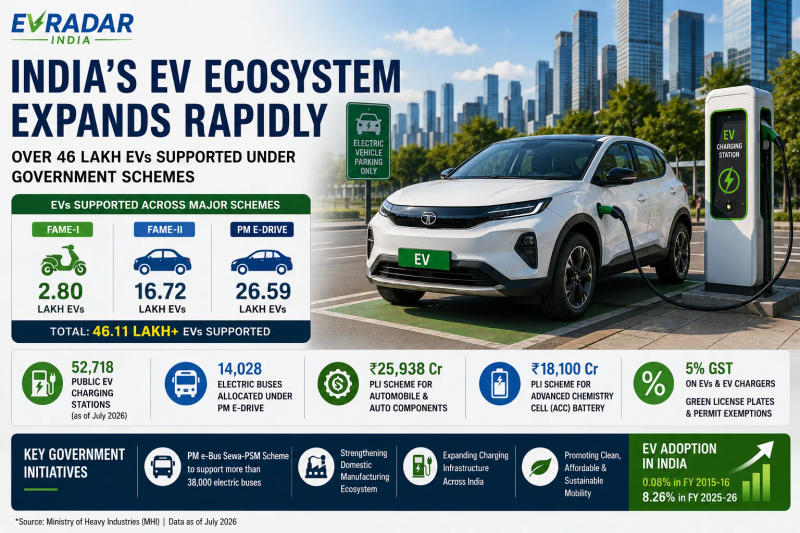
India has reached another significant milestone in its electric mobility journey with more than 52,700 public EV charging stations now operational across the country. The rapid expansion of charging infrastructure is expected to improve accessibility, reduce range anxiety, and encourage more consumers to switch to electric vehicles.
As EV adoption continues to rise across passenger vehicles, commercial fleets, and public transportation, charging infrastructure is becoming one of the most important pillars supporting India's transition to sustainable mobility.
Public Charging Network Continues to Expand
The number of publicly accessible EV charging stations has increased steadily over the past few years, helping improve charging availability across cities, highways, and key travel corridors.
Charging Infrastructure Snapshot
Infrastructure | Numbers |
|---|---|
Public Charging Stations | 52,718+ |
Fast Charging Stations | 16,561+ |
Fast chargers are particularly important for reducing charging time, making long-distance travel and commercial fleet operations more practical.
Government Continues to Invest in Charging Infrastructure
To support the growing electric vehicle ecosystem, the government has introduced multiple initiatives focused on expanding charging infrastructure across India.
Investment programs are supporting:
Installation of public charging stations
Expansion of highway charging corridors
Urban charging infrastructure
Battery swapping facilities
Private sector participation
These initiatives aim to create a more reliable and accessible charging network for EV owners.
Standards for a Connected Charging Network
India is also working toward creating a standardized charging ecosystem.
Recent guidelines promote:
Interoperable charging systems
Standardized charging protocols
Battery swapping support
Better user experience across charging networks
These measures are expected to simplify charging for consumers while encouraging greater private investment.
Easier Investment for Private Charging Operators
The EV charging sector has become increasingly attractive for private companies.
Supportive policy measures are encouraging businesses to establish charging stations in:
Shopping malls
Office complexes
Residential communities
Fuel stations
Highways
Commercial parking facilities
Greater private participation is expected to accelerate infrastructure growth over the coming years.
Domestic EV Manufacturing Receives a Boost
India is also strengthening its EV manufacturing ecosystem through incentive programs designed to encourage local production.
The focus areas include:
Electric passenger vehicles
Advanced automotive technologies
EV components
Battery systems
Power electronics
Expanding domestic manufacturing is expected to reduce import dependence while creating employment opportunities and strengthening supply chains.
Electric Bus Deployment Continues
Public transportation is another major focus area in India's electrification journey.
Thousands of electric buses are being deployed across major metropolitan cities to reduce emissions, improve urban air quality, and modernize public transport systems.
Large-scale fleet electrification is expected to increase demand for both charging infrastructure and battery technology.
Why Charging Infrastructure Matters
A widespread charging network plays a crucial role in accelerating EV adoption.
Key Benefits
✅ Reduces range anxiety
✅ Supports long-distance EV travel
✅ Improves convenience for EV owners
✅ Encourages commercial fleet electrification
✅ Supports electric buses and public transport
✅ Attracts private investment
✅ Strengthens India's EV ecosystem
Outlook
India's expanding charging network demonstrates the country's commitment to building a comprehensive electric mobility ecosystem.
As charging infrastructure, domestic manufacturing, and government support continue to grow together, EV ownership is expected to become more convenient and accessible for millions of consumers.
Continued investments in charging stations, battery technology, and clean transportation will play a vital role in India's transition toward a sustainable automotive future.
FAQs
1. How many public EV charging stations are available in India?
India currently has more than 52,700 public EV charging stations operating across the country.
2. How many fast EV chargers are installed?
More than 16,500 fast charging stations are available to help reduce charging time for electric vehicles.
3. Why are public charging stations important?
Public chargers improve convenience, reduce range anxiety, and make EV ownership more practical for both private users and commercial fleets.
4. What is driving India's charging infrastructure growth?
Government initiatives, private investment, EV adoption, and expansion of charging corridors are contributing to rapid infrastructure development.
5. How does charging infrastructure support EV adoption?
A larger charging network makes electric vehicles easier to own by providing convenient charging options in cities, highways, workplaces, and commercial locations.
6. Are private companies investing in EV charging?
Yes. Supportive regulations and growing EV demand are encouraging private businesses to expand public charging infrastructure across India.
7. What role do electric buses play in India's EV ecosystem?
Electric buses help reduce emissions, improve urban transport, and increase demand for charging infrastructure and battery technology.
Advertisement
Found this helpful?
Share with your friends & EV community