India's electric mobility transition is moving beyond vehicle sales, with government-backed programmes supporting millions of electric vehicles while also expanding charging infrastructure, domestic manufacturing and electric public transport.
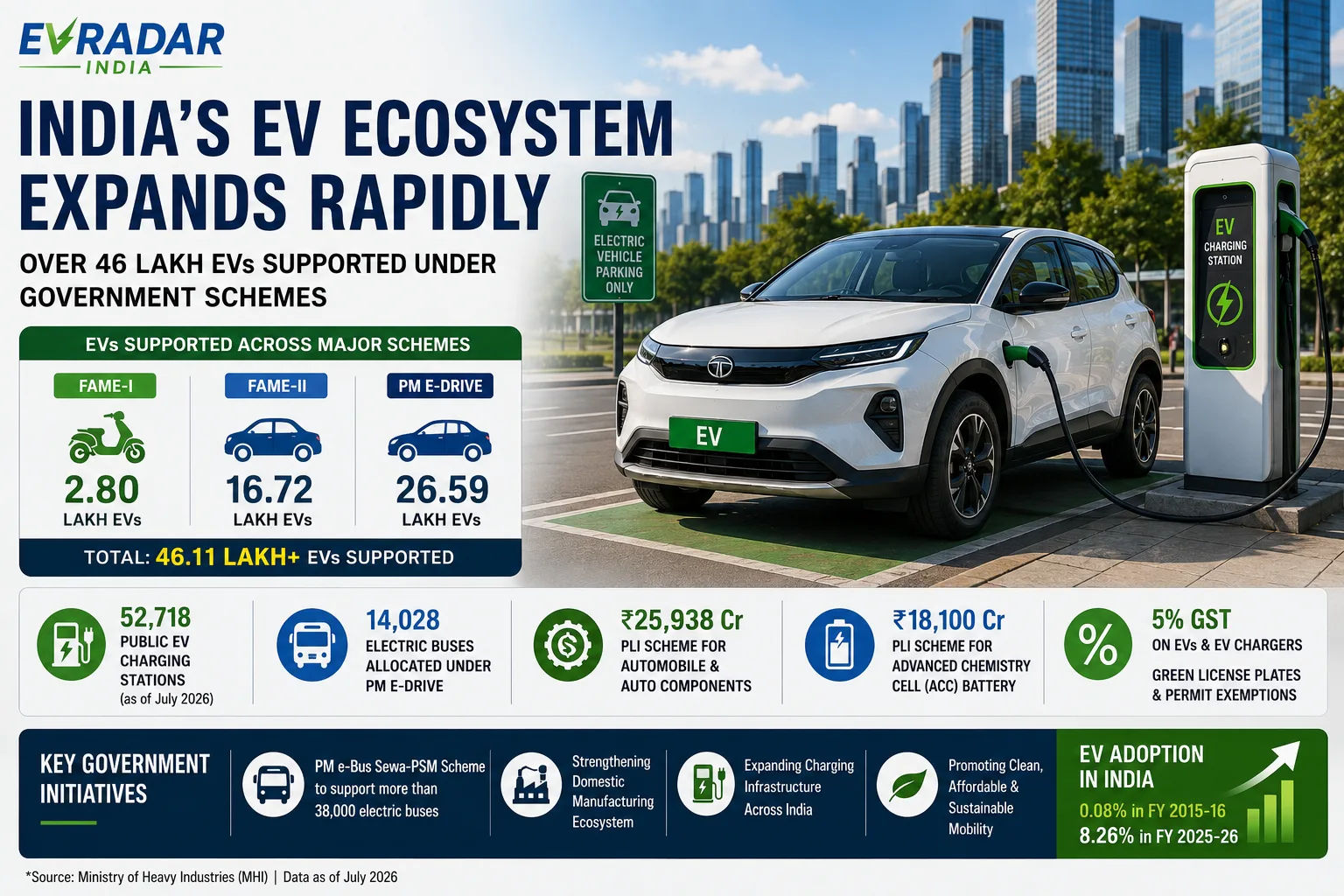
Data from the Ministry of Heavy Industries shows that more than 46 lakh electric vehicles have been supported through major MHI schemes, including FAME-I, FAME-II and PM E-DRIVE. The government's broader policy push is also aimed at building India's battery, component and charging ecosystem.
FAME-II Helped Accelerate Early EV Adoption
The Faster Adoption and Manufacturing of Hybrid and Electric Vehicles in India (FAME-II) scheme ran from April 2019 to March 2024 with budgetary support of ₹11,500 crore.
The programme supported approximately 16.72 lakh electric vehicles across eligible categories, while also supporting electric public transport and charging infrastructure.
The government says 5,197 electric buses had been deployed under FAME-II by June 30, 2026.
FAME-II played an important role in creating early demand for electric two-wheelers, three-wheelers and other eligible vehicles.
PM E-DRIVE Is Driving the Next Phase
The next major programme is PM E-DRIVE, introduced in September 2024 with an overall outlay of ₹10,900 crore.
According to the latest Ministry data, approximately 26.59 lakh EVs had been supported under PM E-DRIVE as of June 30, 2026.
The scheme covers several segments of electric mobility, including two-wheelers, three-wheelers, electric trucks, buses and ambulances.
PM E-DRIVE has also been extended through March 2028, with subsequent amendments expanding support across additional vehicle categories.
More Than 46 Lakh EVs Supported Across Major MHI Schemes
The government's latest figures provide a snapshot of how quickly policy-supported EV adoption has grown.
Government Scheme | EVs Supported |
|---|
FAME-I | 2.80 lakh |
FAME-II | 16.72 lakh |
PM E-DRIVE | 26.59 lakh |
Total | 46.11 lakh |
These figures add up to approximately 46.11 lakh EVs supported across the three programmes.
The numbers indicate the increasing scale of India's transition toward electric mobility.
Charging Infrastructure Continues to Expand
Government support is also being directed toward charging infrastructure.
Under FAME-II, ₹912.50 crore was allocated for public EV charging infrastructure, while PM E-DRIVE has a separate allocation of ₹2,000 crore for charging stations.
According to the latest government information available in July 2026, the BHEL portal listed 52,718 public EV charging stations, including 16,561 stations equipped with fast chargers for cars.
The government has also made EV charging a non-licensed activity, allowing private companies and entrepreneurs to establish charging stations subject to applicable guidelines.
Electric Buses Are Becoming Another Major Focus
Public transport is another important part of India's electrification strategy.
Under PM E-DRIVE, ₹4,391 crore has been allocated for the deployment of 14,028 electric buses, with 14,000 buses already allocated.
The government is also supporting electric buses through the PM e-Bus Sewa-Payment Security Mechanism scheme.
The programme is designed to reduce payment-related risks for operators supplying electric buses to public transport authorities.
Government Wants More EVs Made in India
The policy push isn't limited to encouraging consumers to buy electric vehicles.
India is simultaneously trying to develop a domestic EV manufacturing ecosystem.
The PLI Scheme for Automobile and Auto Component Industry has an outlay of ₹25,938 crore and is designed to strengthen manufacturing of advanced automotive technology products, including electric vehicles.
The programme is intended to attract investment and increase domestic value addition across the automotive supply chain.
Battery Manufacturing Is Another Key Priority
India's EV ambitions also depend heavily on developing domestic battery production.
The PLI scheme for Advanced Chemistry Cell battery storage has an outlay of ₹18,100 crore and aims to establish domestic manufacturing capacity for 50 GWh of advanced battery cells.
Building local battery capacity could eventually reduce India's dependence on imported cells and strengthen the wider EV supply chain.
EV Adoption Is Rising
The impact of these policies is visible in India's broader EV adoption numbers.
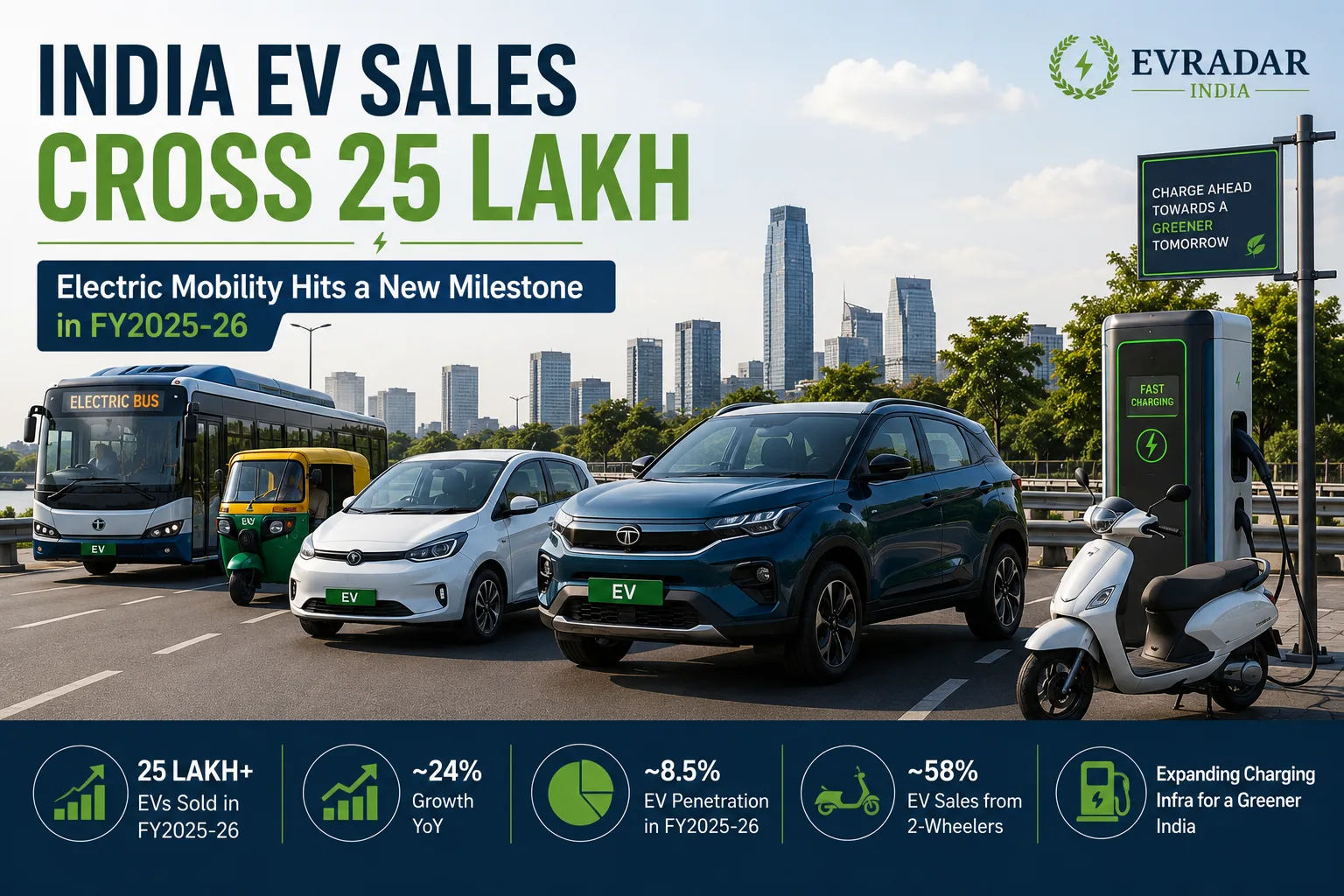
According to the Ministry of Heavy Industries, India's overall EV adoption increased from just 0.08% in FY2015-16 to 8.26% in FY2025-26.
The growth demonstrates how rapidly electric mobility has moved from a niche market toward a significant part of India's automotive industry.
Government Measures to Reduce EV Ownership Costs
The government has also introduced measures intended to make electric vehicles more affordable.
GST on electric vehicles and EV chargers or charging stations has been reduced to 5%.
Battery-operated vehicles receive green licence plates and are exempt from permit requirements under the applicable central rules.
The Ministry of Road Transport and Highways has also advised states to consider waiving road tax on electric vehicles, which could lower the upfront cost of EV ownership.
What This Means for India's EV Industry
The government's approach is increasingly focused on building an entire EV ecosystem rather than simply subsidising vehicle purchases.
The transition involves several connected areas:
EV sales → Battery manufacturing → Charging infrastructure → Domestic components → Electric buses → Servicing → Recycling
This could create opportunities for automobile manufacturers, battery companies, charging operators, software businesses, component suppliers and startups.
EVRadar Take
India's EV transition is entering a more mature phase.
More than 46 lakh electric vehicles have been supported through FAME-I, FAME-II and PM E-DRIVE, while government programmes are simultaneously targeting charging infrastructure, electric buses, batteries and domestic manufacturing.
The next challenge will be moving from policy-supported adoption toward a self-sustaining EV ecosystem.
Affordable vehicles, reliable charging, domestic battery production and strong after-sales support will be critical if India wants electric mobility to become mainstream across both urban and rural markets.
For consumers, manufacturers and businesses, the direction is becoming increasingly clear: India's electric mobility ecosystem is expanding well beyond the vehicle itself.
FAQs
1. How many EVs have been supported by India's major government schemes?
FAME-I, FAME-II and PM E-DRIVE together account for approximately 46.11 lakh supported electric vehicles, based on the latest MHI figures available as of June 30, 2026.
2. How many EVs were supported under FAME-II?
FAME-II supported approximately 16.72 lakh electric vehicles during its implementation period from 2019 to 2024.
3. How many EVs has PM E-DRIVE supported?
The Ministry of Heavy Industries reported approximately 26.59 lakh EVs supported under PM E-DRIVE as of June 30, 2026.
4. How much money has the government allocated to PM E-DRIVE?
PM E-DRIVE was introduced with an overall outlay of ₹10,900 crore to support India's electric mobility transition.
5. How many EV charging stations are there in India?
The latest government information available in July 2026 reported 52,718 public EV charging stations, including 16,561 equipped with fast chargers for cars.
6. How much has been allocated for EV charging infrastructure?
The government allocated ₹912.50 crore under FAME-II and ₹2,000 crore under PM E-DRIVE for public EV charging infrastructure.
7. Is India supporting electric buses?
Yes. PM E-DRIVE has allocated ₹4,391 crore for 14,028 electric buses, while other government programmes are also supporting electric public transport.
8. Does the government support EV battery manufacturing?
Yes. The PLI scheme for Advanced Chemistry Cell battery storage has an outlay of ₹18,100 crore and targets domestic ACC battery manufacturing.
9. What is the PLI-Auto scheme?
The PLI-Auto scheme is a ₹25,938-crore programme designed to strengthen India's manufacturing capabilities in advanced automotive technologies, including electric vehicles.
10. Has EV adoption increased in India?
Yes. MHI data shows India's EV adoption increased from 0.08% in FY2015-16 to 8.26% in FY2025-26.
11. Is GST on electric vehicles lower than conventional vehicles?
Yes. GST on electric vehicles and EV chargers/charging stations has been reduced to 5%.
12. Will EV charging stations continue to increase?
The government is continuing to allocate funds and implement programmes to expand charging infrastructure across cities, highways and other locations. PM E-DRIVE includes a dedicated allocation for public charging infrastructure.