BLive PRIME Launches ₹100 Crore Initiative to Deploy 1,000 Electric Cargo Vehicles Across India
Quick Summary
Enjoyed this article?
Advertisement
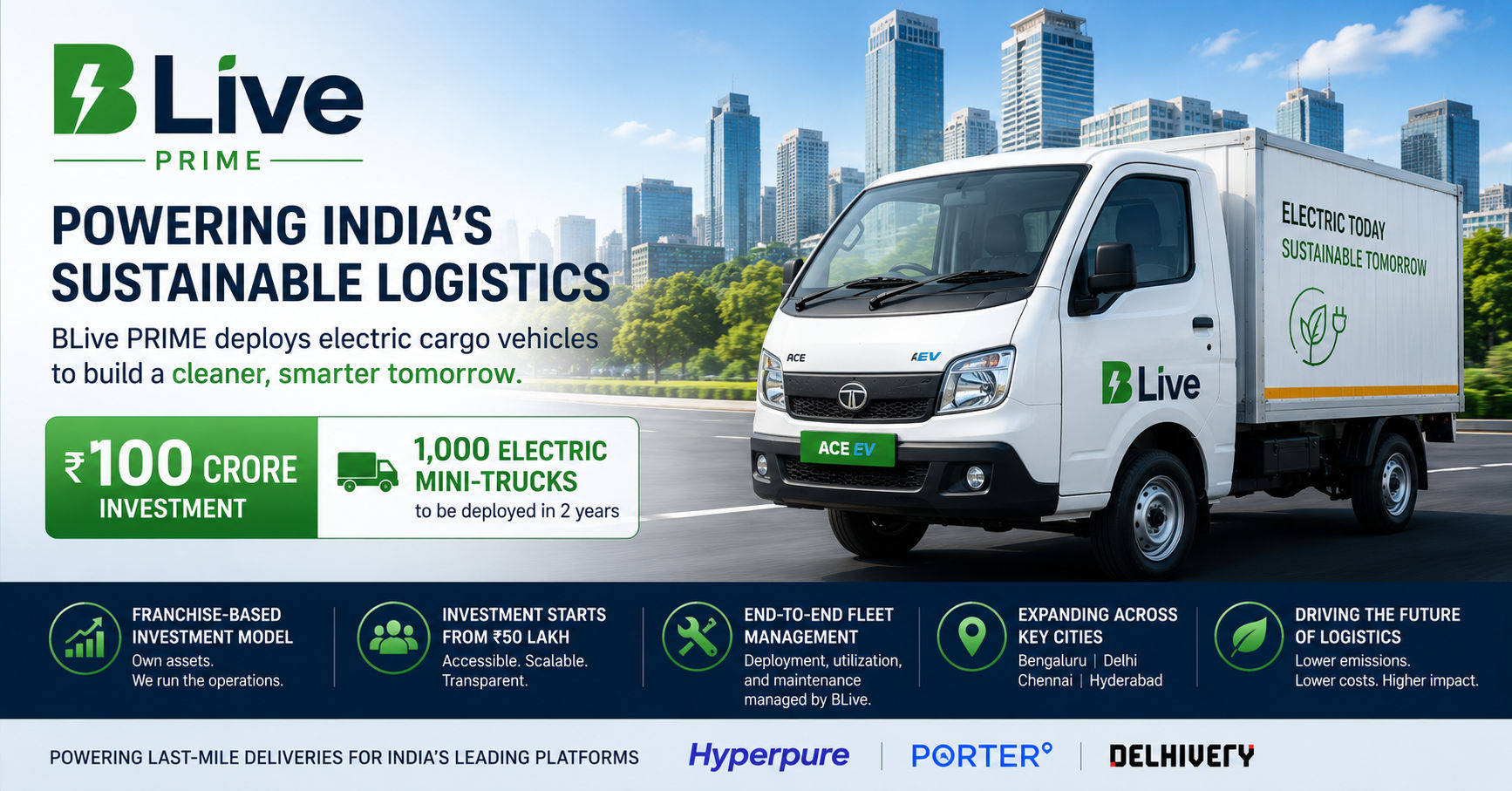
BLive has announced a major expansion into India's commercial electric mobility sector with the launch of BLive PRIME, a new platform focused on accelerating the adoption of electric cargo vehicles for last-mile logistics.
The company plans to invest ₹100 crore over the next two years to deploy 1,000 electric mini-trucks across multiple Indian cities.
The initiative aims to strengthen sustainable logistics infrastructure while addressing the rapidly growing demand generated by e-commerce and quick commerce platforms.
BLive PRIME to Scale Commercial EV Adoption
BLive PRIME introduces an innovative franchise-based fleet ownership model designed to bridge the gap between investor capital and commercial fleet demand.
The model allows investors to participate in India's growing EV logistics ecosystem while BLive manages fleet operations.
The expansion will initially begin in Bengaluru before gradually expanding to major cities, including:
Delhi
Chennai
Hyderabad
The company aims to create a scalable electric logistics ecosystem capable of supporting the next generation of urban deliveries.
Asset-Backed Franchise Model
Under the BLive PRIME model, investors can enter with an initial investment starting from ₹50 lakh.
The platform follows a franchisee-owned and company-operated structure.
This means:
Investors own the electric mini-truck assets
BLive handles fleet deployment
Vehicle utilisation is managed centrally
Maintenance and operational support are provided by the company
This approach simplifies participation for investors while ensuring efficient fleet management.
Electric Mini-Trucks to Power Last-Mile Deliveries
BLive plans to deploy electric cargo vehicles in high-frequency delivery operations where demand is predictable and utilisation rates remain high.
Vehicles such as the Tata Ace EV are expected to play a significant role in urban logistics operations.
The company already supports deliveries through partnerships and networks connected to logistics platforms, including:
Hyperpure
Porter
Delhivery
As e-commerce continues to expand, electric cargo vehicles are becoming increasingly important for sustainable delivery operations.
Why Last-Mile Logistics Is Driving EV Growth
India's last-mile logistics sector has experienced strong growth in recent years, driven by:
E-commerce expansion
Quick commerce growth
Urbanization
Rising demand for faster deliveries
Electric mini-trucks offer several advantages over conventional vehicles:
Lower operating costs
Reduced emissions
Quieter operations
Lower maintenance requirements
Improved efficiency for urban deliveries
Building a Sustainable Commercial EV Ecosystem
BLive is also integrating charging infrastructure into its fleet expansion strategy to support seamless vehicle operations across multiple cities.
The company aims to combine infrastructure, capital investment, and logistics demand into a unified ecosystem that can scale nationwide.
As businesses increasingly prioritize sustainability, commercial electric vehicles are expected to become a key pillar of India's future transportation network.
Outlook
Commercial electric vehicles are emerging as one of the fastest-growing segments within India's EV industry.
With BLive PRIME, the company is positioning itself at the intersection of sustainable logistics, fleet electrification, and investor participation.
If successfully implemented, the initiative could accelerate the transition toward cleaner and more efficient last-mile delivery systems across India.
FAQs
1. What is BLive PRIME?
BLive PRIME is a new electric mobility platform launched by BLive to deploy electric cargo vehicle fleets across India through a franchise-based investment model.
2. How much is BLive investing?
BLive plans to invest ₹100 crore over the next two years.
3. How many electric mini-trucks will be deployed?
The company aims to deploy 1,000 electric mini-trucks across India.
4. Which cities will BLive expand into first?
The rollout begins in Bengaluru and will later expand to Delhi, Chennai, and Hyderabad.
5. What is the minimum investment required?
Investors can participate with investments starting from ₹50 lakh.
6. Which logistics companies are connected to the ecosystem?
The platform supports logistics operations linked to companies such as Hyperpure, Porter, and Delhivery.
7. Why are electric cargo vehicles important?
Electric cargo vehicles reduce emissions, lower operating costs, and improve efficiency for urban last-mile delivery operations.
8. Which vehicle may be used in the fleet?
Commercial EVs like the Tata Ace EV are expected to be deployed for last-mile logistics operations.
Advertisement
Found this helpful?
Share with your friends & EV community