Enjoyed this article?
Advertisement
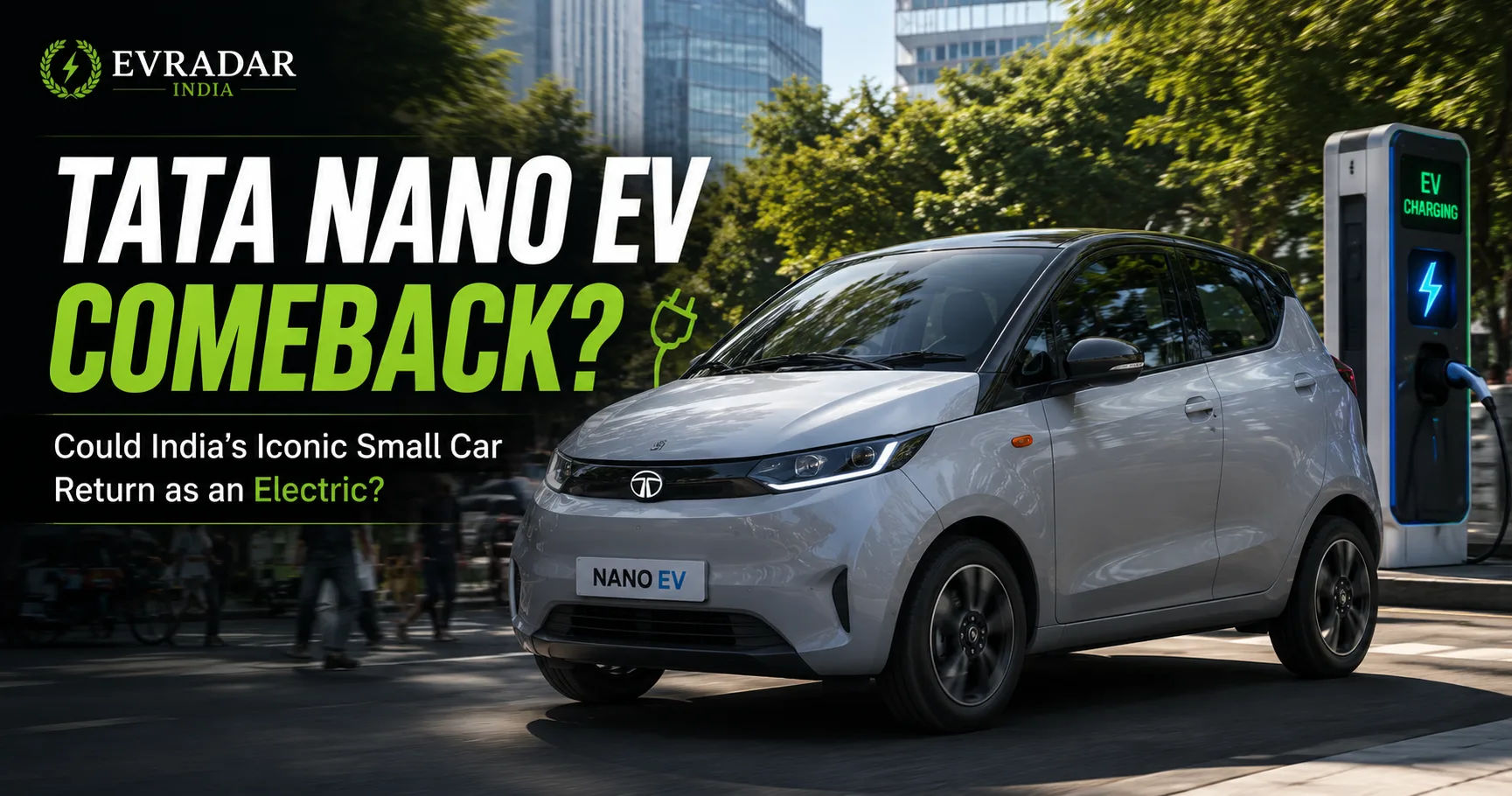
Tata Nano EV Comeback? Why the Iconic Small Car Is Back in the Spotlight
The Tata Nano may have disappeared from India's new-car market years ago, but the small car continues to attract attention. Recent comments from Tata Motors' design leadership have once again raised the possibility that the Nano name could eventually return — potentially in an electric form.
However, there is an important distinction between possibility and confirmation.
Tata Motors has not officially announced a new Nano EV, development programme, launch date or technical specifications. The current discussion stems from comments about the possibility of reimagining the iconic nameplate.
If Tata were to bring the Nano back, an electric city car could make considerably more sense today than a conventional petrol-powered revival.
Why the Nano Still Matters
When Tata launched the Nano in 2009, the company was attempting something unusual: creating an affordable four-wheeler aimed at families moving up from two-wheelers.
Its tiny footprint and distinctive rear-engine layout made it one of the most recognisable Indian cars of its era.
However, the Nano's positioning around ultra-low pricing created a perception problem.
As Indian consumers became more willing to spend on cars, many buyers began looking for larger vehicles with more features and stronger aspirational appeal.
The Nano eventually disappeared from Tata's portfolio, but its concept remained memorable.
Could Electric Power Give the Nano a Second Life?
The EV market has changed the equation.
A modern electric city car does not necessarily need a large engine compartment, transmission tunnel or conventional fuel system. Electric powertrains can provide greater flexibility when engineers are designing around limited exterior dimensions.
That makes the original Nano's compact philosophy potentially interesting for an electric vehicle.
A future Nano-inspired EV could focus on:
Compact dimensions
Easy urban manoeuvrability
Efficient packaging
Low energy consumption
Simple city-focused driving
Affordable ownership
Rather than simply recreating the old Nano, Tata could use the name to represent a completely new generation of urban mobility.
Tata Has Already Explored an Electric Nano
Interestingly, Tata has previous experience with an electric vehicle based on the Nano.
Tata Motors and Coimbatore-based Jayem Automotives worked together on an electric vehicle known as the Jayem Neo. The project was based on the Nano and was developed primarily for fleet applications.
The Neo used a battery of roughly 17 kWh and an electric motor producing around 27 hp and 68 Nm. Real-world range was reported at approximately 120–130 km, depending on usage.
The project demonstrated that the Nano's compact architecture could be adapted to electric propulsion, although the Neo never became a mainstream retail Tata EV.
A Future Nano EV Would Need a Completely New Approach
A modern Nano EV could not simply be an old Nano fitted with a larger battery.
Vehicle safety standards, customer expectations and automotive technology have changed substantially.
Today's entry-level buyers increasingly expect:
Multiple airbags
Advanced safety systems
Touchscreen infotainment
Smartphone connectivity
Digital displays
Rear parking cameras
Connected-car features
Modern cabin design
A future Nano would therefore need to be developed as a new-generation urban EV, rather than treated as a simple conversion of the original car.
Small Electric Cars Could Make Sense in Indian Cities
India's urban environment could provide a strong use case for a compact electric vehicle.
Traffic congestion, limited parking and short daily commutes make small cars particularly practical in major cities.
A Nano-inspired EV could potentially appeal to:
First-Time Car Buyers
Customers moving from motorcycles or scooters to their first four-wheeler.
Second-Car Buyers
Families looking for an inexpensive vehicle for short daily trips.
Urban Commuters
People who primarily travel within city limits.
Fleet Operators
Companies looking for compact vehicles for urban transportation and delivery applications.
EV Buyers
Customers who want a four-wheeler but don't need a large battery or long-distance touring capability.
The Biggest Challenge Would Be Price
Creating an affordable electric car is considerably more difficult than producing an affordable petrol car.
The battery remains one of the most expensive components of an EV, while modern safety and technology requirements add further costs.
That means Tata would have to find a careful balance between:
Price + Battery Size + Range + Safety + Features + Profitability
Trying to recreate the original Nano's ultra-budget positioning could be unrealistic.
A better strategy could be to position the vehicle as an affordable smart urban EV rather than simply India's cheapest car.
What Could a Nano EV Look Like?
There are currently no confirmed specifications for a future Nano EV, so any technical details remain speculative.
However, a compact city-focused EV could potentially use a relatively modest battery rather than a large pack designed for highway travel.
A vehicle targeting urban commuting could prioritise:
Efficient battery usage
Compact dimensions
Easy charging
Low running costs
Lightweight construction
Good cabin utilisation
Modern EV packaging could also allow engineers to create a surprisingly spacious interior relative to the vehicle's exterior footprint.
Tata Already Has a Growing EV Portfolio
Tata Motors is now one of India's most established electric passenger-vehicle manufacturers, with EVs spanning multiple price points and segments.
The company's current and upcoming electric portfolio includes compact cars, SUVs and larger electric models.
A smaller Nano-inspired EV could therefore occupy a different position below larger Tata EV products and potentially attract customers who currently consider premium electric scooters.
The Nano Name Could Be Its Biggest Advantage
The Nano has something that many new EV startups don't have: instant recognition.
The name remains strongly associated with Tata's attempt to rethink affordable mobility in India.
That gives Tata the option of turning the name into something more than nostalgia.
Instead of simply bringing back the old car, Tata could reinterpret the original philosophy:
Small, practical and designed around Indian urban mobility.
An electric powertrain could provide a modern interpretation of that idea.
Tata Nano EV: What Is Confirmed vs Speculation?
Item | Status |
|---|---|
New Nano EV officially announced | ❌ Not confirmed |
Tata design leadership discussed Nano's future | ✅ Yes |
EV version technically explored in the past | ✅ Yes |
Jayem Neo based on Nano | ✅ Yes |
New Nano EV battery capacity | ❓ Unknown |
New Nano EV range | ❓ Unknown |
Launch date | ❓ Not announced |
Official price | ❓ Not announced |
This distinction is important: the Nano EV comeback is currently a possibility, not a confirmed Tata product.
EVRadar Take
The idea of a Nano EV is interesting because the original car's biggest strengths — compact dimensions, efficient packaging and urban practicality — could fit naturally with electric mobility.
But Tata would need to avoid simply repeating the original Nano's positioning.
A successful revival would likely need to be safe, desirable, technologically modern and affordable, rather than competing purely on the lowest possible price.
FAQs
1. Is Tata launching a new Nano EV?
Tata Motors has not officially confirmed a new Nano EV. Current speculation follows comments from Tata's design leadership about the possibility of reimagining the Nano.
2. Did Tata previously make an electric Nano?
Tata Motors and Jayem Automotives previously worked on the Jayem Neo, an electric vehicle based on the Nano architecture. It was primarily developed for fleet use.
3. What was the battery capacity of the Jayem Neo?
The Jayem Neo used a battery of approximately 17 kWh and produced around 27 hp and 68 Nm.
4. What was the range of the electric Nano?
Real-world range of the Jayem Neo was reported at around 120–130 km, depending on driving conditions.
5. When will the new Tata Nano EV launch?
There is currently no officially confirmed launch date for a new Nano EV.
6. What could a future Nano EV compete with?
A compact Tata EV could potentially compete with affordable electric city cars and premium electric hatchbacks, depending on its final size and pricing.
7. Why could an electric Nano make sense today?
Compact dimensions, low energy consumption and easy urban manoeuvrability could make a small EV particularly useful for city commuters and first-time car buyers.
8. Will the new Nano EV use the old Nano design?
There is no confirmed design or platform information. A future model would likely need substantial changes to meet modern safety and technology expectations.
9. Could the Nano EV be cheaper than the Tiago EV?
It is too early to say. Tata has not announced pricing, specifications or positioning for a new Nano EV.
10. Is the Tata Nano EV confirmed?
No. The possibility has generated interest, but Tata Motors has not officially confirmed that a new Nano EV is being developed or launched.
For now, there is no confirmed Nano EV launch. But if Tata eventually decides to revive the name, India's rapidly growing EV market could provide a much more suitable environment for the Nano philosophy than the original petrol-car era.
Advertisement
Found this helpful?
Share with your friends & EV community