India’s EV Revolution Could Create Up to 40 Million Jobs by 2030
India's electric vehicle transition is beginning to reshape more than the automobile market. As electric cars, scooters, buses and commercial fleets become increasingly common, the country is also expected to see a major expansion in employment opportunities across the wider EV ecosystem.
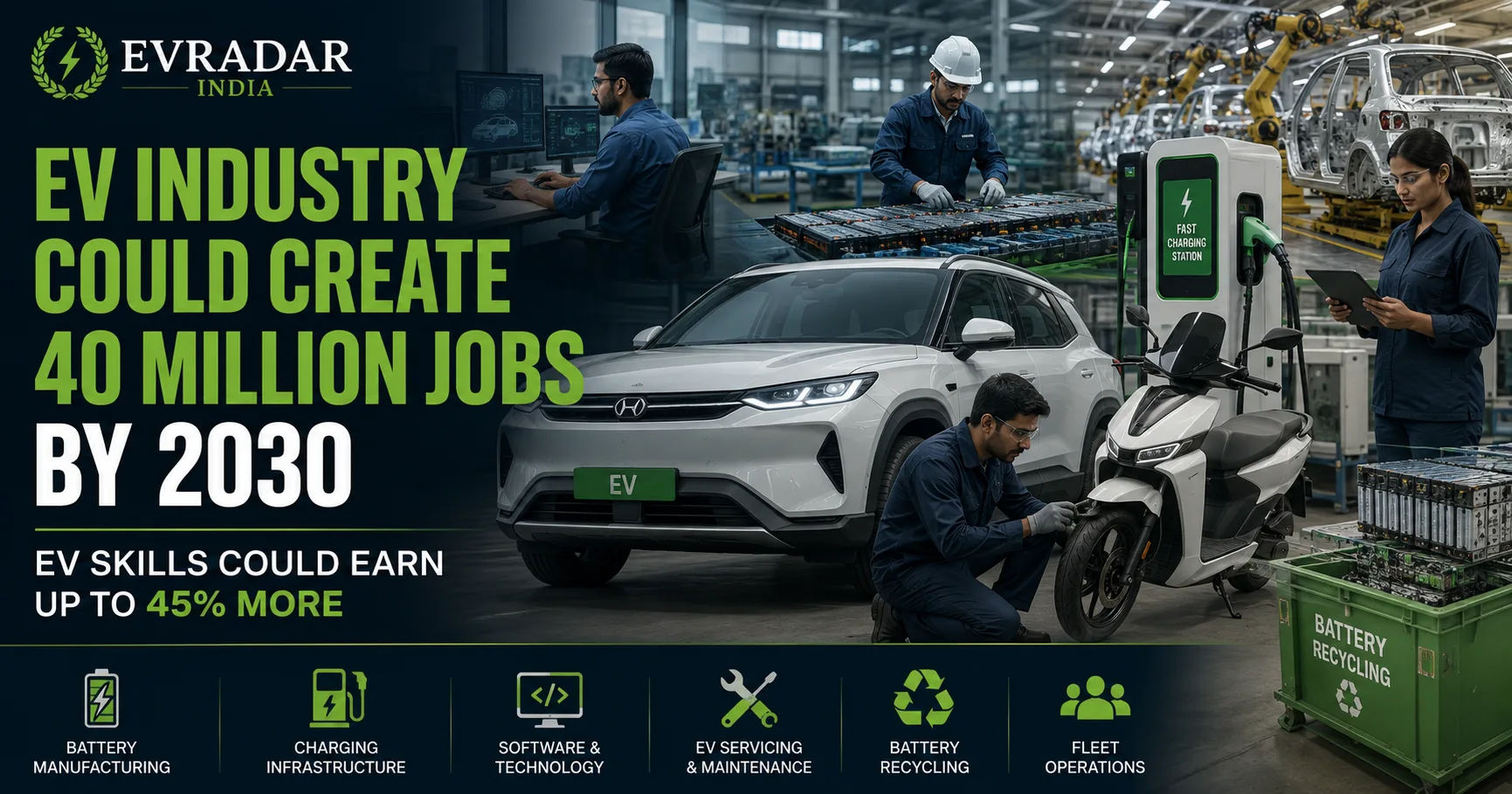
According to estimates from Adecco India, the country's EV industry could generate between 30 million and 40 million jobs by 2030.
The opportunity is not limited to vehicle manufacturing. Battery production, charging infrastructure, software, fleet operations, maintenance, recycling and other supporting industries are expected to contribute significantly to the emerging employment market.
EV Hiring Could Grow Rapidly
The expansion of India's EV ecosystem is expected to create sustained demand for skilled workers.
Adecco India estimates that hiring within the sector could grow at approximately 15–20% annually, while demand for specialized EV-related skills could increase by around 35%.
This reflects a major shift in the type of expertise required by India's automotive industry.
Traditional mechanical and automotive skills will continue to remain important, but companies are increasingly looking for professionals with knowledge of:
Battery technology
Power electronics
Electric drivetrains
Charging systems
Embedded software
Vehicle diagnostics
Connected mobility
Fleet management
Battery recycling
Data and telematics
Most EV Jobs Could Come Indirectly
One of the most interesting aspects of the employment outlook is the expected split between direct and indirect jobs.
Only around 10–15% of the projected 30–40 million employment opportunities are estimated to be directly linked to EV manufacturing.
The remaining 85–90% could emerge through supporting businesses and services.
This means the EV transition could create opportunities for technicians, charging-station operators, software professionals, fleet managers, logistics workers, customer support teams, training specialists and recycling professionals.
Battery Manufacturing Could Become a Major Employer
Battery technology is at the centre of the EV ecosystem, making battery manufacturing one of the most important areas for future employment.
India is increasing its focus on domestic battery production, cell manufacturing and energy-storage technologies.
As local manufacturing capacity grows, companies will require specialists across areas such as:
The growth of this industry could also create jobs in equipment manufacturing and battery supply chains.
Charging Infrastructure Will Need Skilled Workers
A larger EV population requires a much bigger charging network.
Charging infrastructure could therefore become another major source of employment.
New charging locations require professionals for:
Installation → Electrical work → Software integration → Maintenance → Operations → Customer support
As public and commercial charging networks expand, demand is likely to increase for technicians who understand high-voltage electrical systems, charging hardware and EV diagnostics.
Software Is Becoming Critical to EVs
Modern electric vehicles increasingly operate like connected computers on wheels.
Software now plays an important role in areas such as:
Battery management
Vehicle diagnostics
Connected-car services
Navigation
Energy management
Fleet monitoring
Charging optimisation
Over-the-air updates
This creates opportunities for software developers, data analysts, cybersecurity specialists, embedded engineers and other technology professionals within the automotive sector.
EV Fleets Could Create Another Employment Wave
Commercial EV adoption could further expand the employment ecosystem.
Electric delivery vehicles, taxis, buses and logistics fleets require specialized operations teams capable of managing:
Charging schedules
Vehicle utilisation
Battery health
Route planning
Fleet software
Driver training
Vehicle maintenance
As companies electrify larger fleets, these roles could become increasingly important.
Battery Recycling Could Become a Growing Industry
The expansion of EV sales will eventually generate a growing volume of used batteries.
This makes battery recycling and second-life applications an important part of India's future EV economy.
Recycling businesses will need skilled workers and engineers for:
Battery collection
Safe dismantling
Material recovery
Battery testing
Second-life applications
Recycling technology
Waste management
Developing a strong recycling ecosystem could also help India reduce dependence on imported raw materials.
EV Skills Could Carry a Salary Premium
The transition is also changing the value of technical skills in the automotive industry.
Adecco India estimates that professionals with specialized EV expertise could potentially earn salary premiums of up to 45% compared with workers in conventional internal-combustion-engine roles.
The premium reflects a simple market reality: specialized EV skills are still relatively scarce, while demand is increasing.
Professionals who combine traditional automotive knowledge with expertise in batteries, electronics and software could therefore become particularly valuable.
Reskilling Traditional Automotive Workers
India's existing automotive workforce will also play an important role in the transition.
Millions of workers already have experience in vehicle manufacturing, servicing, diagnostics and operations. However, EV technology requires additional knowledge, particularly around high-voltage systems and electronic components.
Reskilling programs could help conventional automotive workers transition into EV-related roles instead of being displaced by the technology shift.
Industry-academia partnerships and specialized technical training will therefore become increasingly important.
Contract and Flexible Jobs Could Lead the Transition
Not every new EV position will immediately become a permanent job.
A significant portion of initial hiring could happen through contractual, project-based and flexible staffing arrangements.
This could be particularly common in:
EV manufacturing projects
Charging infrastructure installation
Fleet operations
Technical support
Battery services
Temporary production expansion
For workers, these positions could provide an entry point into India's expanding EV industry.
India's EV Opportunity Goes Beyond Vehicle Sales
The biggest takeaway is that India's electric mobility transition is creating an ecosystem rather than simply replacing petrol and diesel vehicles.
Every EV sold creates demand for supporting infrastructure and services.
Vehicle → Battery → Charging → Software → Servicing → Fleet Management → Recycling
Each stage can create new businesses and employment opportunities.
EVRadar Take
India's EV industry could become one of the country's largest sources of new green employment over the next decade.
The projected 30–40 million jobs by 2030 include a broad mix of direct and indirect opportunities, from manufacturing and engineering to software, charging, fleet management and recycling.
For job seekers, the message is equally important: learning EV technology, battery systems, power electronics, software, diagnostics and charging infrastructure could provide a strong career advantage as India's mobility ecosystem becomes increasingly electric.
The future of India's EV industry may therefore be measured not only by how many electric vehicles are sold, but also by how many new careers are created around them.
FAQs
1. How many jobs could India's EV industry create by 2030?
Industry estimates cited in the report suggest India's EV ecosystem could create approximately 30 million to 40 million jobs by 2030.
2. Will most EV jobs be in vehicle manufacturing?
No. The majority of projected employment is expected to come from supporting areas such as charging infrastructure, fleet operations, servicing, software, battery recycling and logistics.
3. Which EV skills will be in high demand?
Battery technology, power electronics, EV diagnostics, charging systems, embedded software, connected mobility, fleet management and battery recycling are expected to be important skill areas.
4. Can EV professionals earn higher salaries?
Specialized EV professionals could command salary premiums compared with conventional automotive roles because specialized skills remain relatively scarce.
5. Will EVs create jobs in charging infrastructure?
Yes. Expanding charging networks will require professionals for installation, electrical work, software integration, maintenance and station operations.
6. Are traditional automobile workers at risk from EV adoption?
The transition will change job requirements, but reskilling can help conventional automotive workers move into EV manufacturing, servicing, diagnostics and other emerging roles.
7. Will battery recycling create jobs in India?
Yes. As the number of EV batteries in circulation increases, collection, dismantling, testing, material recovery and recycling are expected to become increasingly important.
8. What role will software play in EV employment?
Software is becoming essential for connected vehicles, battery management, fleet monitoring, diagnostics, navigation and energy optimisation, creating opportunities for technology professionals.
9. Are EV jobs only for engineers?
No. The EV ecosystem requires technicians, electricians, software developers, sales teams, fleet operators, customer support professionals, trainers, logistics workers and recycling specialists.
10. Is the EV industry a good career opportunity in India?
The expanding EV ecosystem is creating new career paths across engineering, manufacturing, technology, charging infrastructure, fleet operations and battery services, making it an important emerging employment sector.