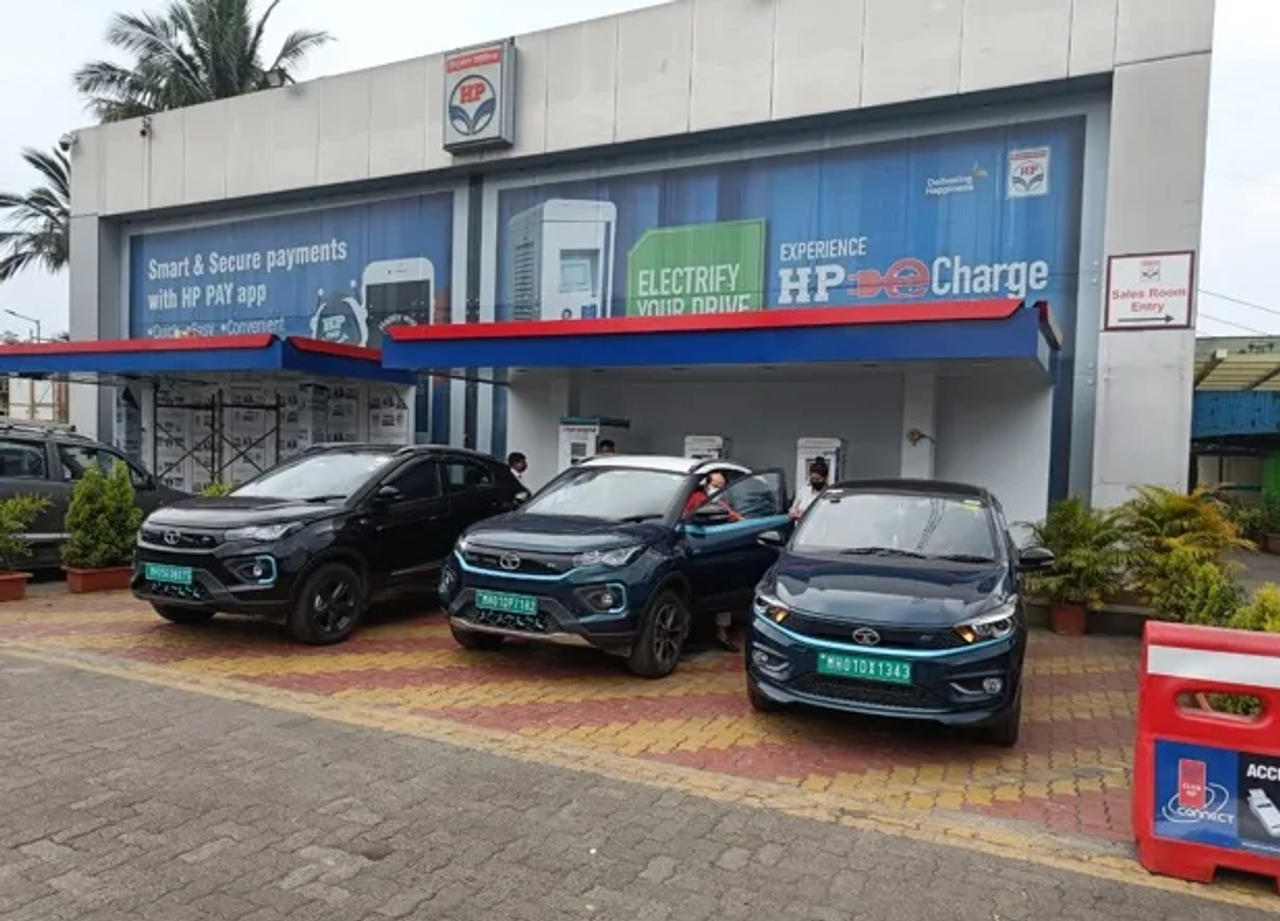
Hindustan Petroleum Corporation Limited (HPCL) has built up one of the largest EV charging footprints among India's oil marketing companies. As of 1 November 2026, the state-run fuel retailer had approximately 5,981 EV charging facilities across its network of more than 25,000 retail outlets, according to Kushal Kumar Banerjee, Chief General Manager (Retail Strategy and Business Development) at HPCL. That is an increase of nearly 11% from around 5,400 earlier in the year.
The company also reported over 176 battery-swapping stations, and said it now intends to shift more of its effort towards high-power charging for electric trucks and buses on highway corridors.
The network in numbers
| Metric | Figure (according to HPCL) |
|---|
| EV charging facilities (1 Nov 2026) | About 5,981 |
| DC fast chargers | About 3,627 |
| AC slow chargers | About 2,180 |
| Battery-swapping stations | Over 176 |
| Chargers set up under FAME-II | More than 2,250 |
| Planned under PM E-DRIVE | Around 323 stations |
| Target by end of FY27 | Around 6,000 chargers |
HPCL says its DC units are predominantly CCS2-compatible, which is the fast-charging connector used by electric cars sold in India. Newer installations are 120 kW and 180 kW units, and the company plans to add about 100 chargers of 240 kW on strategic routes. The FAME-II installations are counted within the overall total. HPCL described the AC and DC split as approximate, and the two figures together come to about 5,807, slightly below the headline count.
Highways and heavy vehicles are the next focus
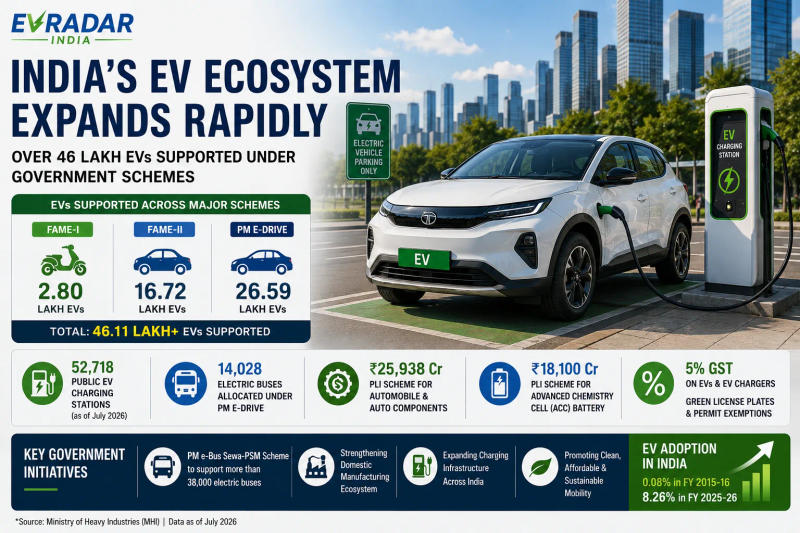
Under the government's PM E-DRIVE scheme, HPCL says it will set up around 323 charging stations, with the emphasis on 50 major highway corridors and on higher-power equipment, including 240 kW chargers suited to electric trucks and buses. According to the company, passenger cars account for most charging sessions on its network today, but heavy commercial vehicles on intercity routes are where it sees the next phase of demand.
Battery swapping follows the same commercial tilt. HPCL runs its swap stations with partners including Honda, Voltup, Yuma, VGreen and Blue Energy Motors, mainly for e-commerce and delivery fleets. Blue Energy Motors recently opened a heavy-truck swapping station at Bhiwandi on the Mumbai-Pune corridor, and Energy In Motion is planning combined swap-and-charge hubs for trucks on the Mumbai-Pune, Delhi-Jaipur and Chennai-Bengaluru freight corridors.
Partners do much of the heavy lifting
Rather than building and running every charger itself, HPCL follows an asset-light approach, letting partners install and operate equipment at its fuel stations. Key tie-ups include:
- Mahindra Charge_iN: an agreement signed in March 2026 for 180 kW dual-gun chargers at HPCL outlets. The first joint station is operational at the HP Auto Care Centre on the Mumbai-Pune Expressway.
- Statiq: more than 5,000 HPCL chargers are integrated into Statiq's EVLinq platform, so they can be found and used through partner apps.
- Snap-E Cabs: fleet access to the HP e-Charge network, starting in Kolkata and eastern India and on highways.
HPCL also acknowledged that charger uptime and customer experience remain a problem across the industry. It says chargers are monitored centrally through the HP e-Charge platform, and that a tracking system logs faulty units and tickets them for repair within set timelines. It did not share an uptime percentage or utilisation figures, though it noted that DC fast chargers generally need 15% to 25% utilisation to make good commercial sense.
What it means for EV owners
For drivers, the main advantage of HPCL's network is location. Fuel stations already sit on major roads, are open round the clock in many cases and have toilets and food nearby, which makes them practical stops on long drives. With most DC units being CCS2, any current Indian electric car from Tata, Mahindra, MG, Hyundai, Kia, BYD and others can use them. The planned 240 kW units will mostly matter to bus and truck operators, but cars will also be able to plug in where they are installed.
HPCL did not announce new tariffs with this update. Prices per kWh vary by station and are shown in the HP e-Charge app, which is also where owners can check whether a charger is working before heading to it.
What comes next
HPCL's stated milestones are about 6,000 chargers by the end of FY27, 240 kW charging and swap hubs live across its targeted 50 highway corridors, and a commercially sustainable EV energy business by March 2030. With the network already close to its FY27 count, the real test will be how fast the high-power highway sites come online and how reliably the existing chargers perform.