Enjoyed this article?
Advertisement
6 New Electric Cars Coming to India by 2027: Tata Safari EV, Maruti YMC & More
India's electric passenger-vehicle market is entering another busy phase.
After the arrival of several new electric SUVs and cars, manufacturers are preparing another wave of launches aimed at different segments — from compact urban SUVs to three-row family EVs.
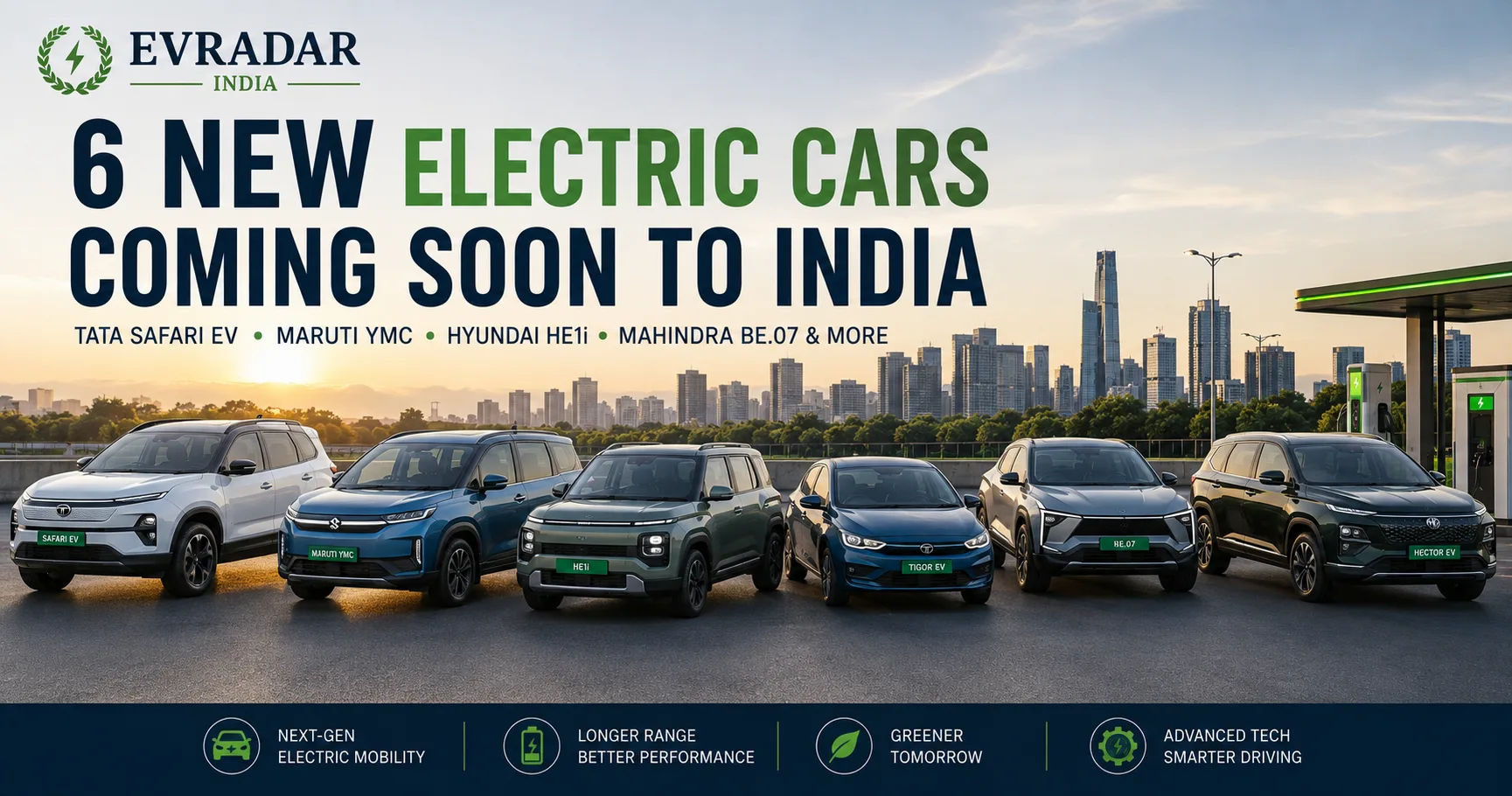
Among the models generating the most interest are the Tata Safari EV, Maruti Suzuki YMC, Hyundai's HE1i electric SUV and Mahindra BE.07. Tata is also preparing an updated Tigor EV, while an electric version of the Hector nameplate has been widely discussed in reports.
The exact launch dates, prices and specifications of several upcoming models are yet to be officially confirmed, so the figures below should be treated as expected or reported specifications.
1. Tata Safari EV
The Tata Safari is expected to enter the electric era in 2026 with a dedicated battery-electric version.
The upcoming Safari EV is expected to sit above the Harrier EV in Tata's electric SUV portfolio and become the brand's flagship three-row electric SUV.
Reports indicate that it will use Tata's acti.ev+ architecture, with battery technology related to the Harrier EV. Expected battery options include 65kWh and 75kWh packs, while both rear-wheel-drive and all-wheel-drive configurations could be offered.
The larger battery version could deliver a claimed range in the region of 600km, depending on configuration.
What to expect
Three-row electric SUV
65kWh and 75kWh battery options expected
RWD and AWD configurations
Expected range above 600km for some variants
Premium cabin and technology
Expected 2026 launch
The Safari EV is likely to face competition from models such as the Mahindra XEV 9S and other upcoming large electric SUVs.
2. Maruti Suzuki YMC
The Maruti Suzuki YMC could be one of the most important upcoming EVs for the Indian mass market.
Internally known by the YMC codename, the model is expected to become Maruti Suzuki's first three-row electric MPV.
A production-spec prototype has already been spotted testing in India. The vehicle appears to have an upright, family-oriented design with three-row proportions and SUV-inspired styling.
The YMC is expected to share its electric architecture with the Maruti e Vitara.
Reports suggest it could use 49kWh and 61kWh battery packs, although the larger MPV's range is expected to be lower than the e Vitara because of its greater size and weight.
The model could make its debut toward the end of 2026, followed by a market launch in 2027.
Why it matters
The YMC could bring Maruti Suzuki into one of the least crowded parts of India's EV market: three-row electric family vehicles.
It could appeal to buyers who want the practicality of an Ertiga or XL6 but are looking to move to an electric powertrain.
3. Hyundai HE1i Electric SUV
Hyundai is preparing a new compact electric SUV specifically for India's mass-market segment.
Internally codenamed HE1i, the model is expected to compete with vehicles such as the Tata Punch EV and other compact electric SUVs. Recent reports suggest it could make its debut by the end of 2026, although Hyundai has not publicly confirmed a final launch date.
The upcoming model is expected to use Hyundai's affordable E-GMP (K) electric architecture and will be produced in India with a high level of localisation.
Internationally related technology uses 42kWh and 49kWh battery options, although Indian specifications could differ.
Expected highlights
Sub-4-metre compact SUV
India-focused development
Two battery options expected
Level 2 ADAS expected
Connected-car technology
Localised battery production
Expected launch around late 2026/early 2027
The HE1i could become an important model for Hyundai because it would give the company a stronger presence in India's affordable EV segment.
4. Tata Tigor EV Facelift
Tata Motors is also preparing an updated version of the Tigor EV.
The Tigor has been part of Tata's electric portfolio for several years, and the upcoming facelift is expected to bring significant visual and feature upgrades.
Design patent images indicate that the updated Tigor will receive styling influenced by the latest Tiago, including a redesigned front end, slimmer lighting elements and revised bumpers.
The electric version is expected to receive its own EV-specific styling details.
Expected changes
New exterior design
Updated dashboard
Larger infotainment system
360-degree camera
Additional safety features
EV-specific styling
Updated battery/charging technology expected
Reports suggest that the Tigor EV facelift could arrive in late 2026.
The existing Tigor EV uses a 26kWh battery, while the facelift could adopt battery and motor technology related to the latest Tiago EV.
5. Mahindra BE.07
Mahindra is preparing another major addition to its Born Electric range.
The BE.07 will sit above the BE 6 and is expected to be a larger five-seat electric SUV measuring roughly 4.6 metres in length.
Mahindra has confirmed that its next EV launch is planned for 2027, with the production version of the BE.07 concept expected to take the stage.
The SUV is expected to share technology with Mahindra's existing electric models, potentially including battery and motor options related to the BE 6 and XEV 9e.
Expected highlights
Five-seat electric SUV
Around 4.6-metre length
Born Electric platform
RWD expected
Long-range battery option expected
Premium technology
2027 launch
Some reports have suggested a range approaching 600–650km, but this should not be treated as an official figure until Mahindra confirms the production model.
The BE.07 is expected to compete with larger electric SUVs such as the Tata Harrier EV.
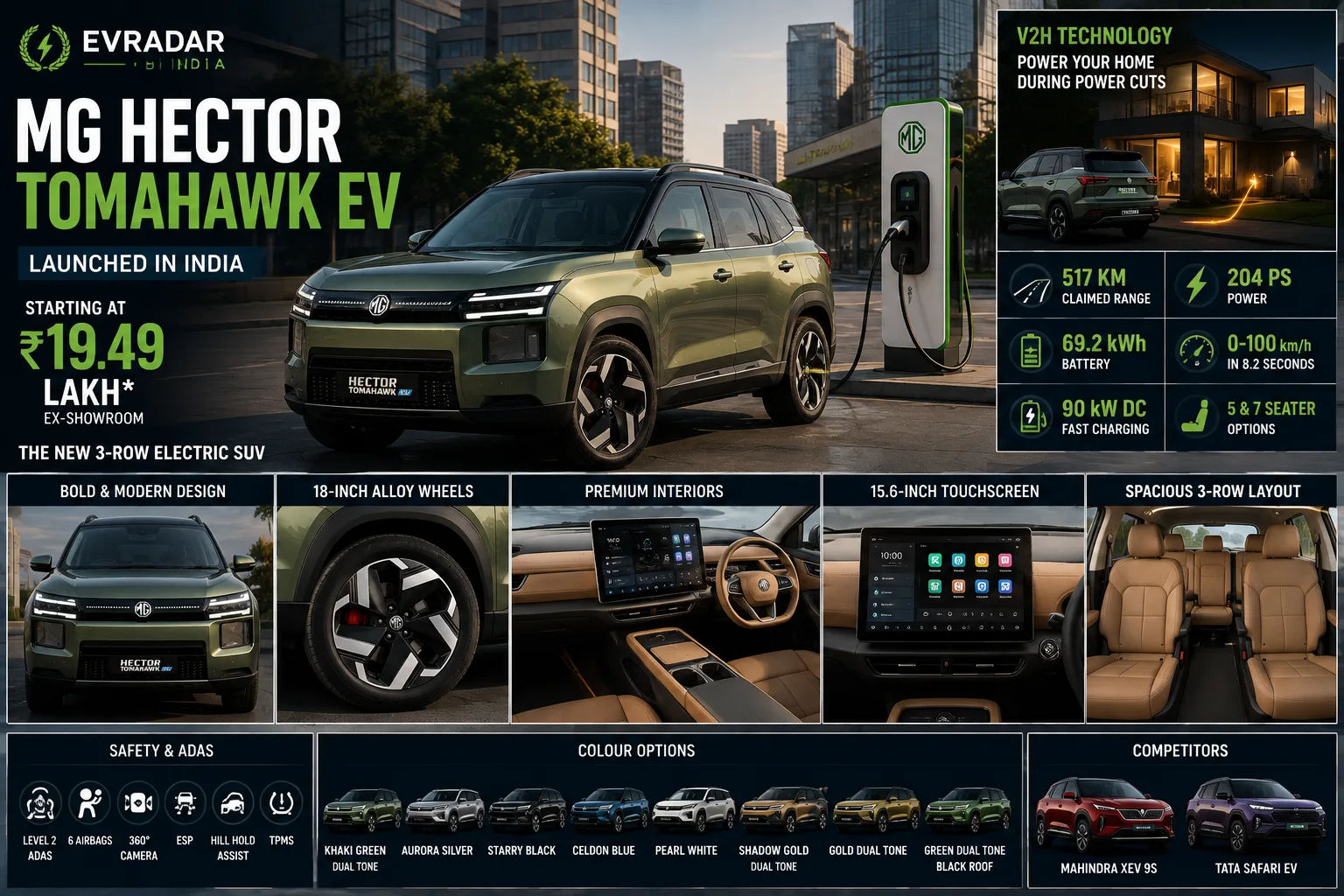
6. MG Hector Electric SUV
MG is also expected to expand its electric SUV portfolio with a larger model positioned around the Hector nameplate.
Reports have referred to an upcoming electric SUV using the Hector/Tomahawk name, although the final production name, specifications and launch timeline have not been officially confirmed.
If introduced, the model could target the growing three-row electric SUV market and sit alongside MG's existing electric offerings.
Potential specifications reported for the model include a battery of around 55–60kWh and a driving range around the 500km mark.
However, these figures should be considered unconfirmed expectations until JSW MG Motor officially announces the vehicle.
Potential positioning
Large electric SUV
Three-row configuration possible
Around 500km claimed range potentially targeted
Family-focused interior
Possible future hybrid/PHEV derivative
Expected to compete with upcoming large EV SUVs
For now, this is the least certain model on this list, so EVRadar recommends treating the project as reported rather than confirmed.
Upcoming EVs at a Glance
Model | Segment | Expected Timeline | Expected Range |
|---|---|---|---|
Tata Safari EV | 3-row SUV | 2026 | Up to ~600km+ |
Maruti YMC | 3-row MPV | Late 2026/2027 | Expected below e Vitara's 543km |
Hyundai HE1i | Compact SUV | Late 2026/2027 | 300km+ expected |
Tata Tigor EV Facelift | Electric sedan | Late 2026 | To be announced |
Mahindra BE.07 | 5-seat SUV | 2027 | ~600km+ expected |
MG Hector EV | Large SUV | Unconfirmed | ~500km reported |
Range and launch information for upcoming models is subject to change and should not be considered final unless officially announced.
Which Upcoming EV Could Be the Most Important?
Each model is targeting a different part of the market.
The Hyundai HE1i could make electric SUVs more accessible to mainstream buyers, while the Maruti YMC could bring a major manufacturer into the three-row EV space.
The Safari EV and BE.07 are aimed at buyers looking for larger, long-range electric SUVs.
Meanwhile, the Tigor EV facelift could give Tata a refreshed entry in the electric sedan category.
The potential MG Hector EV could add another large family EV to an increasingly competitive segment.
What This Means for Indian EV Buyers
The biggest change isn't simply the number of new EVs coming.
It's the variety.
Indian buyers could soon have electric vehicles across:
Compact SUVs → Sedans → Family MPVs → 5-seat SUVs → 3-row SUVs
This wider selection could help EVs move beyond early adopters and reach a much larger mainstream audience.
More competition could also encourage manufacturers to improve:
Battery range
Charging speeds
Safety
Software
Interior technology
After-sales support
Battery warranties
Pricing
EVRadar Take
India's next EV cycle looks increasingly focused on SUVs and family vehicles.
The Tata Safari EV and Maruti YMC could be particularly significant because they bring three-row practicality to electric mobility, while the Hyundai HE1i could target a much larger volume segment.
Mahindra's BE.07 could strengthen the company's position in premium electric SUVs, and Tata's Tigor EV facelift shows that the sedan segment hasn't been completely forgotten.
The biggest question will be pricing.
As more manufacturers localise batteries, components and EV platforms, the Indian market could gradually move toward more competitive electric-car prices.
For buyers planning to purchase an EV in the next 12–18 months, waiting could bring significantly more choice.
1. Which new electric cars are coming to India in 2026–27?
Expected upcoming models include the Tata Safari EV, Maruti YMC, Hyundai HE1i, Tata Tigor EV facelift and Mahindra BE.07. An MG Hector electric SUV has also been reported, although details remain less certain.
2. When will the Tata Safari EV launch?
The Tata Safari EV is expected to launch in India during 2026, with reports pointing toward the festive season.
3. What range could the Tata Safari EV offer?
Depending on the battery and drivetrain, the Safari EV is expected to offer a claimed range of roughly 600km or more in its longest-range configuration.
4. What is the Maruti YMC?
The Maruti YMC is the internal codename for an upcoming three-row electric MPV that is expected to share its electric architecture with the Maruti e Vitara.
5. When will the Maruti YMC launch?
The YMC is expected to debut toward the end of 2026, with sales potentially beginning in 2027.
6. What is the Hyundai HE1i?
HE1i is the internal codename for Hyundai's upcoming compact electric SUV being developed for the Indian market. It is expected to compete with models such as the Tata Punch EV.
7. What battery could the Hyundai HE1i use?
Reports indicate that the Indian HE1i could receive two battery options. Internationally related Inster technology uses 42kWh and 49kWh batteries, although final India specifications have not been announced.
8. When will the Tata Tigor EV facelift launch?
The updated Tigor EV is expected to arrive in late 2026, although Tata Motors has not announced a final launch date.
9. When will the Mahindra BE.07 launch?
Mahindra has confirmed that its next EV, based on the BE.07 concept, is planned for 2027.
10. What range could the Mahindra BE.07 offer?
Some reports expect a range around 600km or potentially higher, but Mahindra has not yet announced the production model's official range.
11. Is the MG Hector Tomahawk EV confirmed?
The electric Hector project has been reported, but the final name, specifications and launch details should be considered unconfirmed until JSW MG Motor makes an official announcement.
12. Which upcoming EV could be the most affordable?
The Hyundai HE1i is expected to target the mainstream compact EV segment, while the Tata Tigor EV facelift could remain one of the more affordable upcoming electric cars. Final prices have not been announced.
Advertisement
Found this helpful?
Share with your friends & EV community