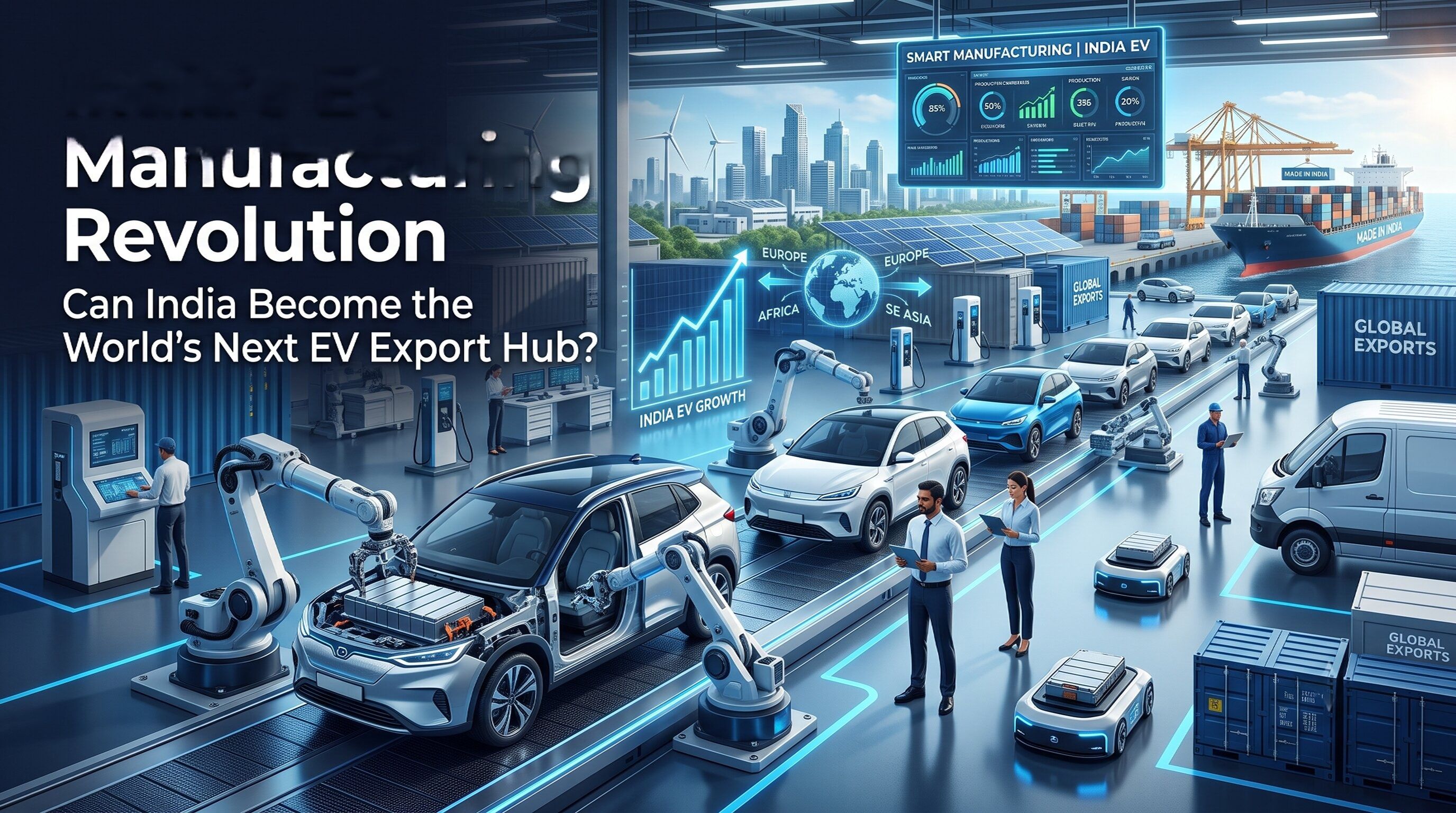
India's EV Manufacturing Revolution: Can the Nation Become the World's Next Electric Vehicle Export Powerhouse?
Quick Summary
India's EV manufacturing sector is accelerating with investments in batteries, charging infrastructure, and localization. Discover how the country is positioning itself as a global electric vehicle export hub.
Enjoyed this article?
Advertisement
India's EV Manufacturing Industry Enters a Defining Decade
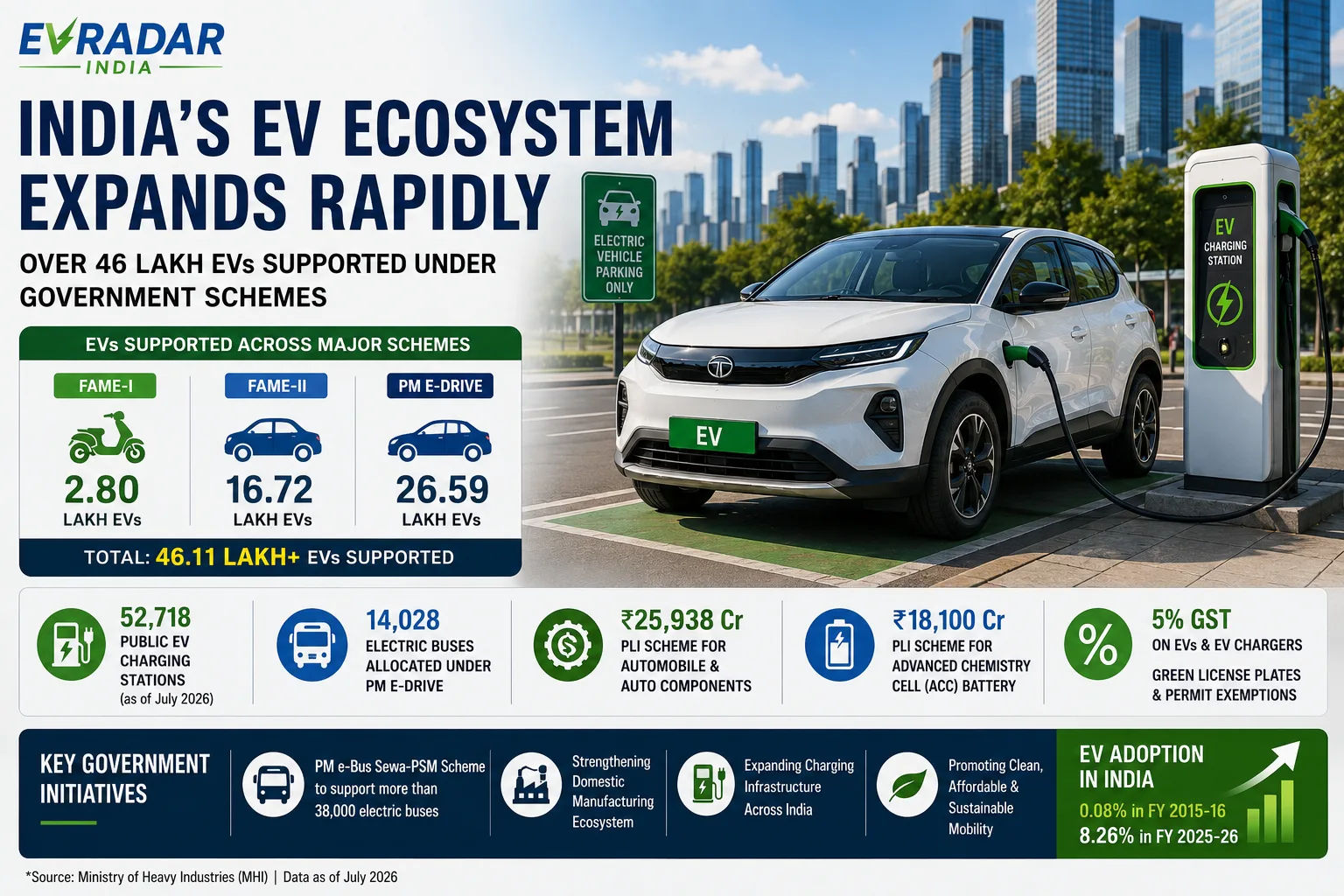
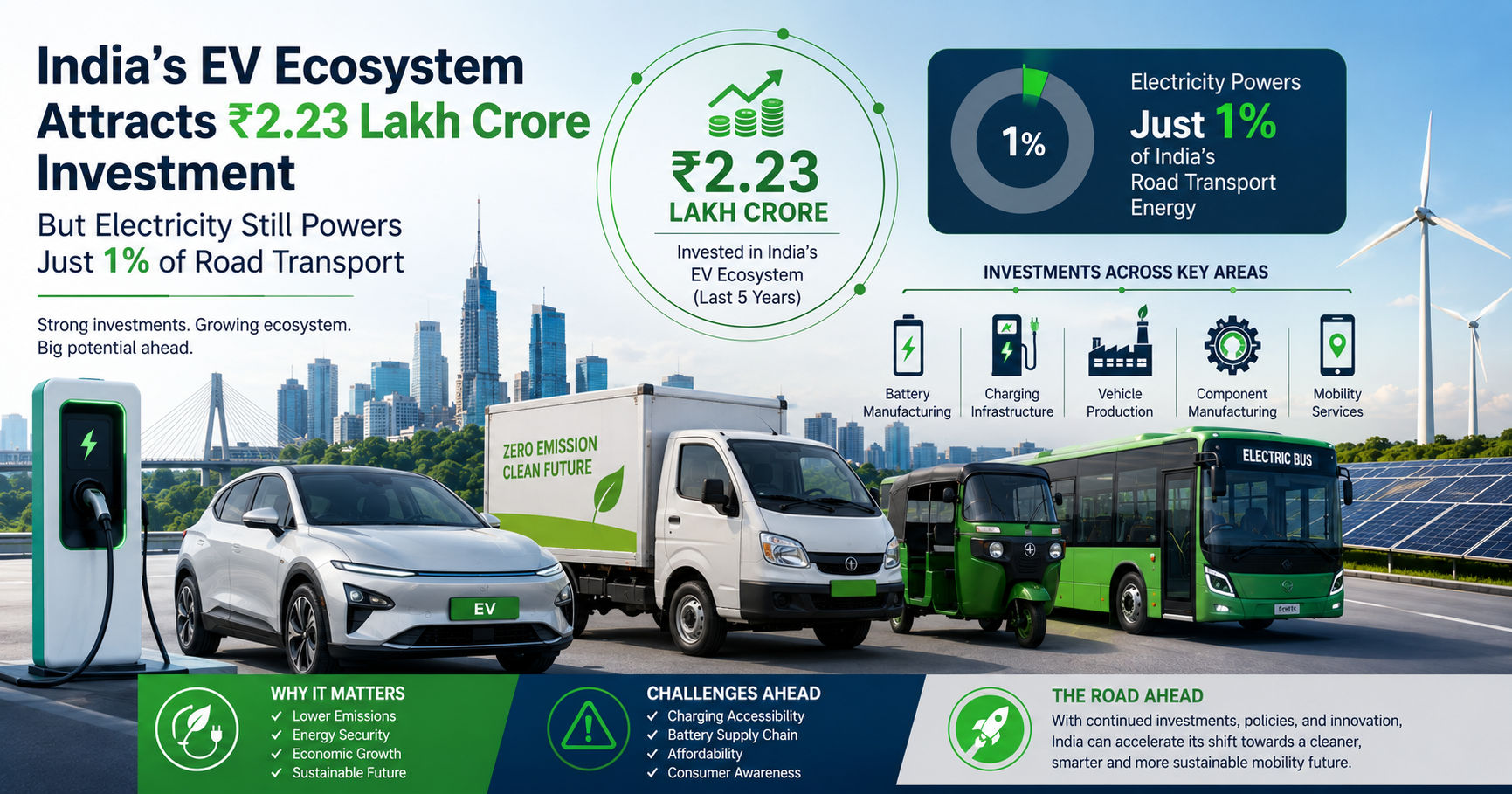
India's electric vehicle (EV) sector is witnessing unprecedented momentum as manufacturers, policymakers, battery makers, and technology companies collectively push toward building a world-class EV ecosystem.
While electric vehicle adoption has grown rapidly over the past few years, industry experts believe the next phase of growth will be driven by local manufacturing, battery production, supply chain development, and exports.
The global transition toward clean mobility presents a massive opportunity for India. With favorable government policies, a large engineering workforce, and increasing investments from both domestic and international players, India is positioning itself as a serious contender in the global EV manufacturing landscape.
Why EV Manufacturing Is Becoming a Strategic Priority
India currently imports a large portion of its energy requirements, making fuel security a long-term economic challenge.
The expansion of EV manufacturing can help India:
Reduce dependence on imported fossil fuels
Create millions of direct and indirect jobs
Strengthen domestic manufacturing capabilities
Increase exports to global markets
Accelerate sustainable mobility goals
Attract international investments
Industry analysts estimate that India's EV market could become one of the largest globally before the end of this decade if current growth trends continue.
Battery Localization Remains the Biggest Opportunity
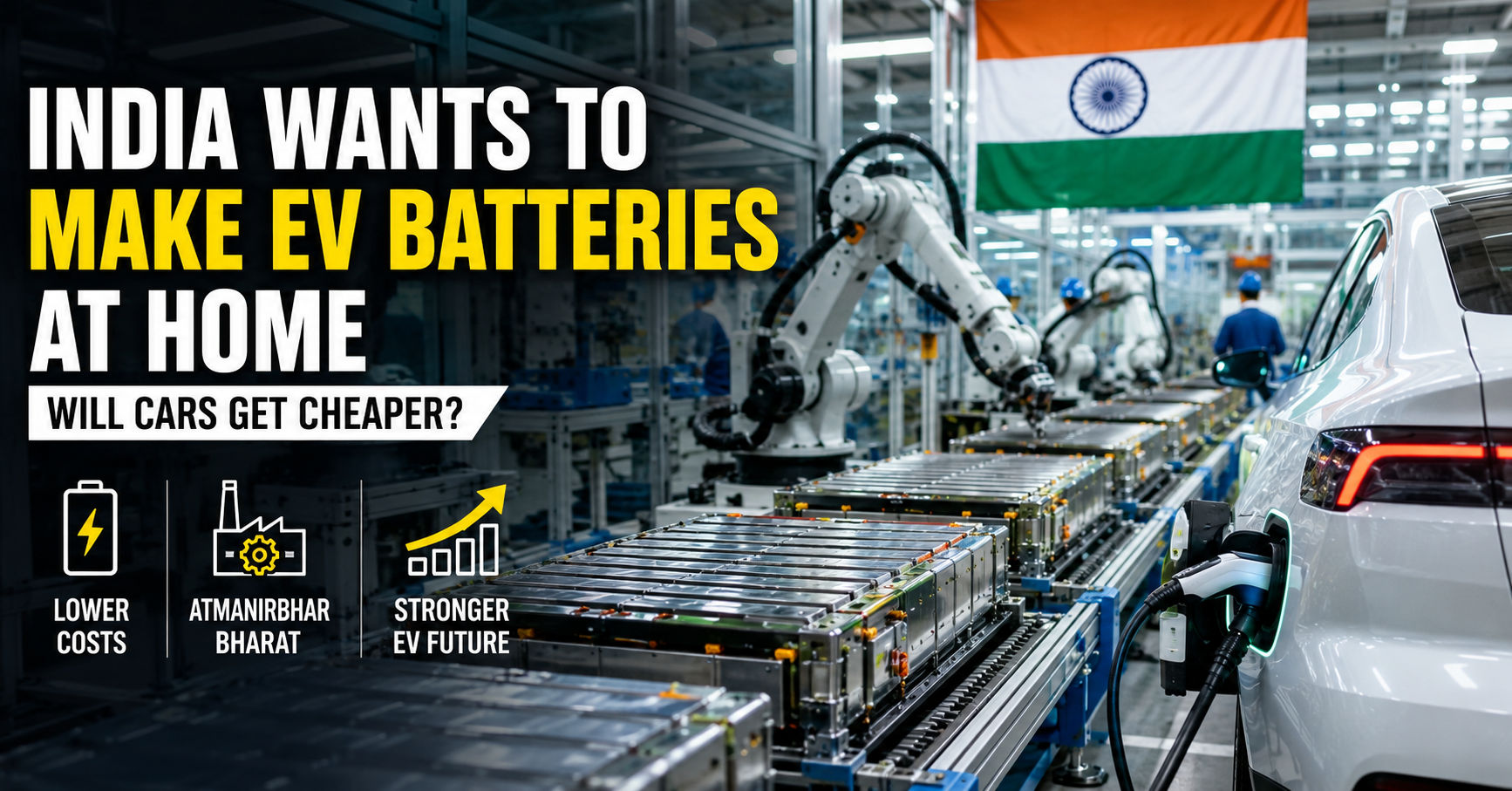
The battery is often considered the heart of an electric vehicle and accounts for a significant share of total manufacturing costs.
Currently, many critical battery materials and components are sourced internationally, creating supply chain dependencies.
To strengthen India's position, experts suggest focusing on:
Key Areas for Improvement
✅ Domestic battery cell production
✅ Battery recycling infrastructure
✅ Critical mineral partnerships
✅ Advanced battery research
✅ Gigafactory development
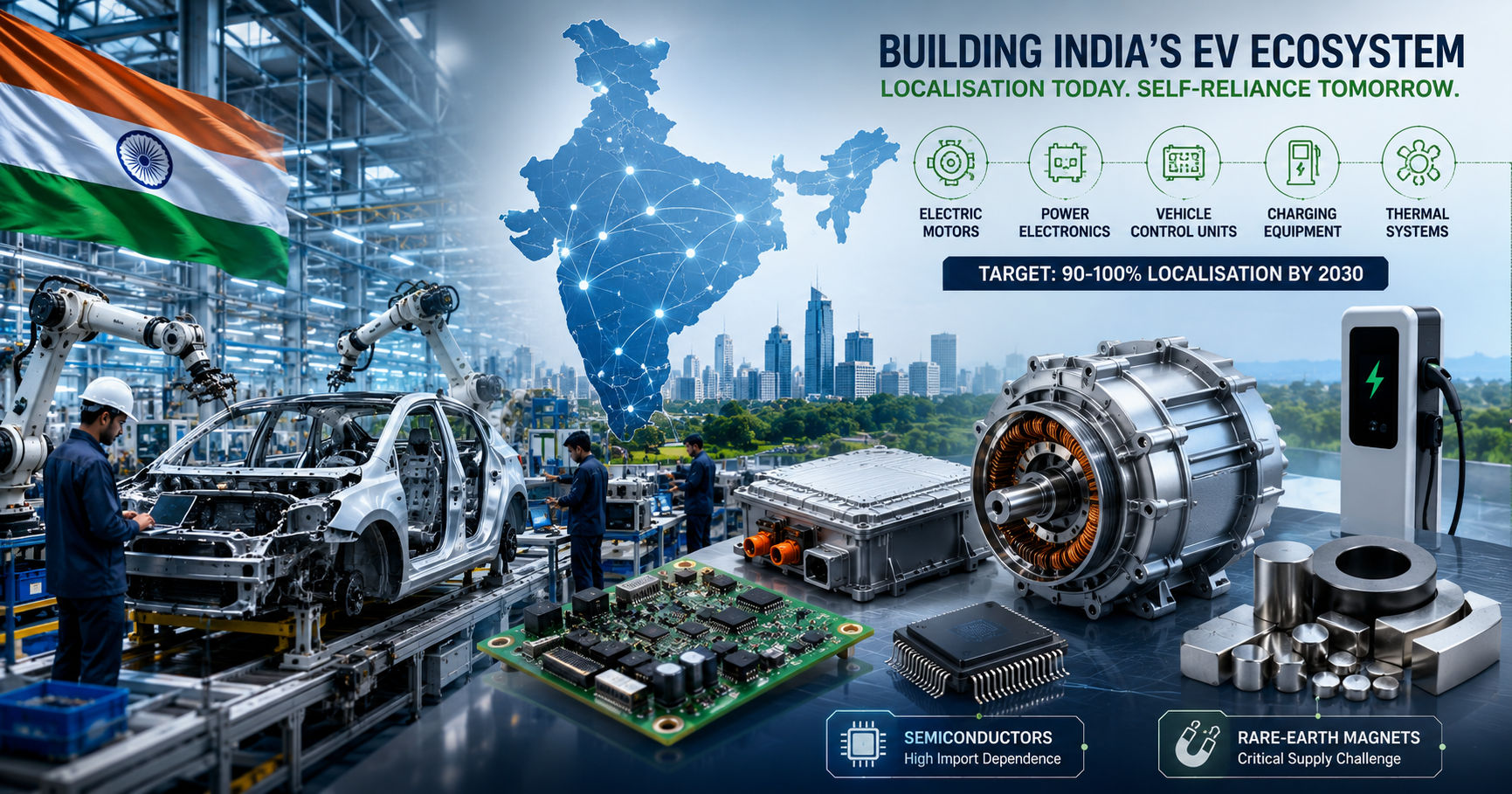
✅ Local component manufacturing
As battery costs decline and local production scales up, EV affordability is expected to improve significantly.
Global Automakers Are Increasing Their India Focus
Several automotive manufacturers have announced plans to expand their EV operations in India.
The country's growing consumer demand, improving charging infrastructure, and policy support are encouraging companies to invest in:
Manufacturing plants
Battery assembly units
Research and development centers
Supply chain partnerships
Export-focused production facilities
Industry observers believe India could become a manufacturing hub not only for domestic sales but also for international markets across Asia, Africa, Europe, and the Middle East.
Technology Will Define the Winners
Unlike traditional vehicle production, EV manufacturing relies heavily on advanced technologies.
Modern EV facilities increasingly use:
Advanced Manufacturing Technologies
Artificial Intelligence (AI)
Industrial Automation
Robotics
Internet of Things (IoT)
Predictive Maintenance
Digital Quality Monitoring
Smart Manufacturing Systems
These technologies help improve product quality, efficiency, and scalability while reducing manufacturing errors.
Charging Infrastructure Is Expanding Rapidly
One of the major barriers to EV adoption has been charging accessibility.
However, the situation is changing rapidly as both public and private players expand charging networks across India.
Recent developments include:
Highway charging corridors
Urban fast-charging stations
Residential charging solutions
Commercial fleet charging networks
Smart charging technologies
Industry experts believe that widespread charging availability will significantly boost consumer confidence in electric vehicles.
Startups Are Driving Innovation
India's EV ecosystem is increasingly benefiting from startup-led innovation.
Emerging companies are developing solutions in:
Battery management systems
EV software platforms
Charging technologies
Fleet electrification
Energy storage
Vehicle conversion solutions
Many startups are attracting significant investment and contributing to India's growing EV technology ecosystem.
Government Policies Continue to Accelerate Growth
Supportive policies remain one of the strongest drivers of EV industry growth.
Key initiatives include:
Manufacturing incentives
EV purchase subsidies
Tax benefits
Infrastructure support
Battery manufacturing programs
Research and innovation grants
Industry leaders emphasize that long-term policy consistency will be critical for attracting large-scale investments.
Can India Become a Global EV Export Hub?
The answer increasingly appears to be yes.
India possesses several competitive advantages:
India's Strengths
✔ Large domestic market
✔ Competitive manufacturing costs
✔ Skilled engineering workforce
✔ Growing supplier ecosystem
✔ Government support
✔ Increasing localization efforts
However, challenges remain:
Key Challenges
Raw material sourcing
Battery localization
Advanced manufacturing capabilities
Supply chain maturity
Skilled workforce development
Addressing these challenges will determine how quickly India can establish itself as a leading EV export destination.
Expert Outlook: The Road to 2030
Industry forecasts suggest that by 2030:
EV sales could account for a substantial share of new vehicle purchases.
Battery manufacturing investments are expected to rise significantly.
Charging networks will become more widespread.
Domestic component manufacturing will increase.
India could emerge as a major EV export center.
The coming years will be crucial in determining whether India can transform from an emerging EV market into a global manufacturing powerhouse.
FAQs
Why is EV manufacturing important for India?
EV manufacturing can strengthen energy security, create employment opportunities, boost exports, and reduce dependence on imported fuel.
What is the biggest challenge facing India's EV industry?
Battery production and localization remain among the biggest challenges due to technology requirements, investment needs, and supply chain dependencies.
How can India become a global EV manufacturing hub?
By expanding local battery production, strengthening supply chains, investing in advanced manufacturing technologies, and maintaining supportive government policies.
Will EV prices become more affordable in the future?
Industry experts expect prices to gradually decline as battery costs reduce and local manufacturing scales up.
What role do startups play in India's EV ecosystem?
Startups contribute innovation in charging infrastructure, battery technologies, software platforms, fleet management, and energy solutions.
Conclusion
India's EV manufacturing journey is entering an exciting phase. With growing investments, supportive policies, technological innovation, and increasing localization efforts, the country is building the foundation required to compete on the global stage.
While challenges such as battery production, supply chain development, and infrastructure expansion remain, the overall outlook for India's EV manufacturing sector remains highly promising. If momentum continues, India could emerge as one of the world's most important electric vehicle manufacturing and export hubs over the next decade.
Advertisement
Found this helpful?
Share with your friends & EV community