commercial
BYD Rolls Out 150,000th Commercial Electric Vehicle
BYD has reached 150,000 commercial plug-in vehicles produced globally, highlighting the growing scale of heavy-duty electric transport.
3 min · 13 Oct 2026
India's #1 Electric Vehicle Platform
India's complete guide to electric cars, bikes, and scooters. Compare prices, range, brands, and find the right EV for your budget.
17 Lakh+
EVs Sold in India 2025
25,000+
Public Charging Stations
80+
EV Models Available
28
States with EV Policy
Expert-ranked top 10 EVs
Top scooters & bikes ranked
Launch dates & expected prices
Affordable electric cars
Home & public charging explained
FAME, PM E-Drive & state schemes
Find chargers near you
FAME 2, PM E-Drive, PLI explained
BYD has reached 150,000 commercial plug-in vehicles produced globally, highlighting the growing scale of heavy-duty electric transport.
3 min · 13 Oct 2026
Volvo's flagship electric SUV arrives as a fully loaded six-seater, undercutting the Kia EV9 and Mercedes EQS SUV. Deliveries begin January 2027.
4 min · 13 Oct 2026
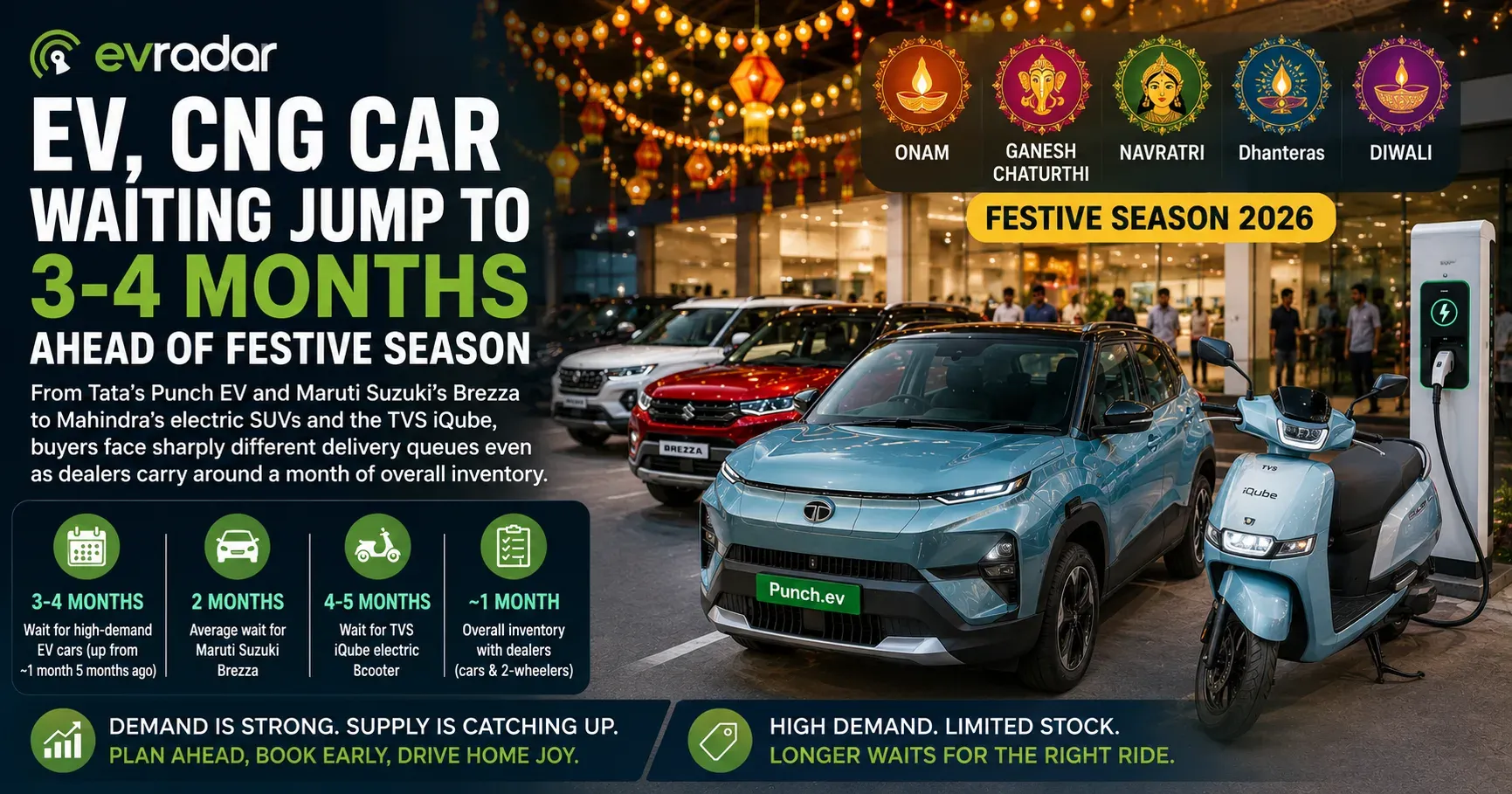
Demand for electric and CNG vehicles is pushing delivery timelines higher ahead of India's festive season, with some EVs facing waits of up to four months and the TVS iQube extending to as much as five months.
5 min · 29 Aug 2026
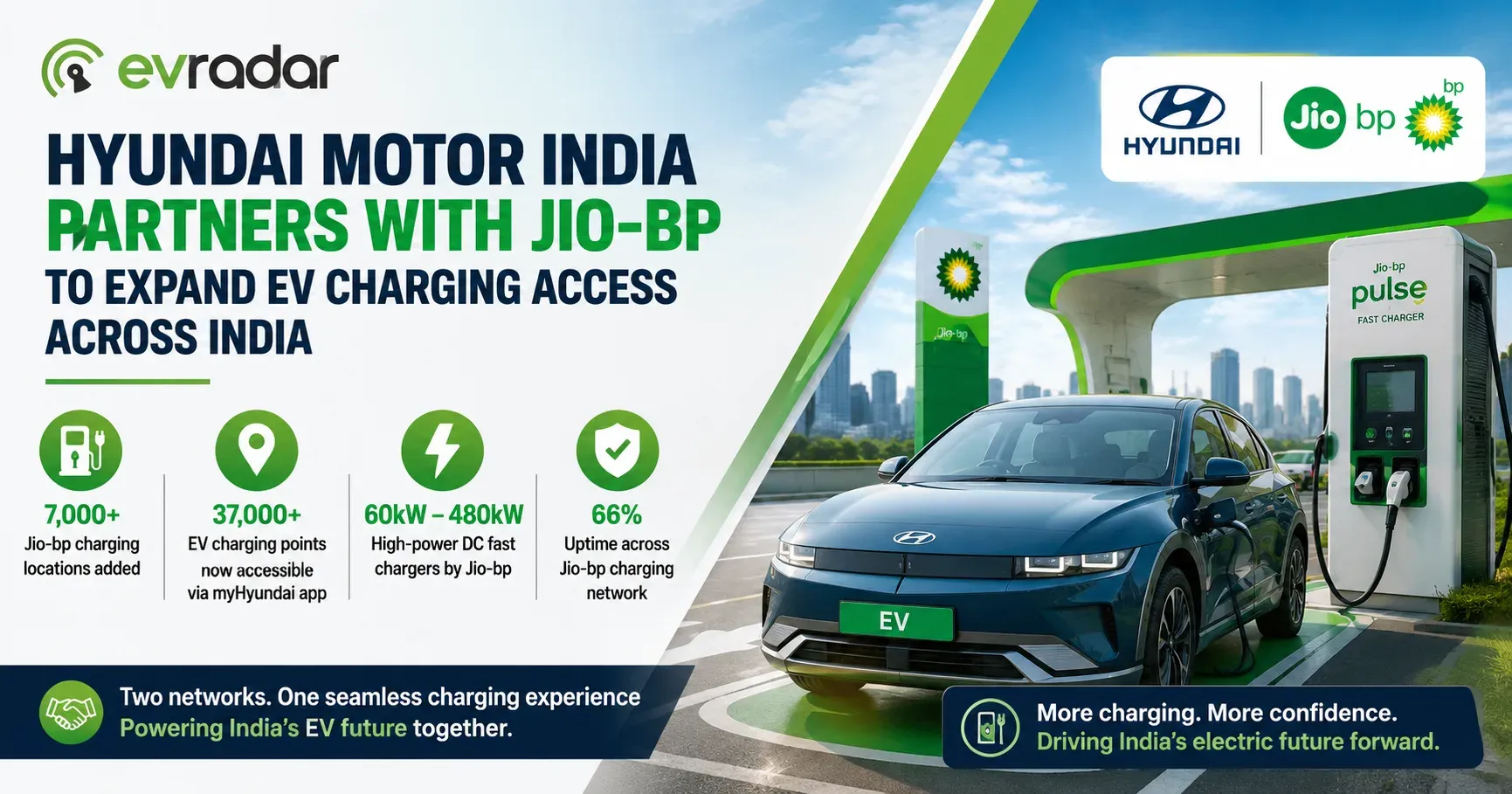
Hyundai Motor India has partnered with Jio-bp to make thousands of EV charging points easier to discover and access through the myHyundai app, strengthening India’s growing electric-vehicle charging network.
5 min · 28 Aug 2026
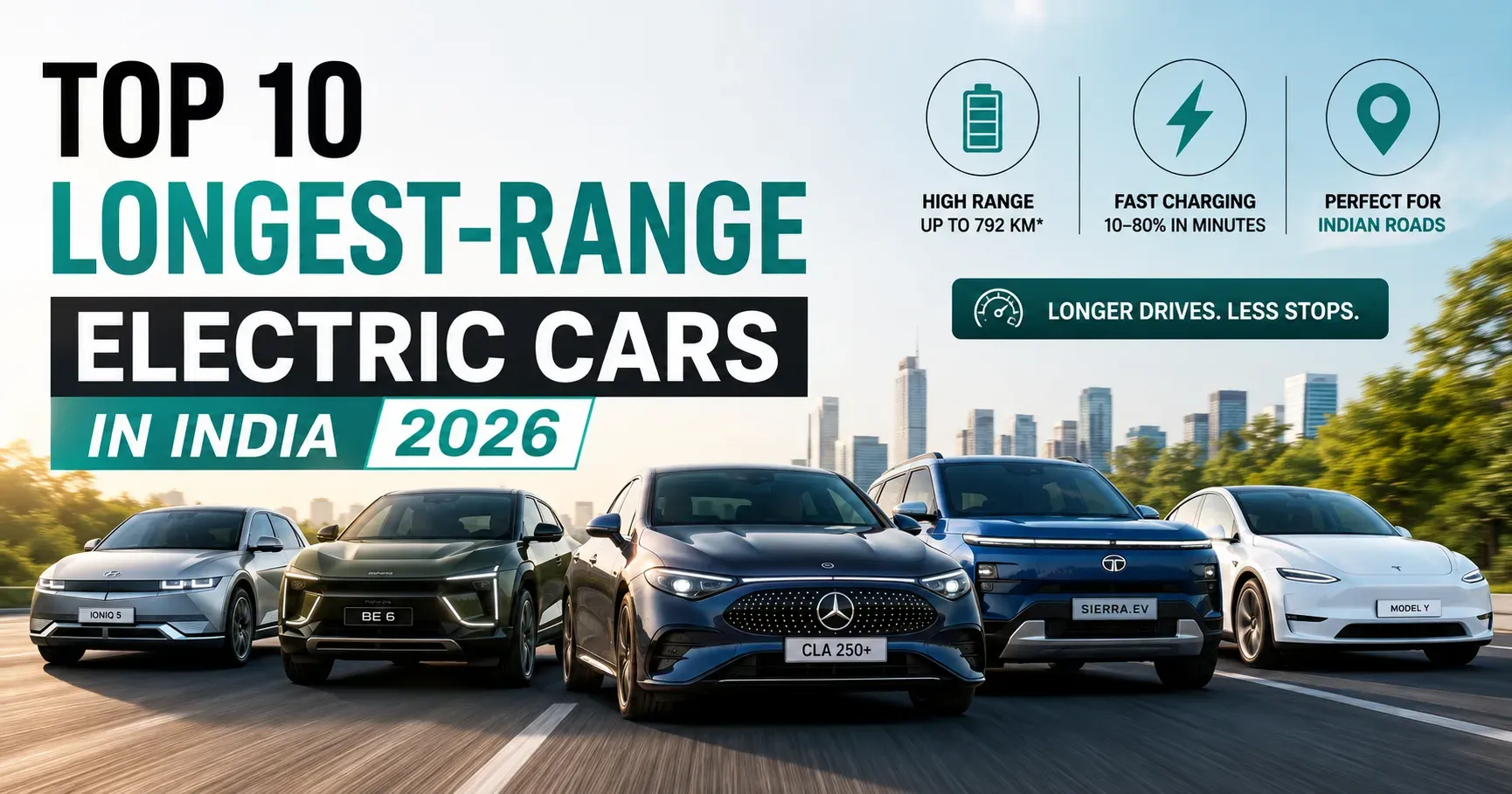
Discover the 10 longest-range electric cars available in India in 2026, with claimed range, battery capacity, charging details and key features.
5 min · 28 Aug 2026
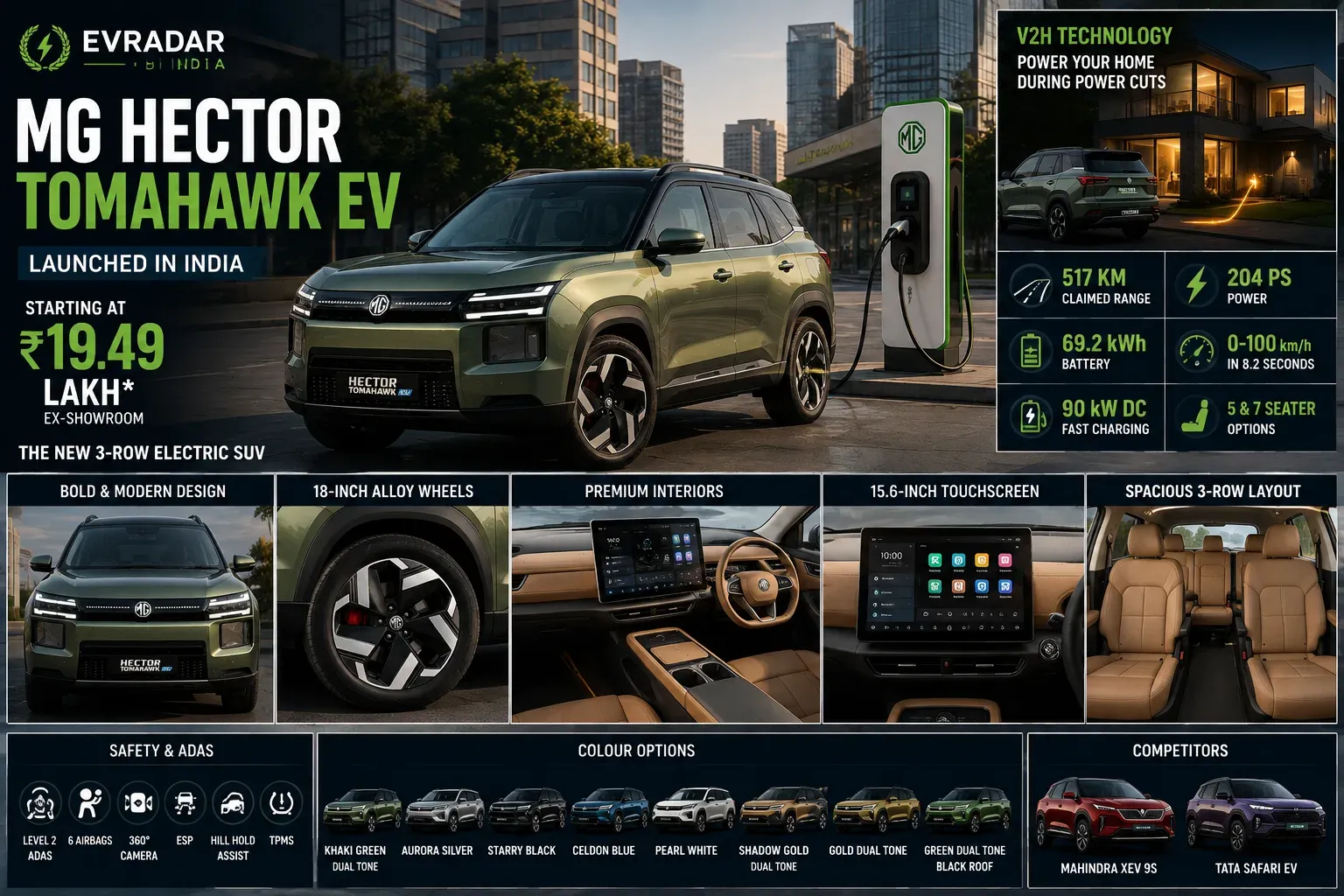
MG Hector Tomahawk EV launched in India at ₹19.49 lakh with a 69.2 kWh battery, 517 km claimed range, 204 PS and V2H technology.
5 min · 27 Aug 2026
The best electric cars in India in 2026 are: Tata Punch EV (best overall under ₹15L), Tata Nexon EV (most popular, 465 km range), MG Windsor EV (best value), Hyundai Creta Electric (best premium), and Mahindra BE 6 (best performance, 682 km range). For electric bikes, Ola S1 Pro, Ather 450X, and TVS iQube are top picks.
Electric cars in India offer ARAI-certified ranges from 250 km (entry-level Tata Tiago EV) to 682 km (Mahindra BE 6). Most popular EVs like Nexon EV (465 km) and Punch EV (421 km) offer 400–500 km. Real-world range is typically 20–25% lower than ARAI figures. Electric scooters offer 100–200 km range.
Electric vehicles in India start from ₹1 lakh for electric scooters (TVS iQube at ₹1.02 lakh) to ₹10 lakh for entry electric cars (Tata Tiago EV at ₹7.99 lakh). Mid-range electric cars cost ₹10–25 lakh (Nexon EV, Creta Electric), while premium EVs cost ₹30–70 lakh (BYD Seal, Mercedes EQS). Prices are after FAME 2 and state subsidies.
Yes. Under the PM E-Drive scheme 2024–2026, electric 2-wheelers get up to ₹10,000 subsidy and electric 3-wheelers up to ₹50,000. Many states offer additional subsidies: Delhi gives ₹30,000 on e-bikes and ₹1.5 lakh on cars. All EVs attract only 5% GST versus 28–50% for petrol vehicles. Section 80EEB allows ₹1.5 lakh annual tax deduction on EV loan interest.
India sold approximately 17 lakh electric vehicles in 2024-25, averaging 1.4 lakh EVs per month. Electric two-wheelers dominate at over 10 lakh units, led by Ola Electric and Ather Energy. Electric cars crossed 1 lakh units monthly in 2024, with Tata Motors holding 35%+ market share. India is now the world's third-largest EV market.
India has over 25,000 public EV charging stations as of 2025, with the government targeting 46,000 by 2030. Major networks include Tata Power EZ Charge (5,000+), ChargeZone (3,500+), Ather Grid (2,000+), Statiq (2,500+), and Jio-BP Pulse (1,200+). Almost all major highways on national routes now have fast-charging stations.