The Delhi Government has approved its new Electric Vehicle (EV) Policy 2026, introducing a comprehensive strategy to accelerate the transition toward cleaner transportation. Scheduled to take effect from July 1, 2026, the policy brings attractive incentives for EV buyers, expands charging infrastructure, and outlines a gradual shift away from conventional fuel-powered vehicles in selected segments.
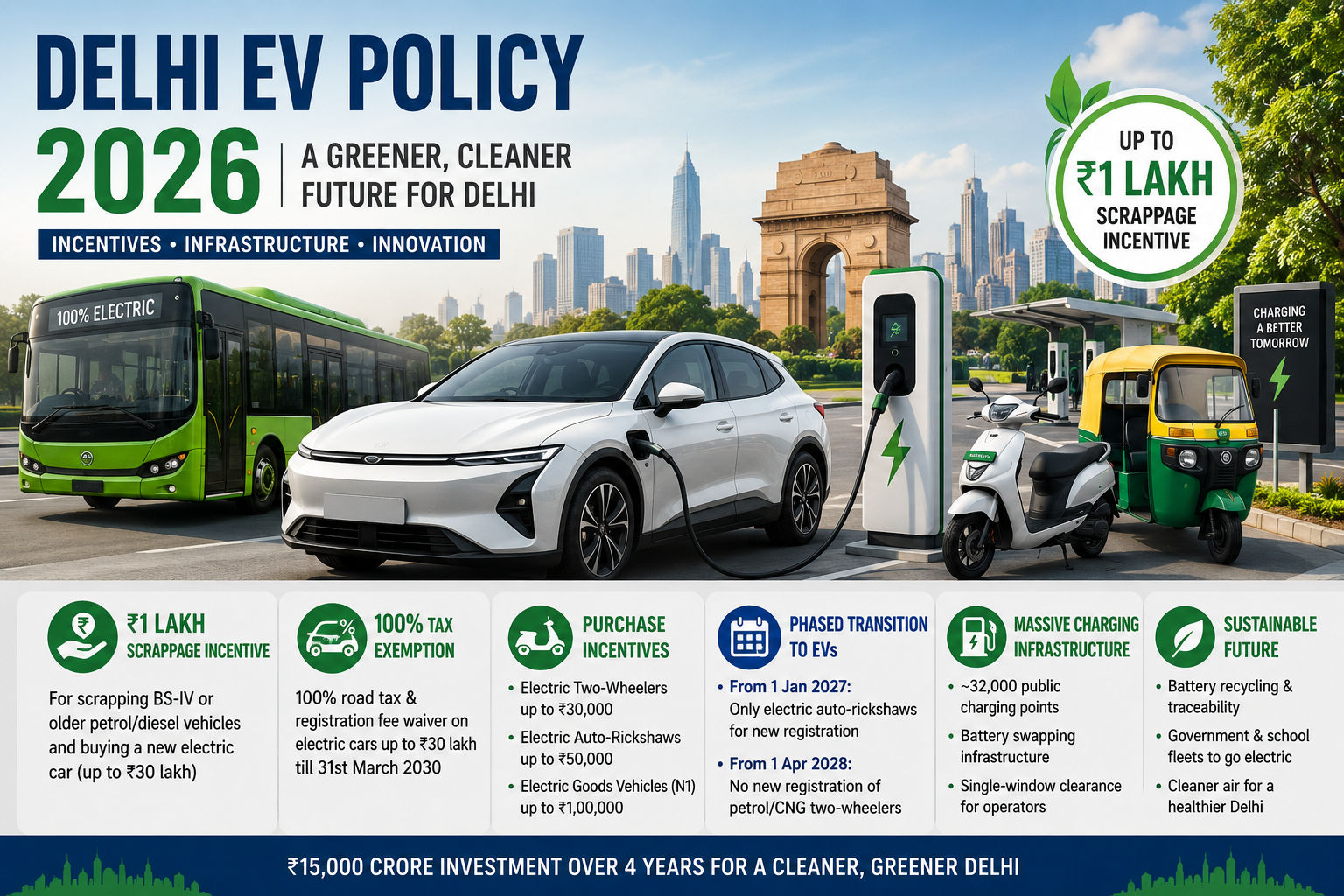
The government plans to invest nearly ₹15,000 crore over the next four years to support EV adoption, charging networks, battery recycling initiatives, and sustainable urban mobility solutions.
₹1 Lakh Scrappage Incentive for Electric Car Buyers
One of the most notable features of the new policy is the scrappage incentive designed to encourage owners of older vehicles to switch to electric cars.
Owners who scrap a Delhi-registered BS-IV or older petrol or diesel vehicle can receive a scrappage incentive of up to ₹1 lakh when purchasing a new electric car priced below ₹30 lakh (ex-factory cost). To qualify, the new EV must be purchased within six months of obtaining the Certificate of Deposit (CoD) issued during the scrapping process.
The benefit will be available to the first one lakh eligible applicants.
Purchase Incentives for Multiple EV Categories
The policy continues to provide financial support across various electric vehicle segments.
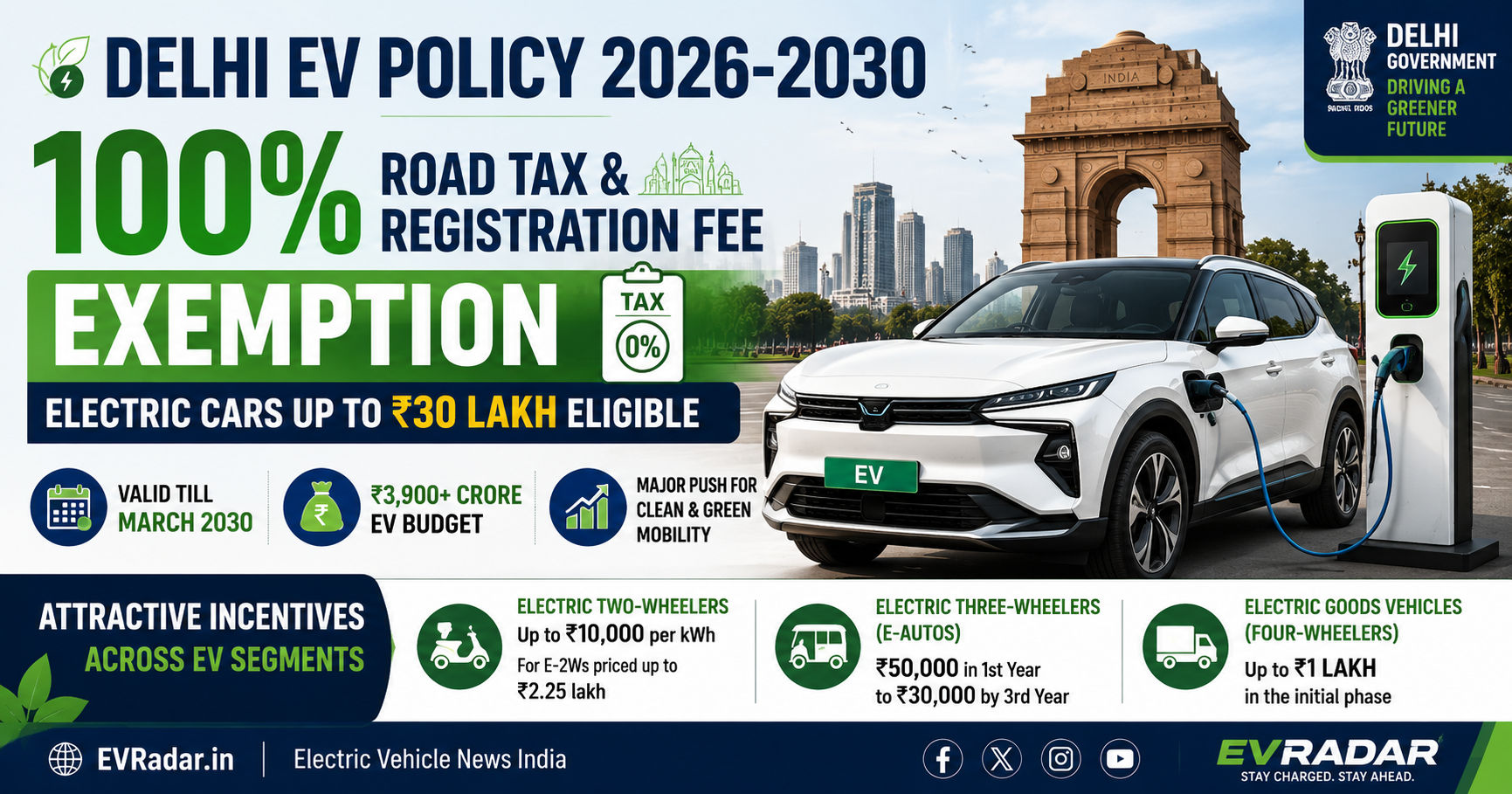
Electric Two-Wheelers: Incentives up to ₹30,000 during the first year.
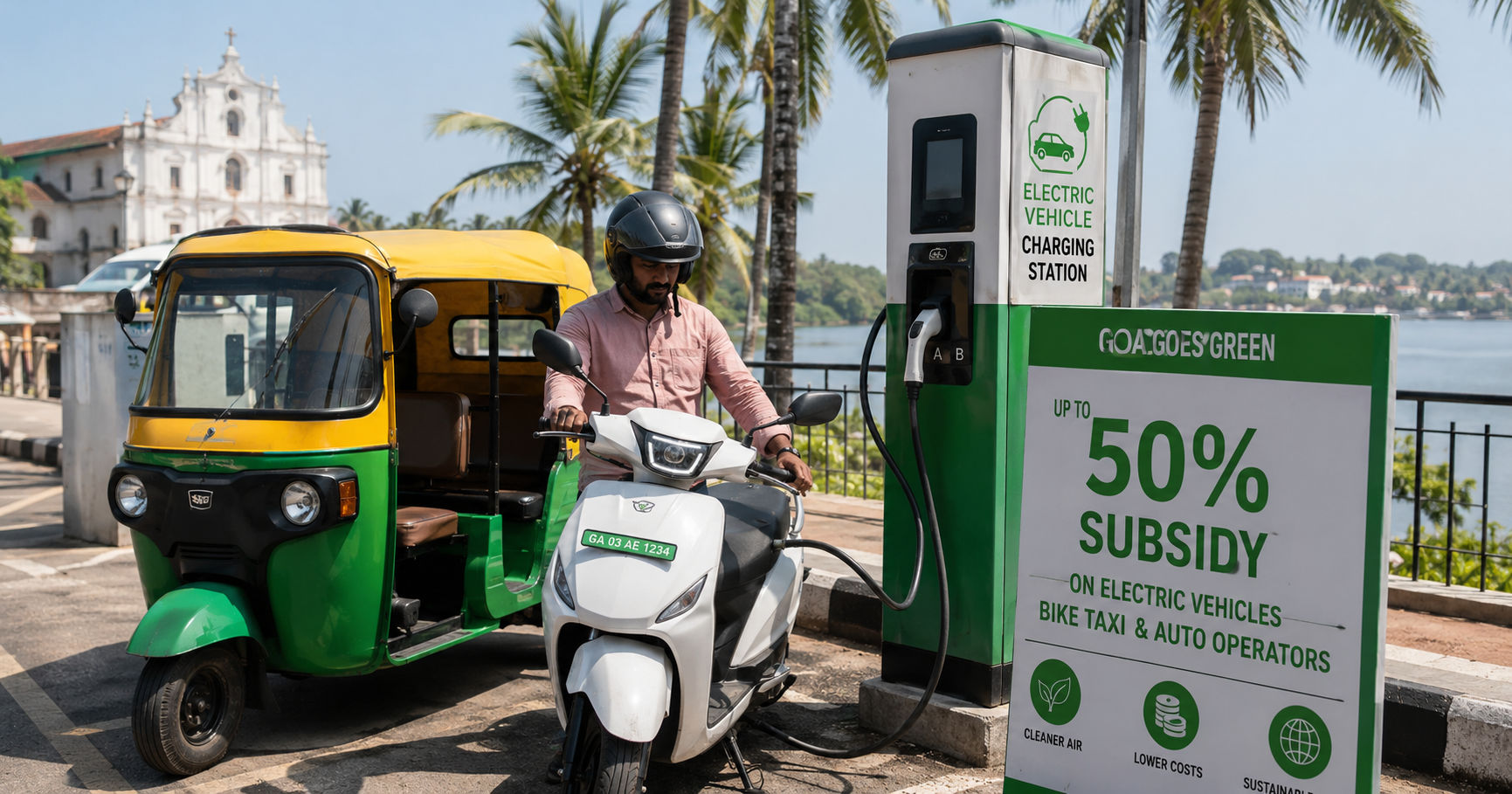
Electric Auto-Rickshaws: Benefits up to ₹50,000.
Electric Goods Carriers (N1 Category): Incentives up to ₹1 lakh.
The subsidy structure is expected to reduce gradually in the coming years, encouraging consumers and businesses to adopt electric vehicles sooner.
Complete Exemption on Road Tax and Registration Fees
To make EV ownership more affordable, Delhi will continue offering a full waiver on road tax and registration charges for electric cars priced up to ₹30 lakh.
These benefits are expected to remain available until March 31, 2030.
Hybrid vehicles will receive partial concessions, while electric cars priced above ₹30 lakh will not be eligible for the full exemption.
Transition Toward an Electric-First Future
The policy introduces clear timelines for reducing dependence on petrol and CNG vehicles.
From January 1, 2027
Only electric auto-rickshaws will be eligible for new registrations in Delhi.
From April 1, 2028
New registrations of petrol and CNG-powered two-wheelers will no longer be permitted. Only electric motorcycles and scooters will qualify for registration.
Existing fuel-powered vehicles can continue operating according to applicable regulations, but future registrations will increasingly favor electric mobility.
Large-Scale Expansion of Charging Infrastructure
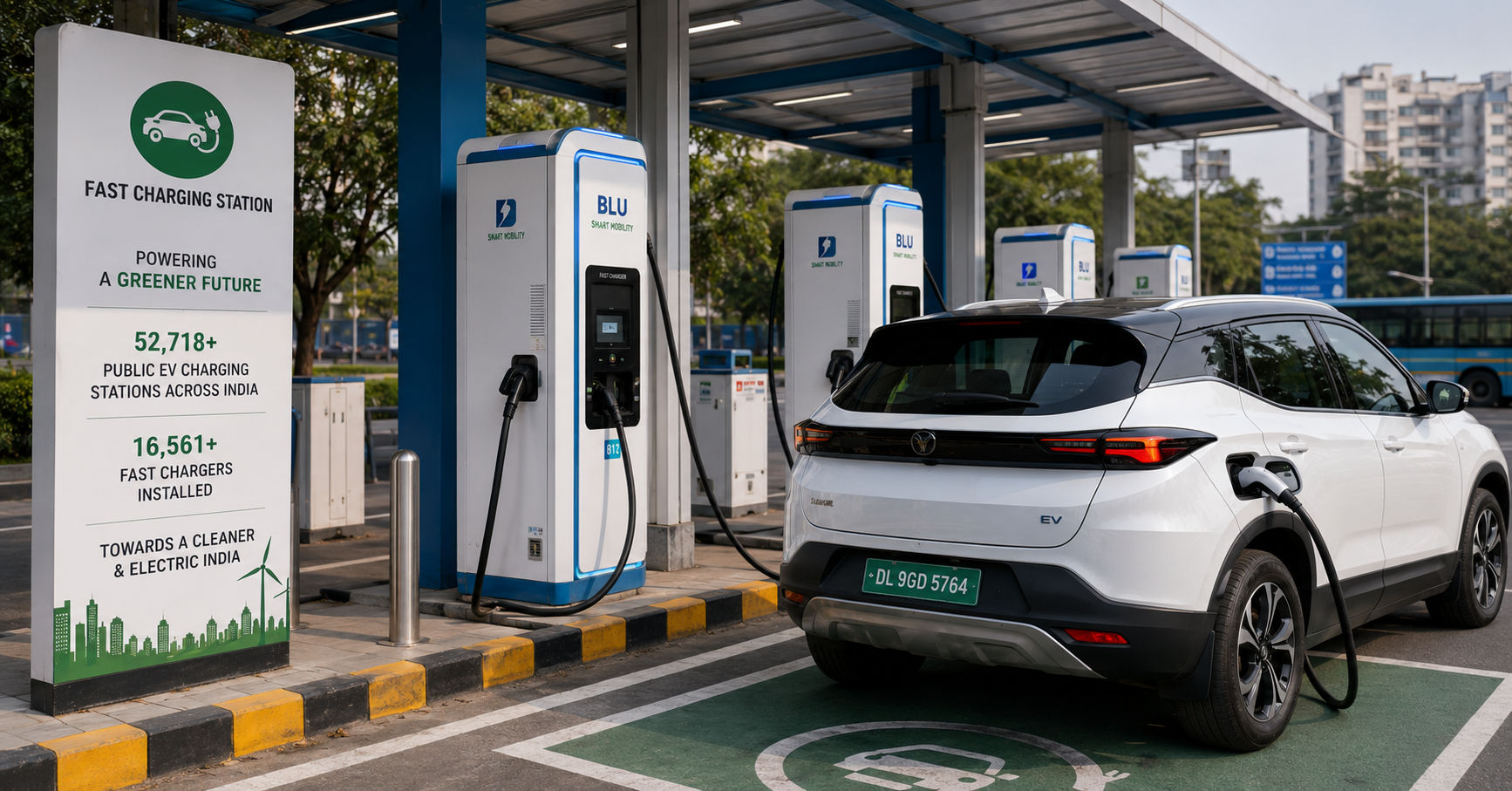
To support growing EV adoption, the government plans to strengthen charging accessibility throughout the city.
Key initiatives include:
Installation of approximately 32,000 public charging points.
Expansion of battery swapping facilities.
Single-window approval systems for charging station operators.
Digital platforms for charger deployment and monitoring.
Mandatory charging infrastructure at vehicle dealerships.
Delhi Transco Limited (DTL) will serve as the nodal agency responsible for planning and implementation.
Government and School Fleets to Shift Toward EVs
The policy also focuses on electrifying public and institutional transportation.
Major targets include:
All newly leased or procured Delhi Government vehicles to be electric.
New intra-city buses added to the DTC fleet to be electric.
Progressive electrification of school bus fleets:
Battery Recycling and Sustainability Measures
As EV adoption increases, battery lifecycle management has become a priority.
The policy proposes:
Battery tracking and traceability systems.
Safe recycling mechanisms.
Promotion of second-life battery applications.
Extended Producer Responsibility (EPR) compliance.
Dedicated battery collection and recycling centers across Delhi.
Why the New Policy Is Important
Delhi continues to face significant air-quality challenges, with vehicle emissions contributing heavily to urban pollution. By combining financial incentives, infrastructure development, and regulatory measures, the EV Policy 2026 aims to accelerate the shift toward cleaner transportation alternatives.
The policy is expected to boost consumer confidence, attract investments in charging infrastructure, and strengthen Delhi's position as one of India's leading electric mobility markets.
Conclusion
Delhi's EV Policy 2026 represents a major step toward sustainable transportation. With benefits such as a ₹1 lakh scrappage incentive, tax exemptions, extensive charging infrastructure plans, and phased electrification targets, the policy creates a clear roadmap for the future of mobility in the capital.
If successfully implemented, it could serve as a model for other states looking to accelerate EV adoption and reduce vehicular emissions across India.
Frequently Asked Questions (FAQs)
1. What is the Delhi EV Policy 2026?
The Delhi EV Policy 2026 is a new government initiative aimed at accelerating electric vehicle adoption through incentives, tax benefits, charging infrastructure expansion, and gradual reduction of new petrol and CNG vehicle registrations in selected categories.
2. When will the Delhi EV Policy 2026 come into effect?
The policy is expected to come into effect on July 1, 2026, subject to final implementation guidelines from the Delhi Government.
3. What is the ₹1 lakh scrappage incentive?
Owners who scrap an eligible Delhi-registered BS-IV or older petrol or diesel vehicle can receive up to ₹1 lakh when purchasing a qualifying electric car priced below ₹30 lakh.
4. Who is eligible for the scrappage incentive?
The incentive is available to owners of eligible older vehicles who purchase a new electric car within the specified timeframe after receiving the Certificate of Deposit (CoD) from an authorized vehicle scrapping facility.
5. Will electric cars be exempt from road tax and registration fees?
Yes. Electric cars priced up to ₹30 lakh will receive a 100% exemption from road tax and registration charges under the policy.
6. Are there incentives for electric scooters and motorcycles?
Yes. Eligible electric two-wheelers can receive purchase incentives, with benefits of up to ₹30,000 during the initial phase of the policy.
7. What incentives are available for electric auto-rickshaws?
Electric auto-rickshaw buyers can receive incentives of up to ₹50,000 under the Delhi EV Policy 2026.
8. Will petrol and CNG two-wheelers be banned in Delhi?
Existing vehicles can continue to operate, but new registrations of petrol and CNG-powered two-wheelers are proposed to end from April 1, 2028, with only electric two-wheelers eligible for new registrations thereafter.
9. What changes are planned for auto-rickshaw registrations?
Starting January 1, 2027, only electric auto-rickshaws will be eligible for new registrations in Delhi.
10. How many EV charging stations will be installed in Delhi?
The government plans to establish around 32,000 public charging points across Delhi to support the growing number of electric vehicles.
11. Does the policy support battery swapping infrastructure?
Yes. The policy includes the development of battery swapping facilities to improve convenience and reduce charging times for EV users.
12. Will government vehicles switch to electric power?
Yes. All newly procured or leased Delhi Government vehicles are expected to be electric under the new policy framework.
13. Are school buses included in the electrification plan?
Yes. Schools will gradually increase the share of electric buses in their fleets, targeting 30% electrification by 2030.
14. What is the government's investment plan under the policy?
The Delhi Government plans to invest approximately ₹15,000 crore over four years to support EV adoption, charging infrastructure, fleet electrification, and sustainability initiatives.
15. Why is the Delhi EV Policy 2026 important?
The policy aims to reduce air pollution, encourage clean transportation, lower EV ownership costs, and position Delhi as one of India's leading electric mobility hubs.